BAKU, Azerbaijan, August 8. One year after the
Washington breakthrough between Azerbaijan and Armenia, it has
become clear that peace in the South Caucasus is not only a
diplomatic achievement but also a driver of economic transformation
across Central Asia.
On August 8, 2025, following a trilateral meeting with U.S.
President Donald Trump in Washington, Azerbaijani President Ilham
Aliyev and Armenian Prime Minister Nikol Pashinyan signed a joint
declaration on establishing peace between Baku and Yerevan, while
the foreign ministers of Azerbaijan and Armenia initialed the text
of the “Agreement on the Establishment of Peace and Interstate
Relations.” The document marked a major milestone after decades of
conflict and opened the way for new transport and trade links. For
Central Asian countries, the key outcome has been a reduction in
risks along their western routes. The South Caucasus is gradually
emerging as a more stable and predictable space for connectivity
between Asia and Europe.
Kazakh President Kassym-Jomart Tokayev described the
normalization of relations between Azerbaijan and Armenia as a
historic process. Addressing the UN General Assembly, he said: “We
also welcome the normalization of relations between Azerbaijan and
Armenia under the mediation of the President of the United States.
This proves that even protracted conflicts can be resolved through
diplomacy and common sense.”
For Kazakhstan, this process has direct economic significance,
as the country is one of the key participants in the Middle
Corridor, or Trans-Caspian International Transport Route, linking
China and Central Asia with the Caucasus and Europe.
Kazakh Prime Minister Olzhas Bektenov said at a meeting of the
Commission on Trade and Economic Cooperation that freight volumes
along the Middle Corridor had increased more than fivefold from
2021 levels, rising from less than 1 million tons to around 4–5
million tons in 2025. A further increase of around 10% is expected
in 2026, bringing volumes to 5.2 million tons. “Developing the TITR
is a shared priority. Systematic efforts are under way to modernize
infrastructure, expand port and terminal capacity, establish
unified tariffs and introduce digital solutions,” he said.
One factor behind this growth is the improved stability of the
South Caucasus. For exporters in Kazakhstan, Uzbekistan and other
countries across the region, this means more reliable supply
planning, lower transit risks and new opportunities to access
markets in Türkiye and Europe.
A key element of this emerging architecture is the Trump Route
for International Peace and Prosperity (TRIPP), which envisages
establishing a transport route through Armenian territory.
Speaking at the opening ceremony of the 13th Global Baku Forum,
President Ilham Aliyev said: “After peace with Armenia, on a new
extension of the Middle Corridor, which will go through the
territory of Armenia. And Armenia, for the first time in its
independent history, will also be a transit country, which today it
is not. And this will allow us to connect two parts of Azerbaijan —
the mainland and our exclave, Nakhchivan Autonomous Republic — with
a sustainable transportation link, energy link, fiber optic link,
electric cables, and potentially pipelines. So for us, it's kind of
a win-win situation for all of us, I mean, for those who really
want to use this new opportunity, because we will connect two parts
of Azerbaijan with transportation infrastructure, and we will
create a new extension, as I said, of the new corridors, which will
benefit many countries.”
For Central Asia, TRIPP means an additional western route.
Today, the main corridor runs through Kazakhstan, the Caspian Sea,
Azerbaijan, Georgia and onward to Türkiye. A new route through
Armenia could provide an additional gateway to European markets,
strengthening the resilience of the wider transport network.
Practical changes are already under way. Following the removal
of restrictions, new opportunities have emerged for the transit of
goods between Central Asia and the South Caucasus. In November
2025, Kazakh grain was transported to Armenia through Azerbaijan
for the first time in decades. The move was one of the early
examples of political normalization translating into tangible trade
flows.
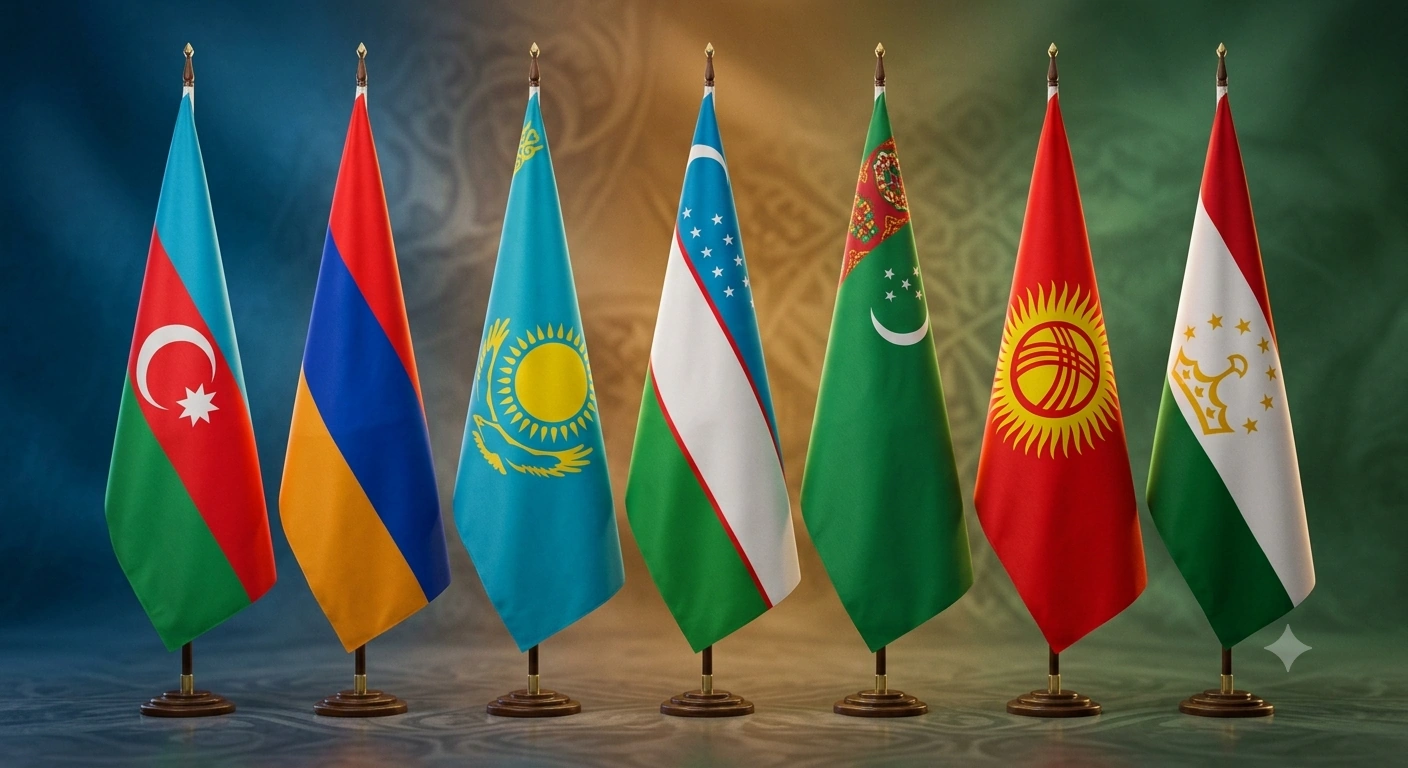
At the same time, Azerbaijan’s cooperation with Central Asian
countries is expanding. Speaking at an informal meeting of the
leaders of Azerbaijan and Central Asian states in Cholpon-Ata,
President Ilham Aliyev said relations with the region were among
Baku’s foreign policy priorities. “Since the beginning of 2023,
over the past three and a half years, I have visited the brotherly
countries of Central Asia 16 times, while my colleagues have
visited Azerbaijan 26 times during the same period. These figures
speak louder than any words about the closeness of our relations
and demonstrate that Central Asia and Azerbaijan have effectively
become a single geopolitical and geoeconomic space,” the head of
state said.
The trend is also reflected in trade figures. Azerbaijan’s trade
turnover with Central Asian countries continues to grow in 2026,
supported by stronger links along the Middle Corridor. Trade with
Uzbekistan increased by nearly 43% in the first quarter of 2026,
reaching $80.1 million, while trade turnover with Kazakhstan
reached $150 million in the first months of the year.
Uzbekistan views regional stability as the foundation for a
broader space for cooperation. In congratulating the leaders of
Azerbaijan and Armenia on receiving the Zayed Award for Human
Fraternity, Uzbek President Shavkat Mirziyoyev described the
agreement reached between the two countries as a historic step
toward ensuring stability throughout the region. “In today’s
volatile world, there is a great need for responsible leaders,
unwavering political determination, and the solution of problems
through dialogue. In the current complex international situation,
decisions made in such a way can create a foundation of stability
and strong trust between states and peoples. However, the priceless
blessing of peace does not come on its own. Peace requires the
courage to listen to others, find ways to compromise even in the
most difficult circumstances, and take responsibility for the
decisions made,” he said.
Kyrgyzstan has also expressed support for the process. “The
Kyrgyz Republic is firmly convinced that the full restoration of
relations between your countries primarily serves the interests of
both peoples and creates a strong foundation for lasting peace. In
this sense, we fully support the recent efforts of Baku and Yerevan
to sign a peace agreement as soon as possible. We are ready to
provide full support for this process, which strengthens mutual
trust between the two countries and contributes to the creation of
a sustainable peace architecture,” Kyrgyz President Sadyr Japarov
said.
Turkmenistan and Tajikistan have likewise supported efforts to
strengthen regional stability. Gurbanguly Berdimuhamedov, Chairman
of the Halk Maslahaty of Turkmenistan, said that the principles of
mutual understanding and trust, the commitment to strengthening
interstate dialogue and resolving conflicts in the interests of
peace and stability represent highly important, effective and
forward-looking approaches. “The adoption, in the International
Year of Peace and Trust, of important decisions to achieve peace
and accord between Azerbaijan and Armenia is of truly historic
significance,” he said.
Tajik President Emomali Rahmon has also expressed support for
the normalization process. During a meeting with Armenian Prime
Minister Nikol Pashinyan in Dushanbe, the two sides discussed the
opportunities that have emerged following the establishment of
peace between Armenia and Azerbaijan, as well as prospects for
implementing the TRIPP project. Dushanbe welcomed the initialing of
the peace agreement and expressed support for further normalization
between Baku and Yerevan. Tajikistan sees the reduction of tensions
in the South Caucasus as creating new opportunities to strengthen
regional cooperation, including transport and trade links.
At the transport level, the shift is already reflected in
corridor dynamics. In the first quarter of 2026, 125 container
trains travelled along the Middle Corridor, up 34.4% year on year.
Average delivery times have fallen to 11–13 days. Energy route
diversification is providing an additional boost. Kazakhstan’s oil
shipments through the Baku–Tbilisi–Ceyhan pipeline continue to
increase, with approximately 704,000 tons transported in the first
half of 2026 against annual plans of 1.5–2.2 million tons.
One year after the Washington agreement, it has become
increasingly clear that peace between Azerbaijan and Armenia has
moved beyond a purely bilateral agenda. For Central Asia, it has
become a factor supporting the development of new routes, expanding
trade and enhancing the region’s investment appeal. Further
progress on TRIPP, the expansion of the Middle Corridor and deeper
cooperation between Azerbaijan and Central Asian countries could
create a new economic link stretching from China to Europe. In this
sense, peace in the South Caucasus is becoming not only a political
outcome, but also a strategic infrastructure asset for the wider
Eurasian space.