BAKU, Azerbaijan, August 31. Uzbekistan and
India have set a target of increasing bilateral trade to $5 billion
by 2030, while expanding cooperation in energy, critical minerals,
healthcare, pharmaceuticals, electronics, machinery, jewelry and
agriculture as the two countries elevate their relationship to a
comprehensive strategic partnership.
This was reflected in the statement by the press service of the
Uzbek president.
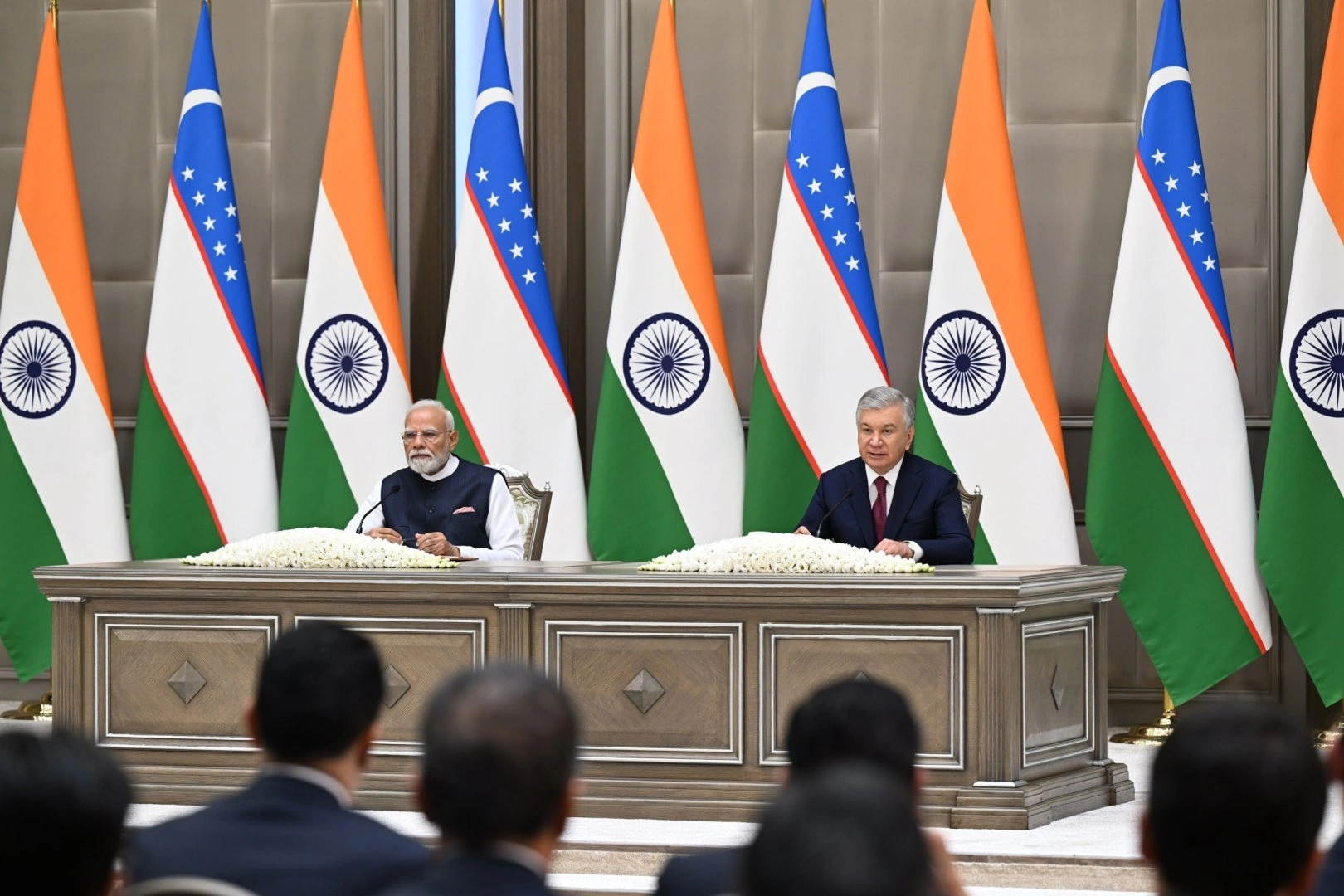
President Shavkat Mirziyoyev and Indian Prime Minister Narendra
Modi discussed the outcome of their talks during a meeting with
representatives of the media, highlighting the economic and
strategic significance of Modi’s visit to Uzbekistan.
Mirziyoyev described the visit as historic and said the talks
demonstrated the “sincere friendship, mutual respect and trust”
between the two countries. He also praised India’s achievements in
digital technologies, software and startups, areas that Uzbekistan
sees as increasingly important for its own economic
modernization.
Economic cooperation was a central focus of the discussions.
Bilateral trade increased 33% last year to $1.3 billion, and the
two leaders agreed to pursue a significantly higher trade target of
$5 billion by 2030.
A portfolio of key joint investment projects was also developed
during the visit, with specific agreements reached with several
major Indian companies. The two sides identified new growth areas
in energy, critical minerals, healthcare, pharmaceuticals,
electronics, machinery, jewelry manufacturing and agriculture.
“India is a reliable and promising strategic partner,”
Mirziyoyev said, emphasizing the country’s growing global influence
and economic and technological capabilities.
The two countries also agreed to maintain mutual support at
international and regional organizations, including the United
Nations, Shanghai Cooperation Organization, Non-Aligned Movement
and BRICS, as well as strengthen cooperation with countries of the
Global South.
People-to-people ties are also expected to expand. Four Indian
universities currently operate in Uzbekistan, while the Lal Bahadur
Shastri and Mahatma Gandhi centers continue their activities.
Uzbekistan’s 30-day visa-free regime for Indian citizens and 14
weekly flights between the two countries are expected to support
further growth in tourism.
The $5 billion trade target represents an ambitious effort to
more than triple current bilateral trade within four years.
Achieving it will likely require not only higher goods trade but
also substantial growth in investment, industrial cooperation and
services. The emphasis on critical minerals, energy and technology
could give the relationship a stronger economic foundation, while
India’s growing engagement provides Uzbekistan with another major
Asian partner as Tashkent continues diversifying trade and
investment ties. To translate the agreements into measurable
results, Mirziyoyev said Uzbekistan will prepare a comprehensive
“Road Map” for implementing the agreements reached during the
visit.
The broader figures also point to a relationship that is
expanding beyond traditional trade. In the first half of 2026, bilateral trade reached
$598.1 million, while Indian investment and loans for fixed capital
projects in Uzbekistan totaled $225.9 million. The presence of more
than 400 Indian-capital enterprises and the arrival of over 32,000
Indian tourists in Uzbekistan in the first seven months of the year
provide further evidence of growing commercial and people-to-people
ties. At the same time, the nearly $430 million trade deficit
highlights the need for a stronger Uzbek export presence if the
countries are to translate their expanding strategic partnership
into a more balanced economic relationship.