BAKU, Azerbaijan, September 1. The Bishkek
meeting shows that the peace process between Baku and Yerevan has
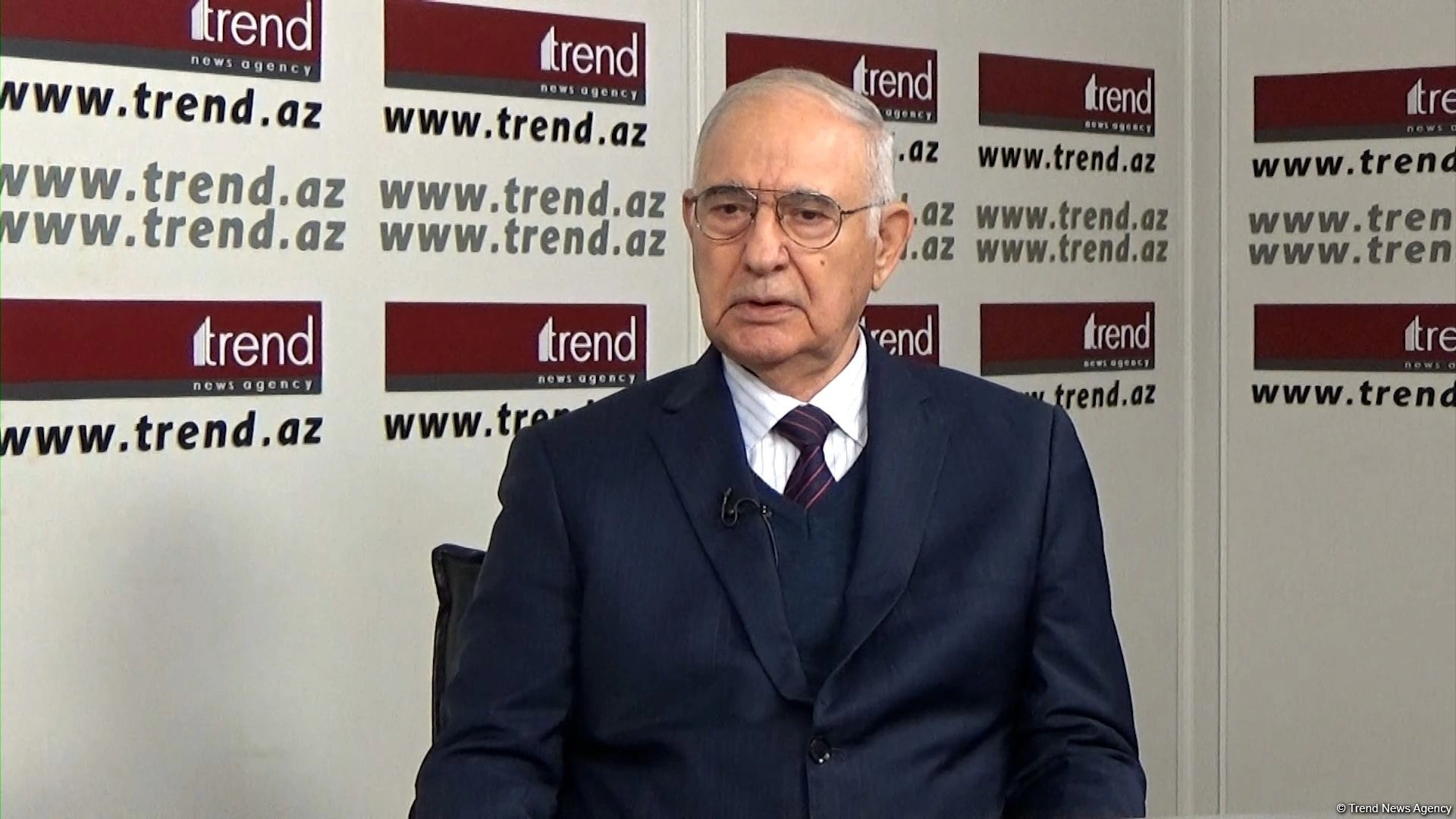
shifted to a practical stage, political analyst Azer Garayev told
Trend.
He said that the meeting between the President of the Republic
of Azerbaijan, Ilham Aliyev, and Armenian Prime Minister Nikol
Pashinyan in Bishkek is of great importance in terms of continuing
direct political dialogue in the process of Azerbaijan-Armenia
normalization.
According to Garayev, the Bishkek meeting should be assessed not
as a separate political event, but as a continuation of the direct
dialogue mechanism that has recently been formed between Azerbaijan
and Armenia.
"One of the main points is that Baku and Yerevan are expanding
the opportunities for direct discussion of the peace agenda. This
is important in terms of the parties determining the future of
their relations independently of the geopolitical interests of
external mediators. Direct dialogue can both accelerate
decision-making and allow for more operational discussion of issues
arising between the parties.
When assessing the political background of the Bishkek meeting,
it's also necessary to take into account the results of the Peace
Summit held in Washington on August 8, 2025. After the initialing
of the agreed text of the peace agreement, the main issue is the
practical implementation of the political agreements reached. That
is, the process no longer consists only of negotiations around the
text of the peace agreement. Now the main focus is on creating real
results of normalization.
In this regard, the export of Azerbaijani petroleum products to
Armenia, the transit of cargo from third countries through the
territory of Azerbaijan to Armenia, and the gradual formation of
trade relations between the two countries are of particular
importance. These can be assessed as real 'peace dividends'. As
people and business structures see the concrete economic benefits
of peace, the social and economic foundations of the normalization
process are also strengthened," the analyst noted.
Garayev pointed out that the expansion of economic and energy
cooperation can also affect the formation of mutual trust in
political relations.
"Long-term peace is not ensured only by political documents. It
must be backed by mutual economic interests, trade relations,
transport communications, and cooperation between business circles.
The expansion of direct contacts between Azerbaijani and Armenian
business representatives is especially important in this sense.
Business relations, unlike political relations, are built more on
mutual benefit and pragmatic interests. The fact that such
relations take on a sustainable character may make it more
difficult to reverse relations in the future.
Another important direction is the process of delimitation of
the state border. The continuation of the activities of the
delimitation commissions is necessary to strengthen the legal and
practical foundations of relations between the two countries. The
resolution of border issues based on agreed principles will serve
to minimize the risks of possible tension in the future. Therefore,
each concrete result achieved in the delimitation process should be
assessed as progress in the general peace process," he
explained.
The analyst revealed that one of the next important directions
is the opening of regional communications and practical issues
related to the implementation of the Trump Route for International
Peace and Prosperity (TRIPP).
"TRIPP should not be considered only as a transport link between
Azerbaijan and Armenia. The project has broader regional
significance. Its implementation can create new opportunities in
terms of diversifying East-West and regional transport relations,
ensuring unhindered connectivity between the main part of
Azerbaijan and Nakhchivan, and integrating Armenia into regional
economic projects. Here, it's important to move from political
statements to technical and practical discussions.
At the same time, it's not enough to conduct the peace process
only at the level of heads of state and governments. There is a
need to expand contacts between parliamentarians, experts, media,
and civil society representatives. Restoring trust between two
societies after decades of conflict is a long-term process. For
acceptance of the agreements reached at the level of political
leadership by societies and formation of peace as an alternative
perspective, dialogue channels between people should also be
created," he added.
Garayev emphasized that at the current stage, the most effective
format for Baku and Yerevan is to continue direct bilateral
dialogue.
"Recent experience shows that Azerbaijan and Armenia have the
opportunity to achieve concrete results through direct contacts.
The participation of mediators may be useful at some stages, but
the final peace must be based primarily on the political will of
Azerbaijan and Armenia because the parties that will implement the
conditions of this peace and live with its consequences are Baku
and Yerevan.
The main expectation in the post-Bishkek meeting is that the
political dialogue will be accompanied by concrete practical steps.
This includes continuing the delimitation process, resolving
technical issues on opening transport communications, expanding
economic and trade relations, and increasing business and public
contacts. Progress in these areas can create a more favorable
political environment for the signing of a final peace
agreement.
The main issue at present is the consistent implementation of
the agreements reached and the irreversible nature of the peace
process. If Baku and Yerevan can maintain the current dynamics and
expand practical cooperation, the Bishkek meeting can be assessed
as one of the important stages leading to the full normalization of
Azerbaijani-Armenian relations in the future," Garayev
concluded.