El Niño and La Niña are the warm and cool phases of the El Niño-Southern Oscillation (ENSO), the planet’s largest source of year-to-year climate variability. They periodically reshape rainfall across the tropics, contributing to drought in Australia, flooding in parts of Peru and weather disruptions worldwide. But scientists have long questioned whether global warming is amplifying these swings, the latest article by Arstechnica says.
A new reconstruction suggests that El Niño in the eastern Pacific has become unusually intense. Julie Cole, an environmental scientist at the University of Michigan, and colleagues reconstructed roughly 1,000 years of ocean temperatures using fossilised Galápagos corals, finding that modern variability is unprecedented in the record.
“We’ve been seeing some very strong El Niño events in the late 20th and early 21st century, and what we didn’t know was how unusual those are,” Cole said.
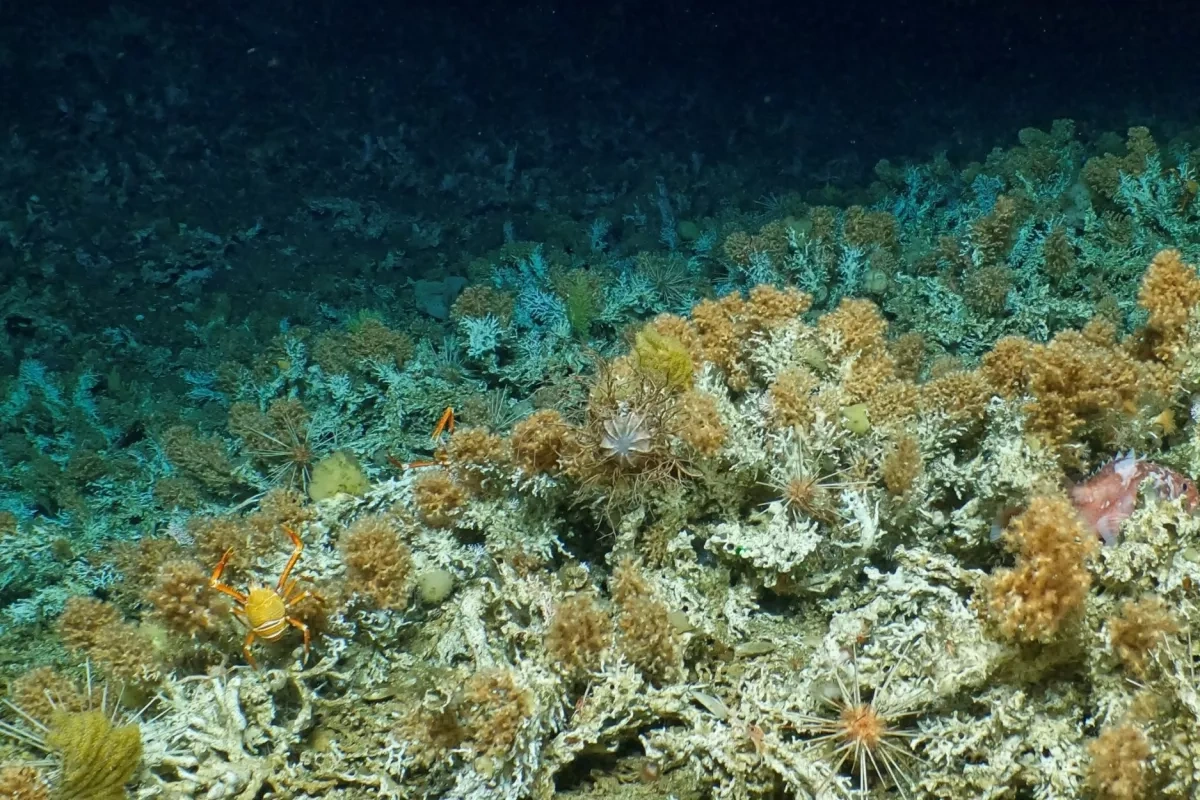
The Galápagos lie at the heart of the eastern Pacific ENSO pattern, where major events have their strongest effects. Corals grow about 1–2 centimetres a year, incorporating chemical signatures of the surrounding water into their calcium-carbonate skeletons. Researchers analysed strontium-to-calcium ratios and oxygen isotopes, which provide temperature information, sampling fossilized cores millimeter by millimeter to reconstruct monthly conditions.
Living corals provide records that can be checked against modern instruments, while dead coral heads can be dated using uranium-thorium techniques to within a few years, extending the record back centuries. The researchers assembled 28 discontinuous temperature series from five islands, reaching to about 1100 CE.
Since 1984, temperature variability has been 36.5% higher than during the preindustrial period from 1000 to 1850 and 16.2% higher than between 1851 and 1982. The researchers also found that the increase was driven specifically by stronger El Niño events.
“The events don’t look anything like what we see in the pre-industrial era,” Cole said. “That was exciting. And a little surprising, actually.”
Climate-model simulations that included natural influences such as volcanic eruptions and solar variability, but excluded human-caused greenhouse-gas changes, failed to reproduce the modern increase. The observed change fell outside modeled internal variability at a confidence level approaching 99%, supporting the conclusion that recent warming is responsible.
The central Pacific record is less clear, partly because oxygen isotopes there are strongly influenced by heavy El Niño rainfall. Models likewise predict that human-driven changes should emerge first in the eastern Pacific.
Global warming is already expected to intensify El Niño-related floods and droughts because warmer air holds more moisture. Stronger temperature swings could compound those effects.
Recent El Niño events have continued the trend. “It suggests that what we see is not a fluke,” Cole said, “but rather a new type of situation for El Niño, a new style of El Niño.”
“We are attributing that to warming, and we know what causes the warming, and it’s our use of fossil fuels,” Cole said. “One more warning sign here of what we’re facing in a warmer world.”
By Tamilla Hasanova