BAKU, Azerbaijan, September 2. Central Asian
countries put forward a range of practical proposals at the SCO
summit in Bishkek that could shape the organization’s economic,
transport and technology agenda for years to come.
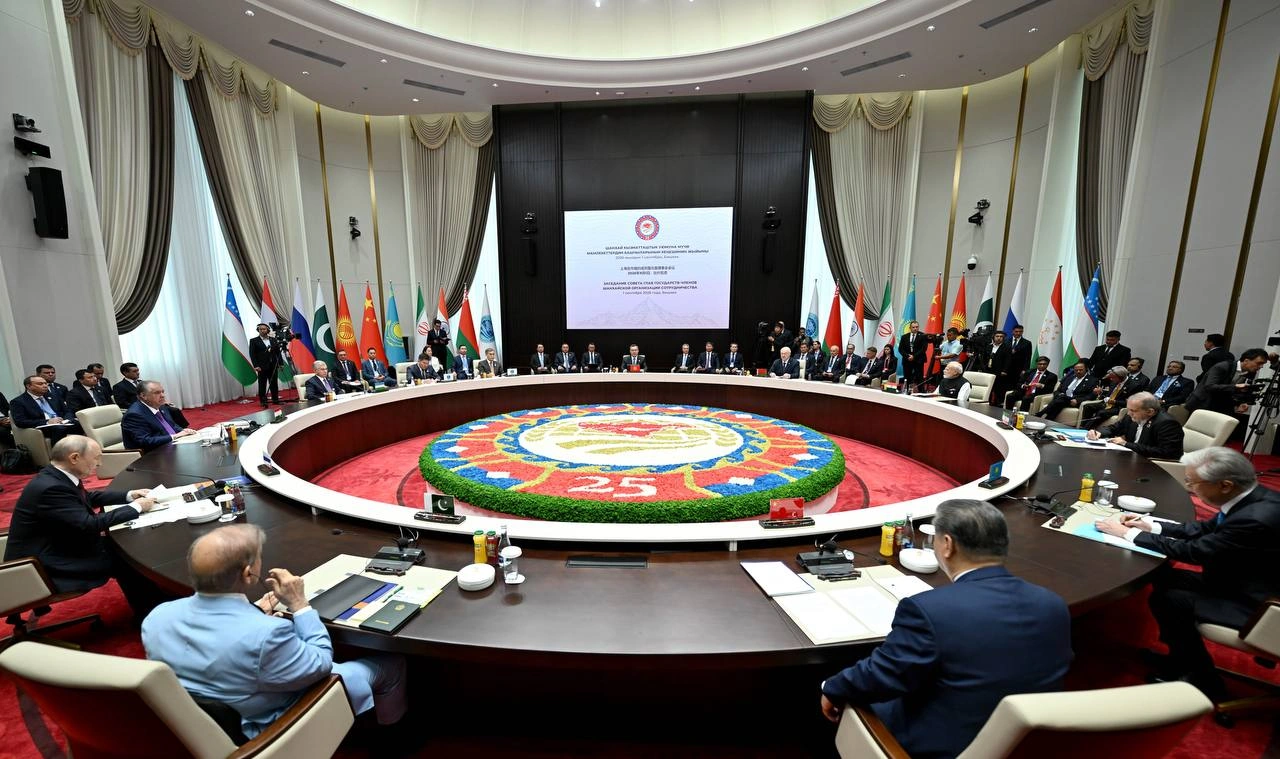
The Shanghai Cooperation Organization (SCO) summit and the SCO
Plus meeting held in Bishkek on September 1 showed that Central
Asian countries are seeking not only to participate in the
organization’s work but also to help shape its future
direction.
For Kazakhstan, Kyrgyzstan, Uzbekistan and Tajikistan, the SCO
is of particular importance. All four countries are founding
members of the organization, which was established in 2001 on the
basis of the Shanghai Five. Today, the region remains one of the
SCO’s key economic and geographic hubs, linking China, Russia,
South Asia, the Caspian region and Europe.
At the same time, the substance of the agenda is evolving. While
security and confidence-building were the main priorities for the
region in the organization’s early years, issues such as
infrastructure, investment, digitalization, artificial
intelligence, energy and sustainable development are now gaining
increasing prominence.
The scale of economic ties provides a solid foundation for this
shift. Trade among SCO countries rose from about $271 billion in
2021 to $674 billion in 2024. By 2025, intra-regional trade
accounted for roughly 16–17% of the organization’s members’ total
trade, up from around 11% in 2017.
Central Asia is also gradually strengthening its own
connectivity. Intra-regional trade among the five Central Asian
countries reached $12.3 billion in 2025, nearly doubling from 2020.
Meanwhile, China’s trade with Central Asian countries hit a record
$106.3 billion.
Against this backdrop, one of the summit’s key proposals was the
establishment of an SCO Development Bank. Member states called for
moving from years of discussions to the practical implementation of
the mechanism.
Kazakh President Kassym-Jomart Tokayev said: “We believe it is
advisable to direct the bank’s resources primarily toward
infrastructure, technology and industrial projects. If there is
consensus among the member states, Kazakhstan could host this
institution and its headquarters.”
For Central Asia, such a mechanism has direct practical
relevance. The region needs to modernize transport infrastructure,
expand energy capacity, deepen industrial cooperation and attract
capital. The Development Bank could therefore serve as a link
between the SCO’s economic ambitions and concrete cross-border
projects.
Uzbekistan proposed compiling a portfolio of priority projects
for the future bank in transport, energy, industrial cooperation
and digital infrastructure. Tashkent also proposed creating a
digital map of SCO industrial cooperation that could bring together
special economic zones, production facilities, markets and
logistics infrastructure across the organization’s member
states.
Uzbek President Shavkat Mirziyoyev linked these initiatives to
the SCO’s longer-term development. “Today, it is important not only
to address emerging challenges effectively, but also to have a
clear understanding of what we want the organization to look like
in the long term. The competitiveness of our countries will
directly depend on the SCO’s ability to offer practical solutions,”
Mirziyoyev said.
He proposed developing a long-term vision, “SCO 2040: A Space
for Common Development,” envisaging the free flow of investment,
technology and knowledge, the implementation of major
infrastructure and industrial projects, and stronger direct ties
among regions, businesses and people.
Digitalization is another major area of focus. Uzbekistan called
for the creation of an open, multilingual data corpus to support
the development of artificial intelligence. Kyrgyzstan proposed
building a common technology space to help narrow the digital
divide among member states.
Kyrgyzstan is also placing a strong emphasis on transport
connectivity. President Sadyr Japarov highlighted the
China–Kyrgyzstan–Uzbekistan railway as a strategic project that
could strengthen trade links between China and Central Asia.
Kazakhstan proposed developing an SCO Transport Connectivity
Strategy through 2035 and a unified digital transit platform.
Another proposal was to establish SCO cross-border trade zones
based on existing border trade centers, with streamlined
procedures, digital processes and modern payment solutions.
A broader logic is gradually taking shape: transport
infrastructure needs to be backed by financial instruments, digital
solutions and trade facilitation. This is particularly important
for Central Asia, as its location between major economic centers
makes transit one of the key potential drivers of future
growth.
Tajikistan brought another dimension to the agenda by linking
economic development with energy, agriculture and environmental
issues.
Tajik President Emomali Rahmon proposed exploring the
establishment of economic growth zones across the SCO space and a
Regional Digital Agro-Ecological Platform.
According to Rahmon, the expansion of the digital economy,
innovation and advanced technologies, including artificial
intelligence, supports the long-term development of SCO countries.
At the same time, Dushanbe called for renewed momentum in trade and
economic cooperation in industry, energy, transport and transit, as
well as agriculture. “Another priority remains trade and economic
cooperation,” Rahmon said.
Energy is particularly important for Tajikistan. Against the
backdrop of volatility in regional and global energy markets, the
president called for stronger coordination among SCO countries in
this area. This includes both conventional energy and green
transition projects.
Dushanbe also supported progress toward establishing the SCO
Development Bank, underscoring the overlap between Tajikistan’s
priorities and the broader economic agenda emerging in Central
Asia.
Tajikistan’s environmental proposals also extend beyond the
national agenda. Rahmon highlighted the strategic importance of
preserving glaciers, ensuring the sustainable use of water
resources, preventing land degradation and strengthening
environmental security.
For Central Asia, this is one of the most sensitive issues.
Water resources are directly linked to agriculture, energy and food
security, making climate change an increasingly important part of
the region’s broader economic agenda.
Security, meanwhile, remains another key pillar of Central
Asia’s engagement with the SCO. Kyrgyzstan called for accelerating
the launch of the Universal Center for Countering Security
Challenges and Threats and expressed its readiness to host in
Bishkek a Center for Combating International Organized Crime.
Tajikistan also emphasized the fight against drug trafficking
and transnational crime. “In this regard, a practical step would be
to launch as soon as possible the Anti-Drug Center and the
Universal Center for Countering Security Challenges and Threats,”
Rahmon said.
Kazakhstan proposed holding a Ministerial Conference on
Strategic Stability and Confidence-Building Measures in Eurasia,
focusing on reducing military risks, preventing an arms race and
avoiding dangerous incidents.
The Central Asian agenda at the summit, however, went beyond the
SCO’s internal mechanisms. At the SCO Plus meeting, regional
leaders also called for using the organization as a broader
platform for discussions on the future of the international
system.
Tokayev said: “Our common strategic task is to build a world
order in which the cult of force and confrontation gives way to a
logic of mutual responsibility, shared development and long-term
cooperation.”
Japarov, in turn, emphasized the importance of maintaining
dialogue among countries with differing positions. “A just world
order does not require all states to think alike. It requires
something else: that we respect each other’s choices, honor our
commitments and keep talking even in the most difficult times,” the
Kyrgyz president said.
Uzbekistan proposed expanding the SCO Plus format as a platform
for interregional dialogue, with a focus on sustainable growth,
advanced technologies, climate adaptation, human capital and
education. “I believe it is important to use the SCO Plus format to
promote cooperation in sustainable growth, advanced technologies,
climate change adaptation, human capital, accessible education and
youth development,” Mirziyoyev said.
Taken together, the proposals put forward by the four countries
indicate that Central Asia is gradually developing its own
practical agenda for the SCO. Kazakhstan is emphasizing finance,
security and transport connectivity; Kyrgyzstan is focusing on
infrastructure, digitalization and the fight against transnational
crime; Uzbekistan is prioritizing long-term economic and
technological development; while Tajikistan is highlighting energy,
agriculture, water resources and climate issues.
The next challenge is implementation. Around 28 documents were
signed at the summit, including the Bishkek Declaration, amendments
to the SCO Charter, provisions on new security mechanisms, plans
for developing port and logistics infrastructure and a green
technology corridor, as well as concepts for regional data centers
and artificial intelligence development.
This creates a foundation for moving from political statements
to concrete projects. For Central Asia, three areas are
particularly important: establishing an SCO financial mechanism,
developing transport corridors and building shared digital
infrastructure.
The region has the necessary conditions to pursue these goals.
It brings together SCO member states, is rapidly expanding trade
with China, is strengthening intra-regional ties and sits at the
center of emerging transport routes. Its contribution to the
organization’s development can therefore extend well beyond the
political sphere.
Central Asia can become one of the main sources of the SCO’s
practical agenda — from railways and trade zones to digital
platforms, energy, artificial intelligence and climate-related
projects.
If these initiatives are implemented, the region’s role in the
SCO will no longer be defined solely by its historical status as
one of the organization’s core regions. Central Asia could help
determine which SCO mechanisms will deliver results over the next
decade and how effectively the organization can translate its
growing economic potential into tangible cross-border projects.
This is perhaps the key takeaway of the Bishkek summit for
Central Asia: the region has presented the SCO not with a single
standalone initiative, but with a set of interconnected proposals
that, if pursued consistently, could form part of a new economic
and technological foundation for the organization.