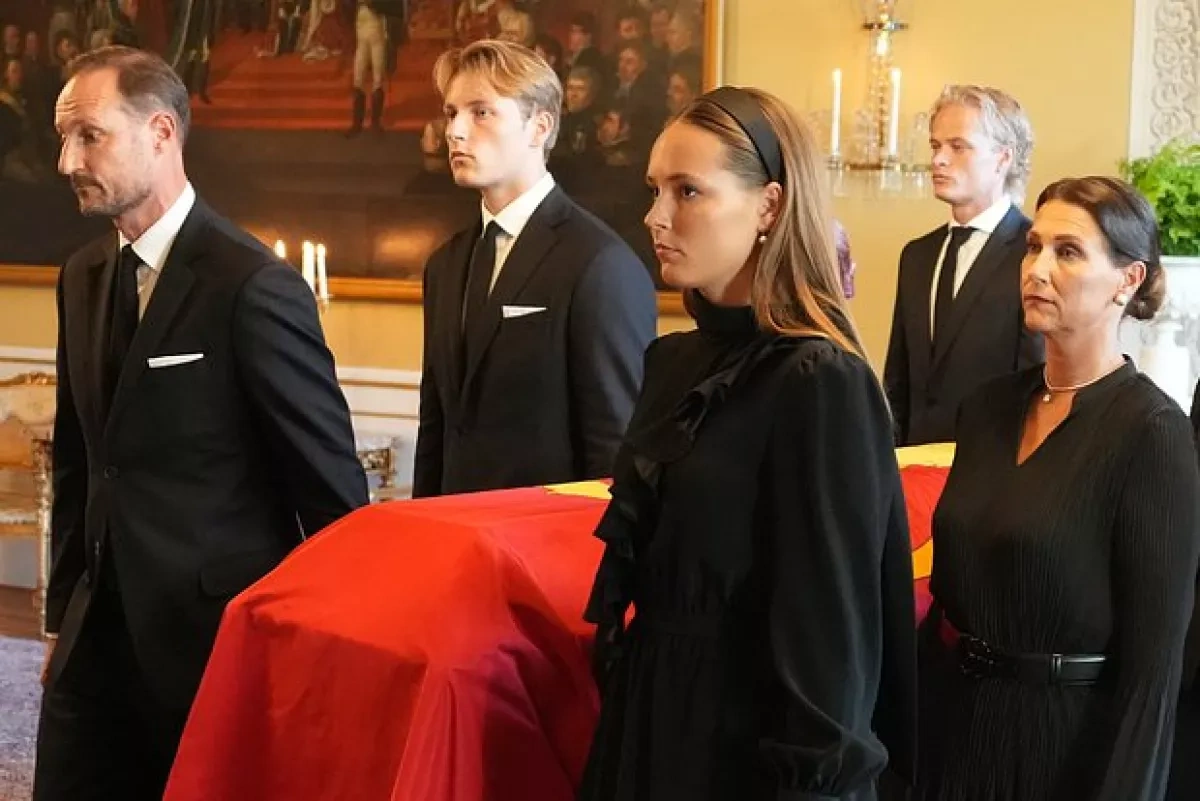
Marius Borg Høiby, the 29-year-old son of Norway's new queen, has been granted permission to leave house arrest to attend the funeral of the late King Harald V on September 9.
Høiby is serving a four-year prison sentence under house arrest with an ankle monitor after being convicted in June of two counts of rape and 32 other charges, including violence against a former partner, Caliber.Az reports, citing The Telegraph.
He has appealed the conviction and is awaiting a new trial.
Norwegian police confirmed on August 31 that Høiby had been granted leave to attend the funeral.
“The public prosecutor deemed that there were grounds to grant the requests for leave submitted by Hoiby in connection with the death,” police prosecutor Oda Karterud said. “Leave has been granted.”
Høiby was also permitted to attend the transfer of King Harald's coffin through the royal palace to the palace chapel. His mother, Queen Mette-Marit, joined the procession in her first official appearance since assuming the title.
King Harald died Friday at the age of 89. His son, Crown Prince Haakon, immediately succeeded him as King Haakon VIII.
Høiby, who was born from a relationship Mette-Marit had before marrying Haakon, was acquitted of two other rape charges.
The new king faces challenges in restoring confidence in the Norwegian monarchy, including scrutiny over Queen Mette-Marit's past association with convicted sex offender Jeffrey Epstein and the rape conviction of her son.
Mette-Marit has largely stayed out of the public eye following a lung transplant in June. She was diagnosed with pulmonary fibrosis in 2018.
Norwegians paid tribute to King Harald over the weekend, laying flowers, writing cards and lighting candles outside the royal palace in Oslo. Tens of thousands also attended memorial services at churches and cathedrals across the country.
Haakon is due to take the oath to Norway's constitution on Tuesday.
King Harald had been hospitalised in Oslo since mid-August with haemolytic anaemia, a condition involving the rapid destruction of red blood cells. He had faced increasing health problems in recent years and gradually reduced his official duties.
By Bakhtiyar Abbasov