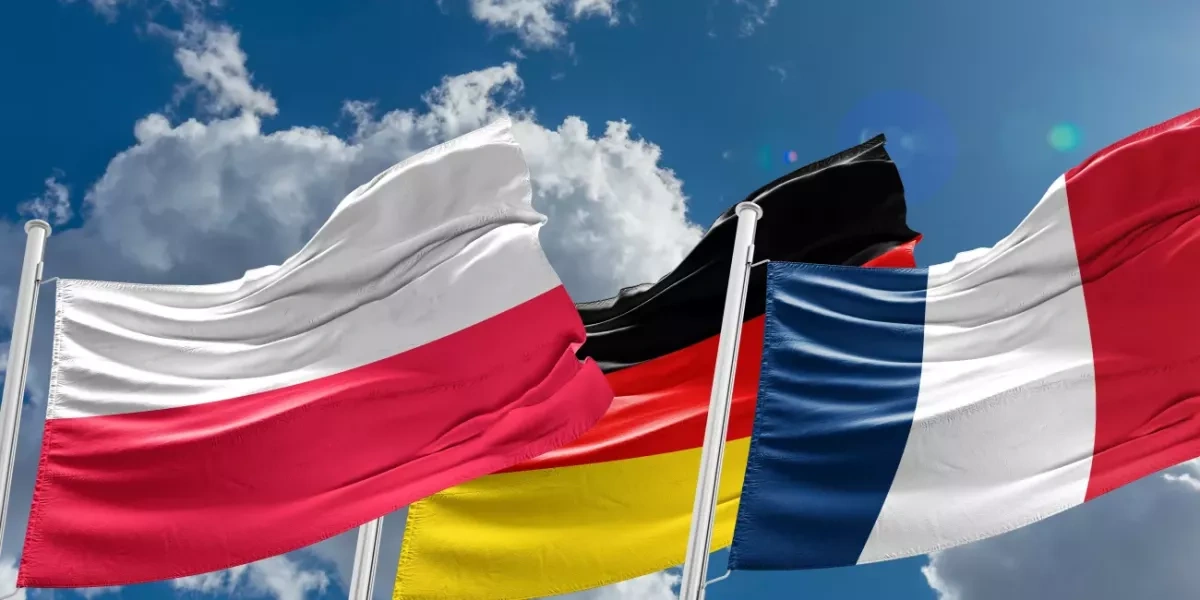
The foreign ministers of Germany, France and Poland are due to discuss coordinated responses to pressing international challenges on Thursday, September 3, with the meeting taking place in the Weimar Triangle format.
A spokesman for Germany’s Foreign Ministry in Berlin said the agenda would cover a broad range of issues, including hybrid threats, the situation in the Middle East, European Union enlargement and reform of the EU’s foreign policy.
The term “hybrid threats” refers to the use of a combination of military, economic, intelligence and propaganda measures to influence public opinion and exert pressure. State-sponsored cyberattacks are also considered part of this category.
German Foreign Minister Johann Wadephul met his European Union counterparts in the Irish town of Wicklow on Wednesday, including French Foreign Minister Jean-Noël Barrot and Polish Foreign Minister Radosław Sikorski.
In Ireland, discussions focused in particular on the response to the German government’s attribution of responsibility to Russia for an attempted attack at Leipzig airport on August 4.
The Weimar Triangle was established in 1991 as a forum for dialogue between Germany, France and Poland. It was created by the countries’ foreign ministers at a meeting in the central German city of Weimar.
The initiative initially focused primarily on supporting the integration of Poland and other Eastern European countries into the European Union and NATO.
By Tamilla Hasanova