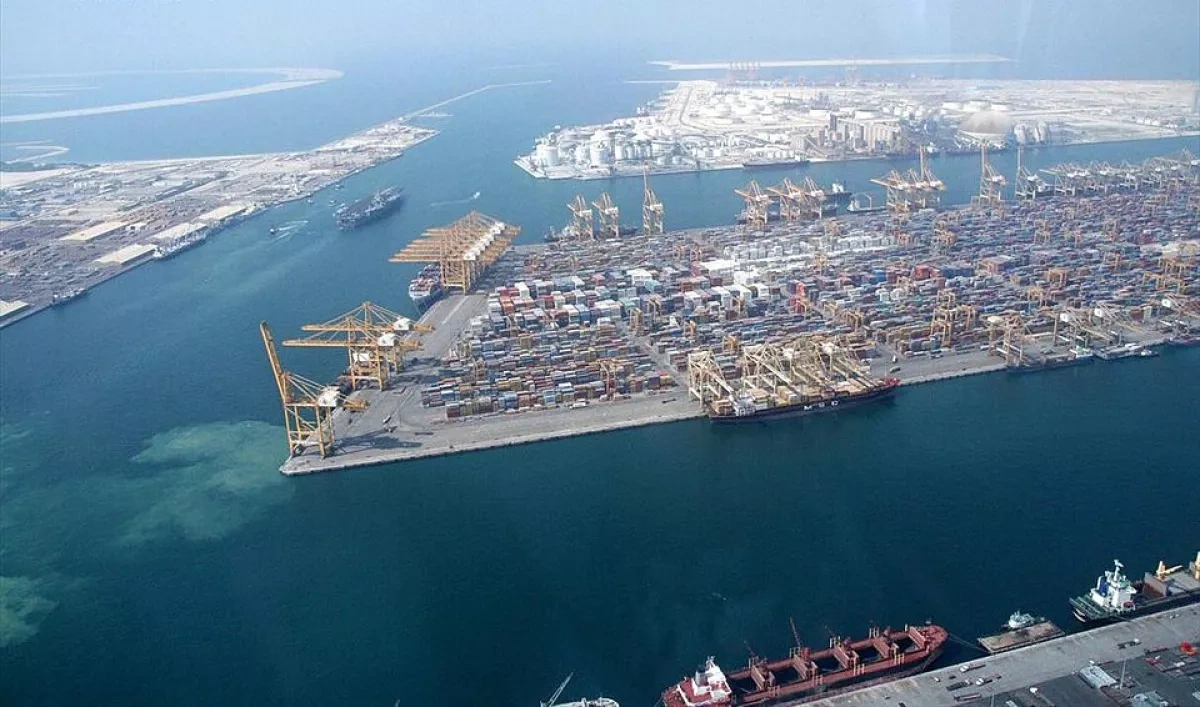
Dubai’s Jebel Ali port, a cornerstone of the emirate’s transformation into a global commercial hub, is facing its most serious disruption in decades as the US-Israeli war with Iran chokes shipping through the Strait of Hormuz, the Financial Times reports.
The disruption has exposed a strategic vulnerability at the heart of Dubai’s economic model. The “on-again, off-again scenario” for Gulf shipping poses “an existential risk” to the emirate, according to Eirik Hooper, senior associate at maritime consultancy Drewry and a former DP World executive. Jebel Ali, he said, had been “instrumental in the growth of Dubai and its business model”.
The port was conceived by Sheikh Rashid bin Saeed Al Maktoum, Dubai’s ruler in the 1970s and 1980s, building on the emirate’s long-standing role as a trading and communications link between India and Britain. Despite early criticism that the project was excessively ambitious, Jebel Ali became the centrepiece of a broader system combining ports, free trade and the movement of capital, goods and labour.
The creation of the Jebel Ali Free Zone in 1985 was pivotal, allowing companies to import components, manufacture or assemble goods and re-export them without the normal customs regime. The zone now hosts 12,000 companies. Nearby Al Maktoum airport is also being expanded under a $35bn project that is expected to make it the world’s largest by passenger and cargo capacity.
According to Adeel Malik, an Oxford development economics professor, this “Dubai model” enabled the emirate to build “a substantial non-oil economy”. Jebel Ali and its free-trade zone account for more than a fifth of Dubai’s GDP, while the port generated 30 per cent of DP World’s revenues last year.
Before the conflict, Jebel Ali’s four container terminals, equipped with more than 110 cranes, handled about 40,000 TEU a day, according to Lloyd’s List. Volumes subsequently fell by more than 90 per cent during the conflict’s early weeks and have barely recovered.
Clarksons data cited by the FT showed that only about 17 vessels a day transited Hormuz in the week to August 28, compared with roughly 135 before the war. The renewed hostilities threaten further disruption.
DP World says growth of 7-8 per cent annually at its other terminals and its global network of 60 ports in 80 countries have helped offset the decline.
The UAE is seeking alternatives. DP World plans two terminals in Fujairah, while other operators are expanding in Khor Fakkan and Oman’s Sohar. Yet logistics executives warn that Jebel Ali’s wider ecosystem of businesses and transport links cannot easily be replicated.
“This is really a turning point for Dubai and the UAE more than any other state,” Malik said.
Jim Krane of Rice University said Iran itself had an incentive to preserve access to Jebel Ali, describing Dubai as potentially “the second-most important city to the Iranian economy, after Tehran”.
“Dubai as we know it would not exist without Jebel Ali,” Krane said. “It’s just that important.”
By Tamilla Hasanova