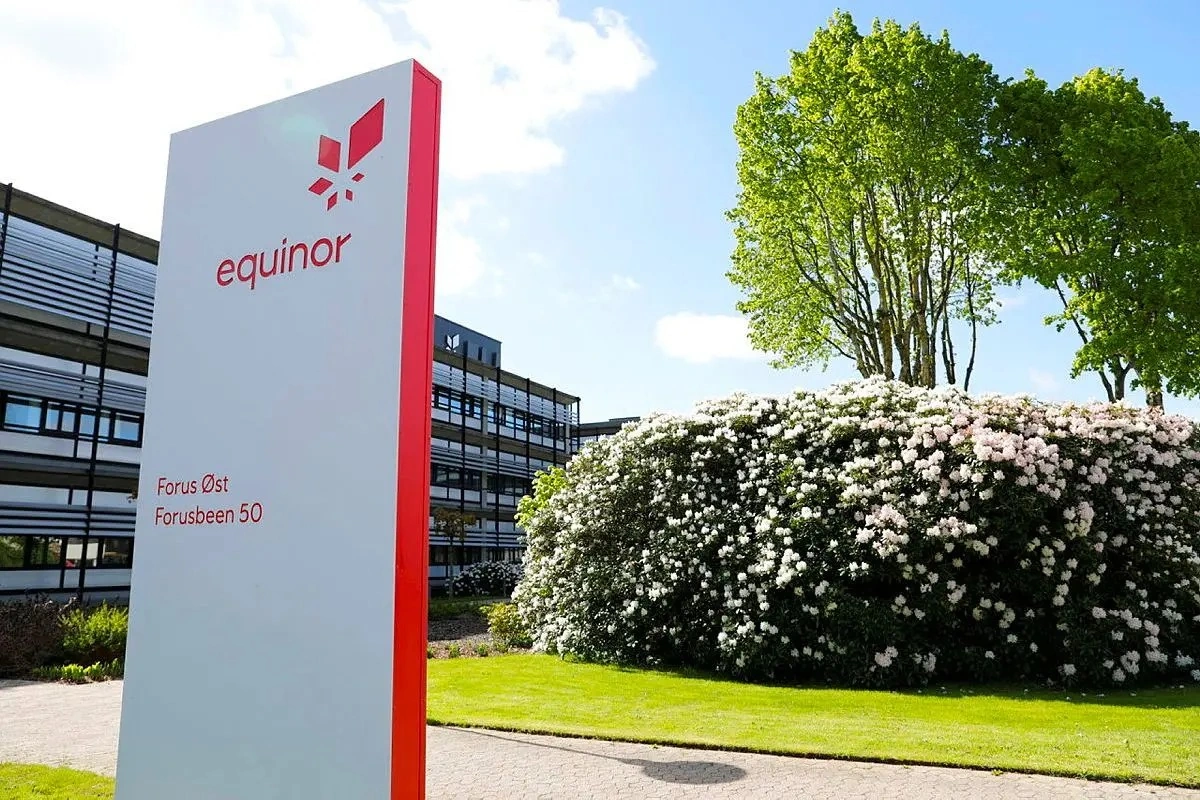
BAKU, Azerbaijan, September 22. Equinor and the
Global Centre for Maritime Decarbonisation (GCMD) have agreed a
five-year partnership to accelerate the deployment of alternative
marine fuels and other technologies aimed at cutting emissions from
shipping, GCMD said.
The partnership will combine GCMD's experience in conducting
real-world maritime trials with Equinor's position as a vessel
charterer, energy provider and developer of lower-carbon
solutions.
The organisations will focus on addressing technical and
operational barriers to the wider adoption of alternative fuels,
including biofuels, ammonia and methanol, while also examining
technologies that can reduce emissions from the existing shipping
fleet.
GCMD's work on alternative fuels centres on operational safety
and monitoring, reporting and verification of emissions. Its trials
are designed to generate operational data on the safe bunkering and
handling of new fuels, while its assurance work seeks to improve
confidence in fuel quantity, quality and greenhouse gas emissions
reductions.
Equinor brings experience from chartering vessels powered by
LNG, LPG and methanol, as well as testing biofuels and supplying
methanol to the maritime sector. The Norwegian energy company is
also involved in trials of ammonia as a marine fuel, including work
on the safety, regulatory and bunkering infrastructure needed for
its wider use.
"The partnership brings together GCMD's capabilities in
conducting real-world maritime pilots with Equinor's experience as
a charterer, energy provider and developer of low-carbon
solutions," the organisation said.
The companies will also explore technologies beyond alternative
fuels, including energy-efficiency solutions and onboard carbon
capture and storage (OCCS).
GCMD has conducted trials to quantify the real-world fuel
savings from technologies such as wind-assisted propulsion and has
worked on financing mechanisms intended to facilitate their wider
adoption. Its Project CAPTURED demonstrated an end-to-end system
for capturing and liquefying CO₂ onboard ships, generating evidence
that contributed to the recognition of captured CO₂ under the EU
Emissions Trading System.
Equinor's experience in carbon capture and storage extends to
the Northern Lights project in Norway, developed jointly with Shell
and TotalEnergies. The project transports liquefied CO₂ by ship to
an onshore terminal before sending it through pipelines for
permanent storage beneath the North Sea.
Northern Lights started storing its first CO₂ in 2025 and has an
initial annual storage capacity of 1.5mn tonnes. Its second phase
is planned to increase capacity to at least 5mn tonnes a year,
according to Equinor.
"Together, the organisations will leverage their complementary
expertise to help address technical and operational gaps in scaling
alternative marine fuels and supporting the development and uptake
of other maritime decarbonisation solutions," GCMD said.
Equinor has been developing lower-emission marine-fuel options
as part of its broader maritime strategy. The company has
experience with LNG, LPG, biofuels, methanol and ammonia, while its
maritime activities also include the development of solutions for
reducing emissions from vessels used in its offshore
operations.
The company has also supported the conversion of the offshore
supply vessel Viking Energy to operate on ammonia. Equinor has
described the project as a demonstration of ammonia's potential as
a marine fuel and part of efforts to develop practical solutions
for lower-emission shipping.
The partnership comes as shipping companies and fuel suppliers
face the challenge of moving from pilot projects to commercially
scalable alternatives to conventional marine fuels. That transition
requires not only sufficient supplies of low-carbon fuels but also
compatible vessels, bunkering infrastructure, safety standards and
reliable systems for measuring emissions reductions.
Through the five-year collaboration, GCMD and Equinor will seek
to combine their operational experience and pilot projects to help
close those gaps and support the broader adoption of maritime
decarbonisation technologies.