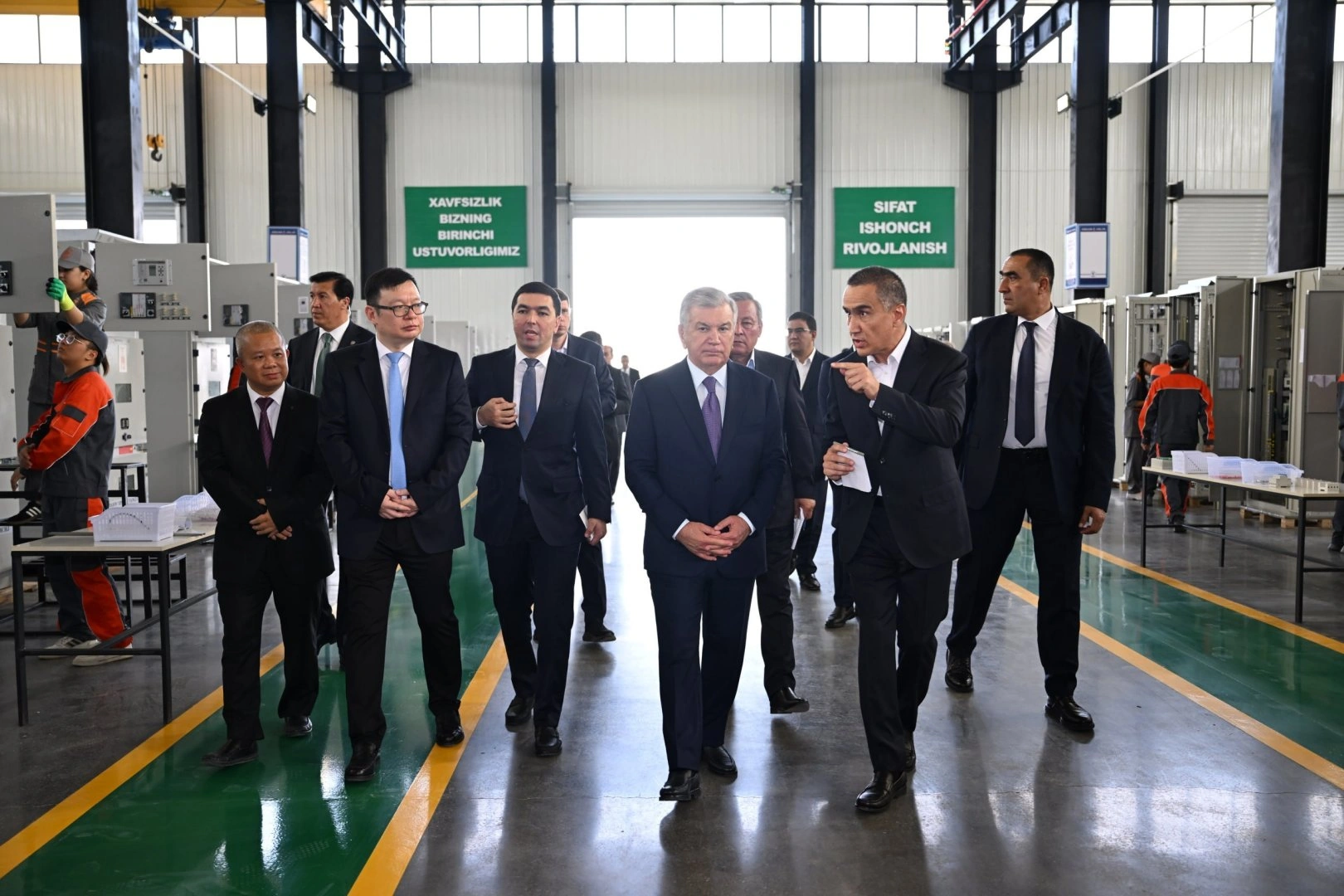
BAKU, Azerbaijan, September 23. Uzbekistan is
investing $20 million in a new facility in Andijan district to
produce equipment for small and micro hydropower plants, with the
project expected to reach full capacity in 2027 and create 200
jobs, was noted following the President Shavkat Mirziyoyev's visit
to Andijan region today.
This was reflected in the statement by the press service of the
Uzbek president.
The facility, Andijon Jinlun Yangi Energiya, is being
established under a presidential resolution issued on March 28,
2025, aimed at expanding the network of micro hydropower plants
across Uzbekistan’s regions.
The project is being financed entirely through foreign
investment and is designed to address growing demand for
specialized hydropower equipment in Central Asia, a region with
significant mountainous and water resources.
“The development of micro and small hydropower is an important
direction for making effective use of Uzbekistan’s water resources
and expanding clean energy generation,” the presidential
administration said.
Once operating at full capacity, the facility will produce 100
small hydropower plant complexes annually, with a total value of
about 70 billion soums (about $5.9 million), as well as
micro-hydropower equipment, machine tools and electrical
products.
Andijan region’s water resources, including the stable flow of
the Big Fergana Canal, provide favorable conditions for developing
micro and small hydropower projects.
The project is also designed to serve regional markets. The
company plans to export its products to Kazakhstan, Kyrgyzstan and
Tajikistan, with annual exports targeted at $3 million.
In addition to manufacturing equipment, the enterprise plans to
develop a number of micro hydropower plants in Andijan region. The
projects are expected to provide households and industrial
facilities with affordable and stable electricity while supporting
the expansion of renewable energy.
Small and micro hydropower plants are increasingly being used as
renewable energy solutions because they generally require shorter
construction periods and can generate electricity consistently
where suitable water flows are available.