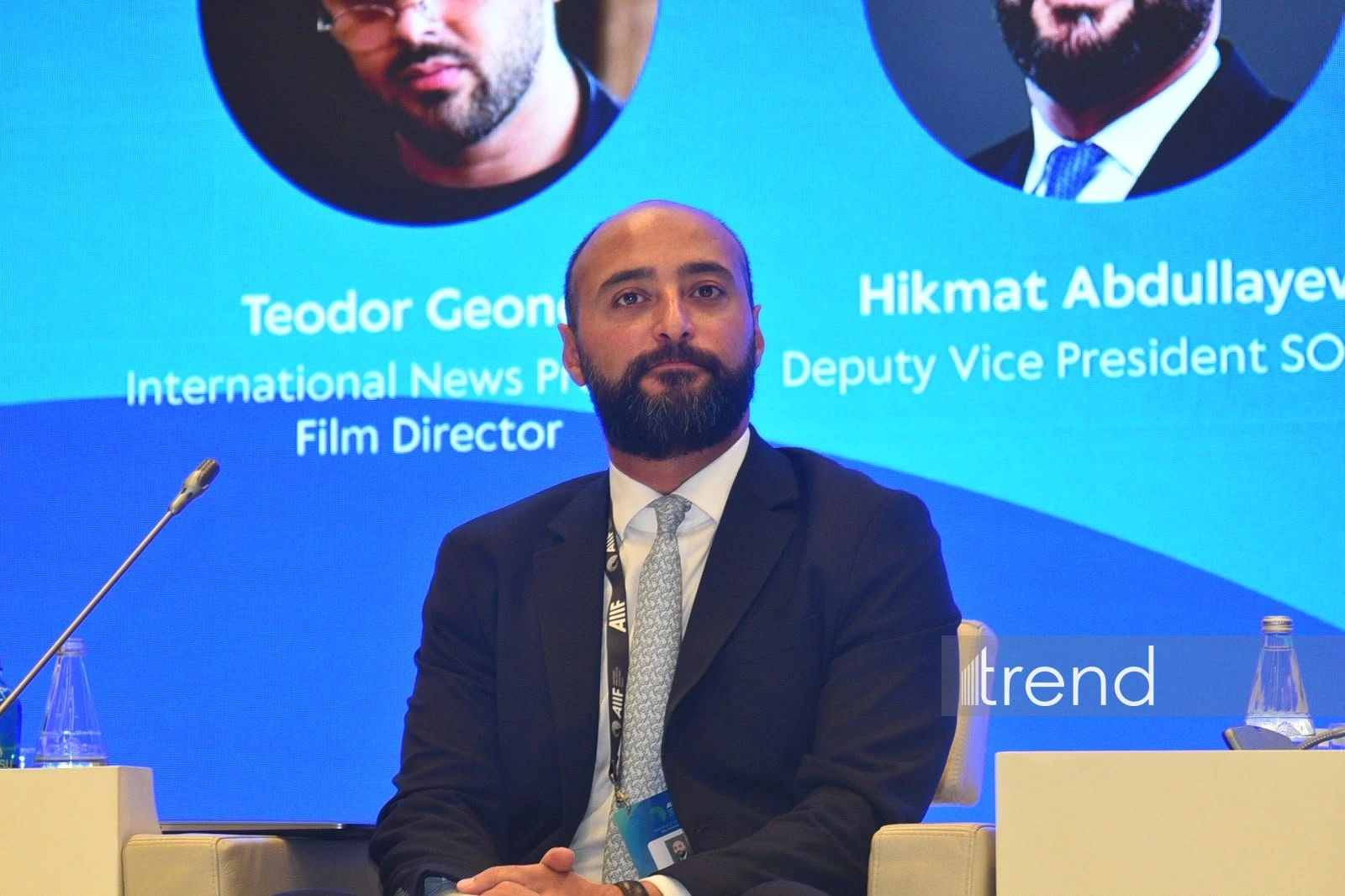
BAKU, Azerbaijan, September 26. The State Oil
Company of Azerbaijan (SOCAR) is focusing on reducing methane
emissions and addressing abandoned wells as part of its
decarbonization strategy, SOCAR Deputy Vice President for Energy
Transition, Environment and Decarbonization Hikmet Abdullayev said
on Saturday during the 2nd Azerbaijan International Investment
Forum in Baku, Trend's correspondent reports from the event.
According to him, one of SOCAR's key areas of work is the
implementation of the company's decarbonization strategy announced
at COP28.
"We have a number of corporate targets and public commitments
that we have undertaken, and we have also joined several
international initiatives. This has become one of the company's
main areas of work. One of the first areas SOCAR focused on was
reducing methane emissions. We have carried out a large number of
measurements in recent years, as well as extensive analysis of the
methane emissions indicators of our assets. We involved
international experts to support this process," he said.
Abdullayev noted that international experts were involved at
different stages, including conducting facility-level measurements,
analyzing collected data and developing conclusions based on the
results.
"At the same time, we created conditions, including at the
contractual level, to train specialists and build capacity within
SOCAR as part of this project. We used specialized SOCAR
subsidiaries and continue to develop this capacity," he said.
According to him, the company's goal is to conduct such
measurements and analyses independently and develop the necessary
expertise in Azerbaijan.
"We found that the country's capacity in this area is currently
limited. However, with the introduction of new EU methane
regulations, demand for such services is growing, as this is
becoming a compliance requirement. Therefore, the relevant
infrastructure needs to be developed," Abdullayev said.
He added that another area of SOCAR's work is the reassessment
and rehabilitation of abandoned wells that are no longer in
operation.
"SOCAR inherited a large number of such abandoned wells from the
Soviet period. There are thousands of them, both onshore and
offshore. Many infrastructure elements have been damaged, as
decades have passed since their construction, and some facilities
have collapsed. This project was announced as part of Baku Climate
Week. Its implementation is a complex task, as some wells are
surrounded by damaged subsea infrastructure, significantly limiting
access. Other wells are relatively easier to access, and we are
already carrying out rehabilitation work on them. The process
includes several stages: assessment, data collection, obtaining
permits, and then monitoring to verify the results of the work," he
said.
Abdullayev noted that SOCAR engages international experts for
hard-to-reach wells to obtain the necessary expertise and develop
solutions for specific sites.
"Our approach to involving international experts in such
projects is quite simple. We engage them on the condition that our
local teams and project participants receive training as the work
progresses. The idea is that at a certain point we will be able to
implement these projects independently," he said.