BAKU, Azerbaijan, September 28. For Kazakhstan,
developing relations simultaneously with China, Russia, Europe, the
US and other states is part of its foreign policy course. The
approach consistently promoted by President of Kazakhstan
Kassym-Jomart Tokayev involves developing international cooperation
without opposing one partner to another and maintaining ties with
different centers of economic and political power.
One of the most important areas of Kazakhstan's foreign policy
is the development of cooperation with China. Another step in this
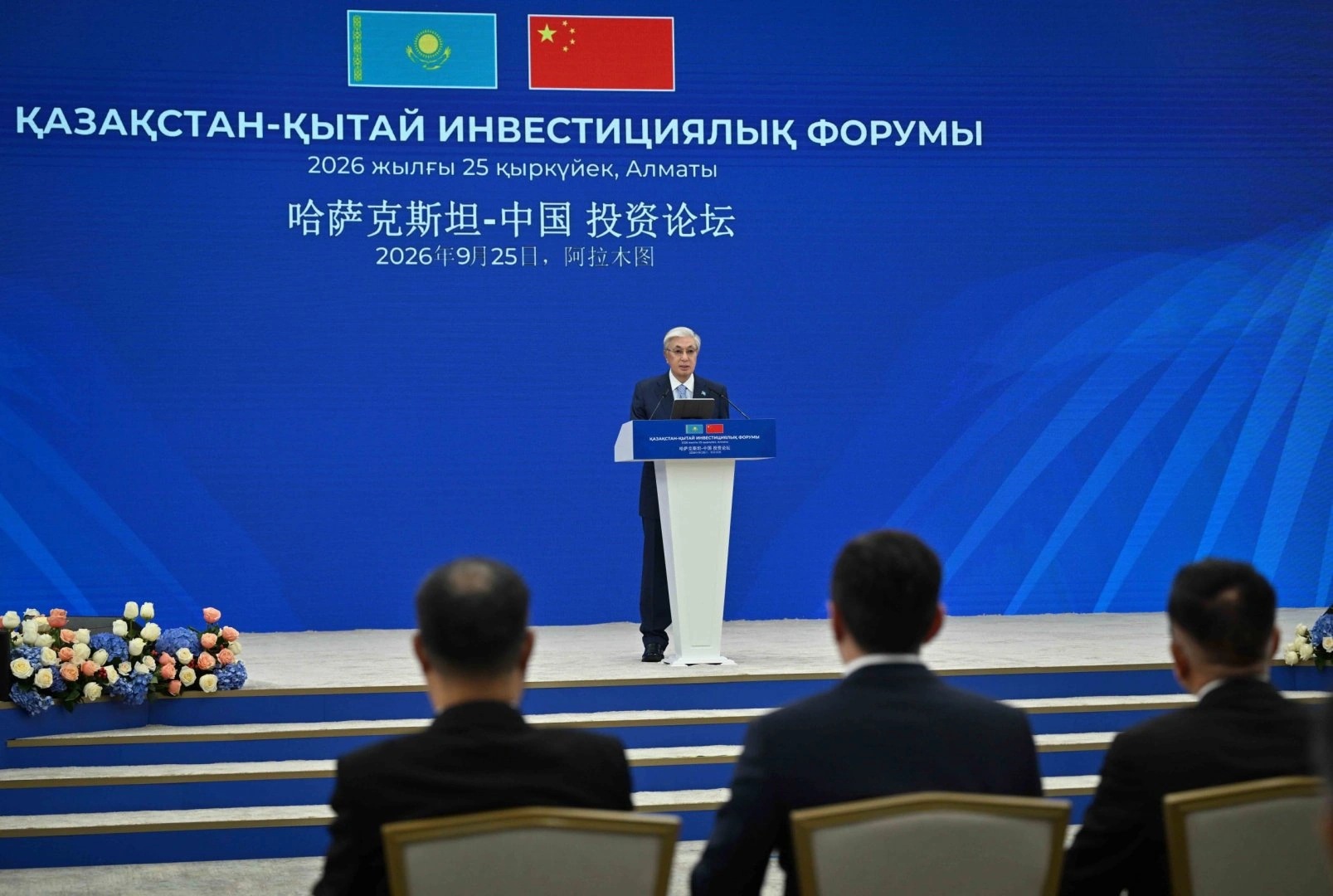
direction was the Kazakhstan-China Investment Forum in Almaty, held
on September 25. Following the forum, the sides signed 50
commercial documents worth $8.2 billion. The agreements cover the
energy sector, aluminum production, automotive industry,
fertilizers and investment cooperation.
According to data announced at the forum, trade turnover between
Kazakhstan and China approached $50 billion last year. The sides
expect to increase this figure to $100 billion in the future. A
portfolio of 260 joint industrial projects worth more than $62
billion has been formed.
In addition, during Tokayev's working visit to Shanghai on July
15-16, 2026, Kazakhstan and China signed more than 70 commercial
agreements worth a total of over $15 billion.
However, the development of the Chinese direction does not mean
a reduction in Kazakhstan's other foreign economic ties. On the
contrary, in recent months, Astana has also strengthened relations
with other major economies.
Speaking at the general debate of the 81st session of the United
Nations General Assembly, Minister of Foreign Affairs of Kazakhstan
Mukhtar Tleuberdi called multilateralism "an important component of
Kazakhstan's long-term political transformation."
"For Kazakhstan, multilateralism is a key tool for strengthening
trust, seeking common solutions and achieving concrete results for
our citizens and future generations," Tleuberdi said.
The expansion of Kazakhstan's cooperation with South Korea has
become a practical reflection of this approach. During Tokayev's
state visit to Seoul on September 14-16, 2026, the countries
upgraded the level of relations to a comprehensive strategic
partnership. The sides signed about 80 commercial agreements worth
a total of around $19 billion.
The European Union, in turn, is expanding cooperation with
Kazakhstan in critical raw materials, energy, transport and digital
technologies. During Tokayev's official visit to Brussels in June
2026, the sides signed commercial agreements and memorandums worth
a total of more than $12 billion. One of the important areas
remains the development of the Trans-Caspian Transport Corridor,
connecting Central Asia with European markets.
The US also remains an important source of investment and
technology for Kazakhstan. During Tokayev's visit to Washington in
November 2025, Kazakhstan and US companies signed 29 agreements
worth almost $17 billion in industry, energy, digitalization and
other areas.
In addition, Russia retains significant economic weight for
Kazakhstan. In May, Vladimir Putin visited Astana on a state visit.
As part of the visit, Russia and Kazakhstan signed a general
contract for the construction of the first nuclear power plant in
the republic, the Balkhash NPP, in Almaty region.
Kazakhstan's foreign economic ties are currently gradually
changing in terms of their content. Previously, a significant part
of cooperation was related to raw material trade and transit. Now
an increasing number of projects cover industrial production,
extraction of critical minerals, energy, technology and the
creation of new production facilities in the country.
The main result of this approach is the transition from
individual agreements to the formation of long-term projects in
different sectors of the economy. Their implementation will allow
Kazakhstan to strengthen its industrial base, attract technologies
and investment, while simultaneously expanding ties with various
centers of the global economy. Thus, multivectorism under Tokayev
is gaining practical content through concrete projects and economic
ties.