
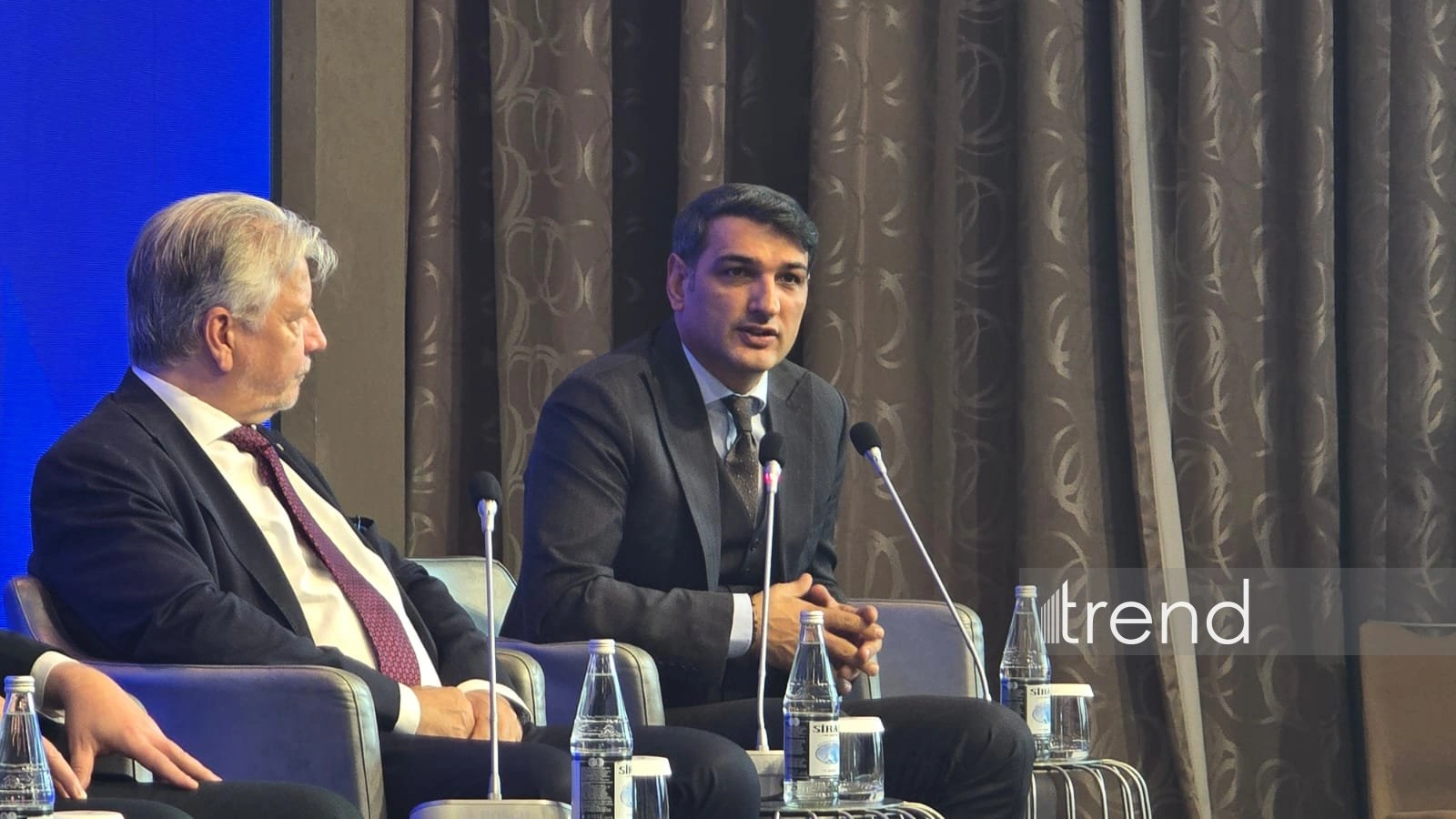
BAKU, Azerbaijan, October 6.
European and Chinese companies, as well as international logistics
operators, should be more actively involved in projects along the
Middle Corridor route for its development, in addition to building
physical infrastructure, Advisor to the Director of Baku
International Sea Port LLC under the Azerbaijan Railways CJSC,
Khudayar Hasanli, said at the German-Azerbaijani Strategic
Partnership and Connectivity Conference held in Baku on Tuesday,
Trend's correspondent reports from
the event.
He noted that the volume of cargo transportation along the
Middle Corridor is expected to increase over the next 3–5
years.
"Against the backdrop of the geopolitical situation, developing
the infrastructure is crucial to transforming the route into a more
reliable and resilient transport link. We plan to build a container
terminal to facilitate the transport of containerized cargo. At the
same time, the creation of a fertilizer terminal is envisaged.
Furthermore, there is a need to develop railways, terminals,
warehouses, and other key infrastructure facilities," Hasanli
explained.
According to him, alongside the Azerbaijani government's
investments in physical and core infrastructure, the governments of
other countries participating in the Middle Corridor must also
increase their investments in this area.
"However, it would be preferable to see key operators active in
European countries, as well as Chinese and other international
companies, contribute to the development of this corridor. This is
because the scope extends beyond just the countries the corridor
traverses; importers and exporters based in Central Asia, China,
and Europe are also key participants," he pointed out
Hasanli emphasized that more active involvement of the private
sector, particularly logistics companies and operators, in the
process could enable the pre-identification of market demands and
ensure that the corridor's development aligns with actual
needs.
"The real sector, operators, and logistics companies possess
greater insight into market demands. Their participation could pave
the way for other companies, including European operators, to enter
the Middle Corridor and contribute to its development," Hasanli
mentioned.
He added that the primary goal of developing the Middle Corridor
extends beyond merely establishing physical infrastructure.
"We aim to do more than just build physical infrastructure; we
are also working on coordination, planning, schedule alignment, and
ensuring efficiency. Collaborative action among all corridor
participants will enable it to become a more reliable and efficient
route," Hasanli stressed.


