BAKU, Azerbaijan, October 10. Sustainable
urbanization is an important dimension of Azerbaijan’s contribution
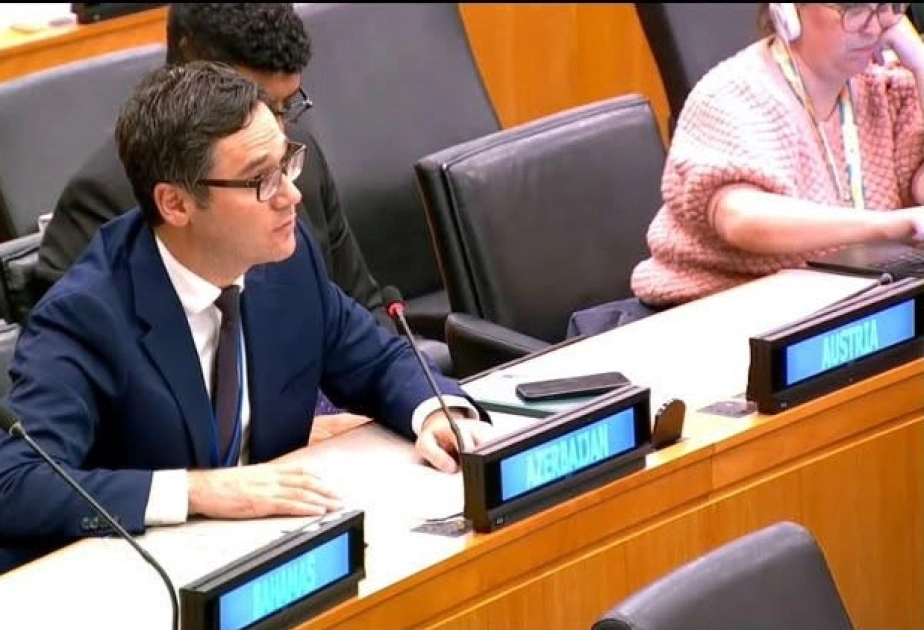
to the 2030 Agenda, said Elvin Ashrafzade, Azerbaijan’s Deputy
Permanent Representative to the United Nations, as he delivered a
statement at the joint general discussion on item 18: Follow-up to
the implementation of the New Urban Agenda and strengthening of the
United Nations Human Settlements Programme (UN-Habitat) and item
20: Groups of countries in special situations.
"The achievement of SDG 11 is central to the realization of the
2030 Agenda. As urbanization continues to shape societies and
economies, our ability to build inclusive, safe, resilient and
sustainable cities will be critical to achieving sustainable
development for all.
The Secretary-General’s report on the follow-up to the
implementation of the New Urban Agenda and the strengthening of
UN-Habitat reminds us that, while progress has been made,
significant implementation gaps remain. Strengthening policy
coherence, financing, capacity-building and partnerships will
therefore be essential to ensure that the New Urban Agenda delivers
tangible improvements in people’s lives. In this regard, we
recognize the importance of strengthening UN-Habitat’s capacity to
effectively deliver on its mandate.
We welcome the adoption by the General Assembly of the Political
Declaration to Renew Commitment and Accelerate the Implementation
of the New Urban Agenda. The Declaration provides renewed political
impetus to our collective efforts and underscores the importance of
turning commitments into concrete action at the national and local
levels.
Sustainable urbanization is an important dimension of
Azerbaijan’s contribution to the 2030 Agenda. Earlier this year,
Azerbaijan co-organized, together with UN-Habitat, the thirteenth
session of the World Urban Forum under the theme “Housing the
world: safe and resilient cities and communities”. Bringing
together participants from 176 countries, WUF13 placed the global
housing crisis at the centre of international urban policy
dialogue. It also featured the first Ministerial Meeting and the
inaugural Leaders’ Summit.
As the Secretary-General underscores in his report, the Baku
Call to Action of WUF13, developed through an extensive and
inclusive months-long global multi-stakeholder consultation
process, calls for an assertive, concerted and urgent response to
the global housing crisis and for accelerated implementation of the
New Urban Agenda through 2036.
The Call emphasizes that housing should be approached as part of
an integrated urban system, connecting land, infrastructure,
transport, public services and economic opportunity, while
highlighting integrated urban planning, climate resilience,
multilevel governance, adequate financing and meaningful community
participation.
The central importance of housing is also reflected in
Azerbaijan’s engagement in the intergovernmental process on
adequate housing. As co-chair of the Open-Ended Intergovernmental
Expert Working Group on Adequate Housing for All, Azerbaijan
attaches particular importance to adequate, affordable and
sustainable housing as a key component of inclusive urban
development and a critical enabler of progress towards SDG 11.
Urban development is also a national priority for Azerbaijan.
2026 has been declared the Year of Urban Planning and Architecture
by the President of the Republic of Azerbaijan, reflecting our
commitment to modern, sustainable and people-centred urban
development. Azerbaijan is advancing integrated urban planning and
sustainable and resilient communities, including in the context of
the Great Return to the territories liberated from occupation.
Our experience reinforces the importance of connecting sound
urban planning with infrastructure, resilience, housing and the
needs of communities. We believe that sharing such experiences
through platforms such as WUF can help turn global commitments into
practical solutions,” the Deputy Permanent Representative said.