BAKU, Azerbaijan, October 13.
Attempts to create artificial religious tensions over school
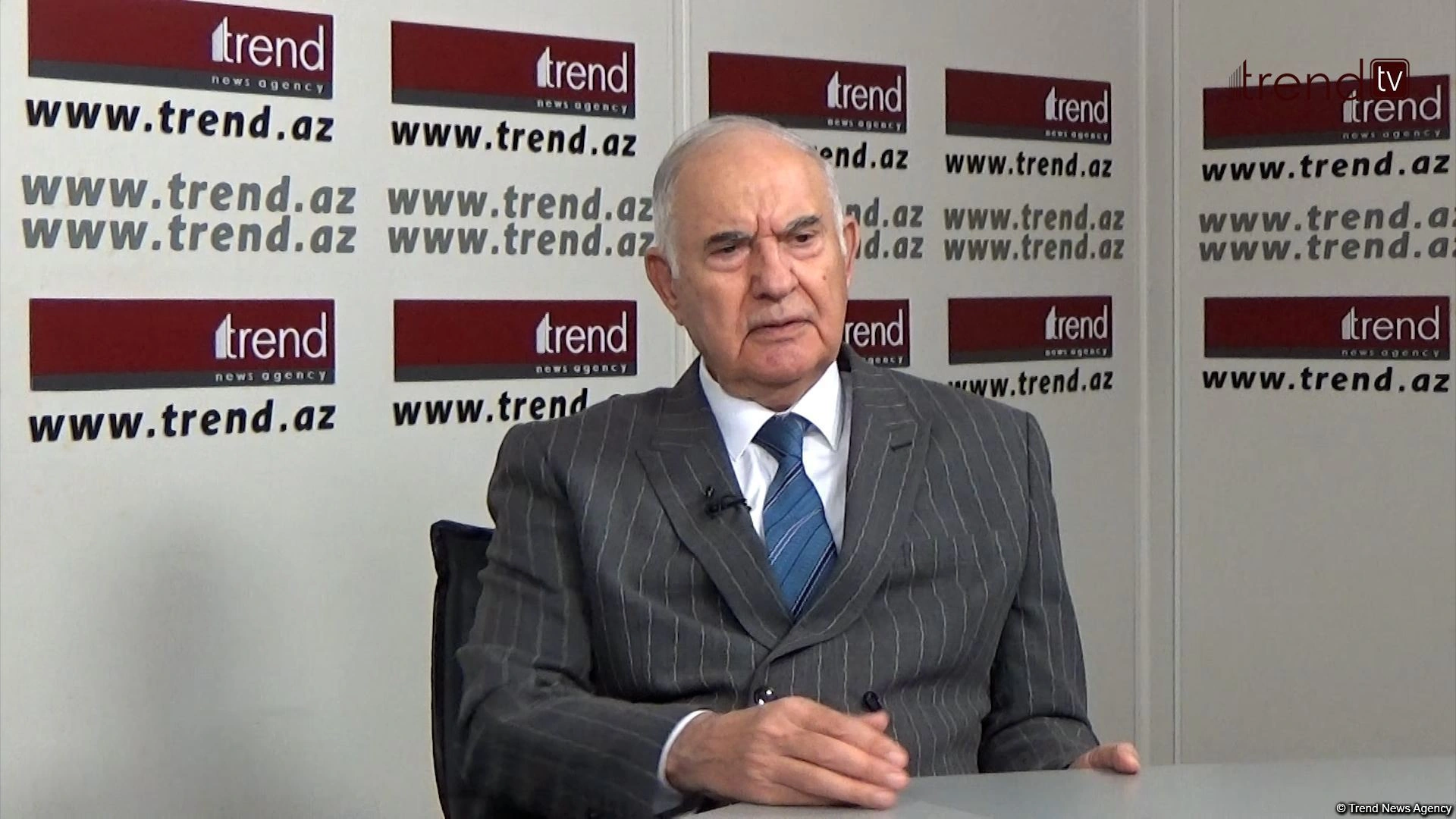
uniforms are unacceptable in Azerbaijan, political analyst Azer
Garayev told Trend.
According to him, discussions over the enforcement of school
uniform regulations in Azerbaijan have once again brought the
importance of the principle of secular education to the forefront.
The implementation of standardized dress codes in schools is not
merely a matter of appearance; it is also significant for
maintaining equality, discipline, and respect for shared rules
within the educational environment. Dragging this issue into the
realm of religious conflict not only creates artificial tension in
society but also increases the risk of children becoming
participants in an ideological struggle.
He noted that the decision signed by Prime Minister Ali Asadov,
regarding amendments to the "Descriptions of uniforms for students
of state general education institutions," which was originally
approved by Cabinet of Ministers Decision No. 96 dated March 17,
2022, is significant in this context.
"According to the amendments, the use of clothing elements that
violate the uniformity of the prescribed uniform, or that are
inconsistent with the principle of secularism in general education,
is not permitted. Parents are required to ensure that their
children comply with the established uniform requirements.
The essence of these provisions is to maintain a unified
approach within educational institutions. A school is a place where
children should benefit from equal educational opportunities,
regardless of their religious, social, or economic backgrounds. A
standard uniform is one of the means that helps reduce visible
differences and the perception of social discrimination among
students in this environment. Therefore, automatically framing the
enforcement of school uniform regulations as a move directed
against any religion or religious belief distorts the true nature
of the matter," Garayev noted.
The analyst added that the fact that Azerbaijan is a secular
state does not mean that religious values are rejected in
society.
"On the contrary, secularism entails the independence of state
governance and public institutions from religious influence, as
well as the protection of the rights of people holding diverse
beliefs. Schools are among the key public spaces where this
principle is applied.
The Islamic faith holds a significant place in the historical
and cultural life of Azerbaijan. Efforts undertaken in the country
regarding the construction and restoration of mosques, as well as
the preservation of religious and cultural heritage, demonstrate
that it is incorrect to judge the attitude toward religious values
solely based on isolated disputes. Under the directives and
initiatives of President Ilham Aliyev, new mosques have been built,
existing places of worship have been restored and reconstructed,
and consistent measures are being implemented to safeguard
religious and cultural heritage.
The state's approach to religious heritage and the dress codes
applied in general education institutions are distinct matters;
conflating the two can lead to misconceptions within society.
A particularly sensitive aspect of the issue is the involvement
of children in the ideological struggles of adults. School-age
children may have limited capacity to independently analyze social
and political events. Consequently, steering them toward a specific
stance through religious slogans, emotional appeals, and divisive
propaganda is a matter of particular concern. Attacks on schools,
threats, violence, or behaviors that jeopardize children's safety
cannot be justified by any religious or ideological stance," he
emphasized.
According to him, specific incidents involving school uniforms
should also be investigated from this very perspective.
One of the notable aspects of the unfolding events is the
attempt to incite societal conflict by exploiting religious
sensitivities. The involvement of radical groups, influenced by
external forces, in such processes, along with activities aimed at
undermining public stability and damaging educational institutions,
is a cause for serious concern. Targeting schools and creating
tension within the educational environment cannot be justified by
any religious or ideological stance.
Furthermore, the involvement of children in these conflicts
through religious slogans and emotional appeals is particularly
dangerous. When individuals with radical leanings exploit
children's religious sentiments and vulnerabilities to use them as
tools for their own agendas, it can harm both the children's safety
and their future worldviews. Turning religious values into
instruments for political or geopolitical objectives also damages
religion itself.
One of the fundamental goals of a secular education system is
for children to learn to respect diverse perspectives, abide by the
law, and live within the framework of public order.
Ultimately, discussions regarding school uniforms should not
serve to incite religious conflict, but rather be turned into an
opportunity to explain the essence of the principle of secular
education and to strengthen the culture of law within society.
While respecting Azerbaijan's religious and cultural diversity,
upholding uniform rules in schools also serves the shared interests
of the state and society.
Most importantly, children should not become participants in the
political and ideological struggles of adults; instead, they should
grow into independent-thinking citizens who develop within a safe
educational environment and determine their own futures," he
noted.