BAKU, Azerbaijan, October 14.
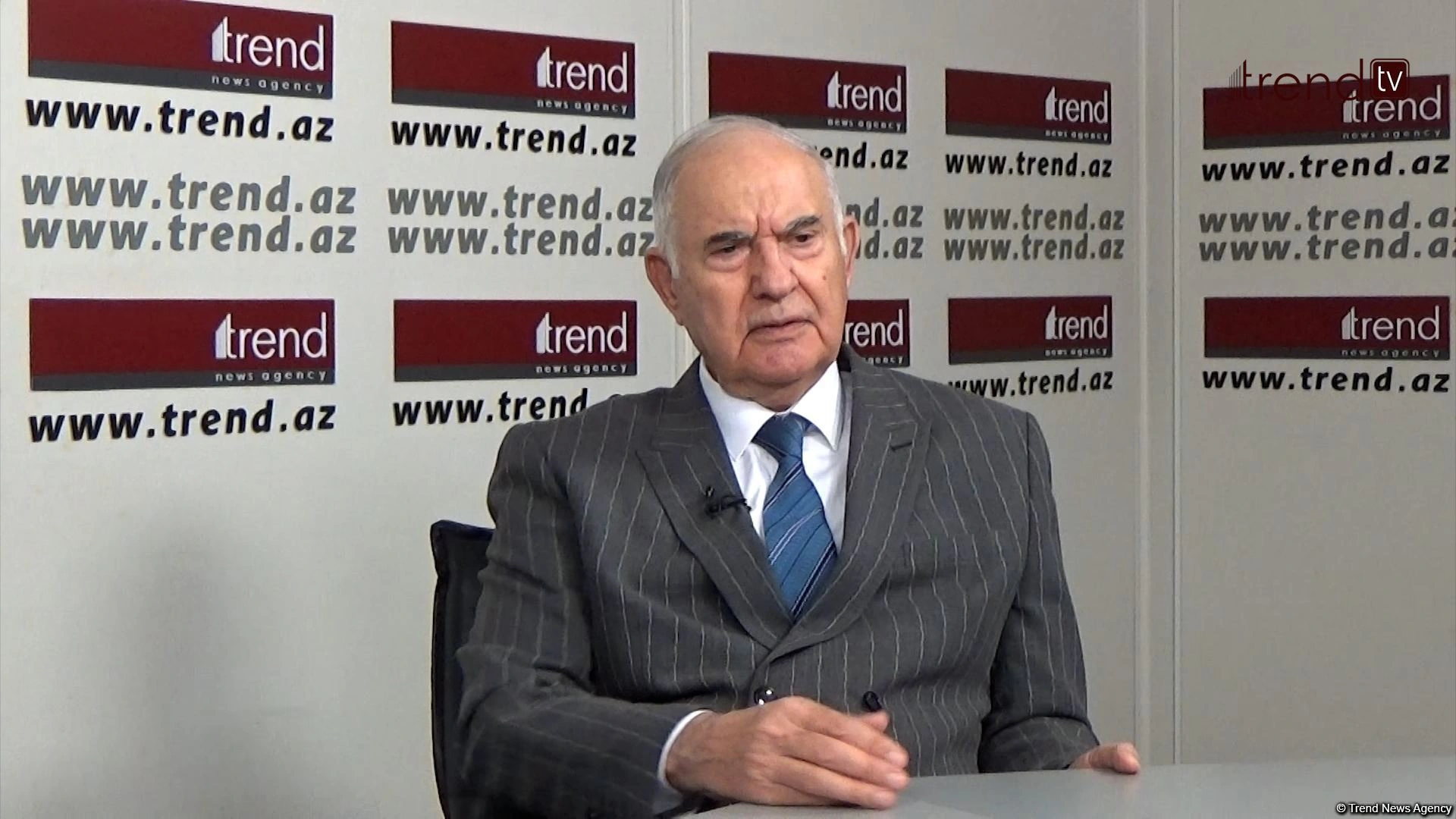
New opportunities are emerging for the expansion of cooperation
between Azerbaijan and Laos, political analyst Azer Garayev told
Trend.
According to him, there is political will and mutual interest to
elevate relations between the countries to a new stage. The
meetings held, the Joint Statement adopted, and the documents
signed during the official visit of the President of Laos,
Thongloun Sisoulith, to Azerbaijan on October 13 demonstrated the
countries' intention to expand cooperation. The primary goal now is
to translate existing political ties into concrete results in the
fields of economy, investment, transport, agriculture, and
education.
"During his meeting with the leader of Laos, President Ilham
Aliyev emphasized that the current level of economic relations
doesn’t reflect the potential of the two countries: “We would like
to see the same progress in the economic field as well. Today,
during the exchange of views, both sides expressed the shared
position that our current trade turnover does not reflect either
our potential or our intent.” This statement defines the primary
direction of cooperation between Baku and Vientiane. Political
dialogue and mutual support within international organizations form
a solid foundation for the relationship. In the next phase, it’s
essential to build economic ties upon this foundation, increase
direct contacts between business communities, and identify
favorable opportunities for mutual investment," the analyst
said.
According to him, diplomatic relations between Azerbaijan and
Laos were established in 1995. Over the intervening period, the two
countries have cooperated within international organizations, and
inter-parliamentary ties as well as contacts between their ruling
parties have developed. The establishment of friendship groups in
both countries also demonstrates an interest in expanding relations
across various areas.
"Thongloun Sisoulith's visit to Azerbaijan is of particular
importance for further strengthening these ties at the level of
heads of state. According to the President of Laos, this visit
opens up new opportunities to transform the traditional friendly
relations between the two countries into a broader partnership. The
history of bilateral relations is also noteworthy in this regard.
In his speech, the Lao leader recalled Heydar Aliyev's
participation in the 1986 congress of the Lao People's
Revolutionary Party and noted that the visit had left a positive
impression in his country. He emphasized the role of Azerbaijani
President Ilham Aliyev in upholding these traditions. Thus, the
relationship between the parties is not based solely on political
interests that have emerged in recent years; it is underpinned by a
history of long-standing contacts and a tradition of mutual
respect. This factor creates favorable conditions for extending
cooperation into new areas," the analyst noted.
Garayev pointed out that increasing trade turnover is one of the
most important areas for expanding economic ties between the two
countries.
"As President Ilham Aliyev pointed out, current figures don’t
align with the parties' actual capabilities. Consequently, relevant
instructions have been issued to intensify economic relations. The
Laos-Azerbaijan business forum, planned to be held in Baku, could
play a special role in this process. Such platforms enable
companies to gain a better understanding of each other's markets,
investment opportunities, and potential partners. Developing
economic ties requires not only political statements but also
concrete commercial projects, long-term contracts, and sustained
business contacts," the analyst said.
He emphasized that Azerbaijan's experience in investing abroad
could also be of interest to Laos.
"President Ilham Aliyev noted that Azerbaijan is ready to review
projects to be presented by Laos. The head of state emphasized that
Azerbaijani investments contribute to the creation of new jobs and
the development of production sectors. This approach demonstrates
an intention to build cooperation based on mutual benefit. Laos
could present projects to Azerbaijani investors in sectors such as
agriculture, energy, and mining. In turn, Azerbaijani companies
could evaluate these opportunities alongside local partners and
launch operations in economically viable areas," Garayev said.
According to him, the expansion of Laos's regional transport
connections could create additional prospects for cooperation with
Azerbaijan. During the meeting, discussions were held regarding the
development of railway links between Laos and neighboring
countries, as well as future opportunities for access to the
Trans-Caspian International Transport Route.
"Azerbaijan's transport and logistics infrastructure represents
a significant advantage in this regard. The country's port,
railway, and other transport projects facilitate the development of
freight transportation between Europe and Asia. Aligning
Azerbaijan's transit capabilities with the expansion of Laos's
regional railway network could pave the way for new cargo flows in
the future. To achieve this, the economic viability of routes,
transit times, and logistics costs must be thoroughly evaluated.
Cooperation in the agricultural sector has also been formalized
through official agreements; a Memorandum of Understanding has been
signed between the Ministry of Agriculture of Azerbaijan and the
Ministry of Agriculture and Environment of Laos. This document
creates opportunities for the exchange of experience and joint
initiatives in the agrarian sector. By defining specific areas of
cooperation, the parties can leverage beneficial practices
regarding productivity, production, and agricultural technologies,"
he explained.
Garayev also noted that education is another key area of
cooperation between the two countries. Recalling that more than two
thousand Laotian students studied in Azerbaijan during the Soviet
era, President Ilham Aliyev proposed reviving this tradition. The
President of Laos also supported increasing the number of students
studying at Azerbaijani universities and expanding scholarship
opportunities: "I truly believe that this official visit will
create an opportunity to task the relevant institutions of our
countries with discussing the results of the talks held at the
level of heads of state in greater detail." This statement
highlights the importance of following up on the visit's results
with practical steps. In the field of education, student exchanges,
joint programs, and scholarships can serve not only to train
specialists but also to strengthen ties between peoples. The
exchange of experience in mine action and the application of new
technologies are also among the areas where the parties can
cooperate," he noted.
The analyst stressed that the meetings between President Ilham
Aliyev and President Thongloun Sisoulith, the Joint Statement, and
the signed documents establish a political framework for the
development of Azerbaijan-Laos relations. The key task now is to
translate these agreements into concrete projects.
"Increasing trade turnover, exploring investment opportunities,
developing transport links, and pursuing joint initiatives in
agriculture and education could feature prominently on the future
agenda of bilateral relations. If the mutual interest demonstrated
at the political level yields tangible results in economic and
humanitarian ties as well, the friendly relations between
Azerbaijan and Laos could evolve into a broader and more practical
partnership," Garayev added.