
BAKU, Azerbaijan, October 14.
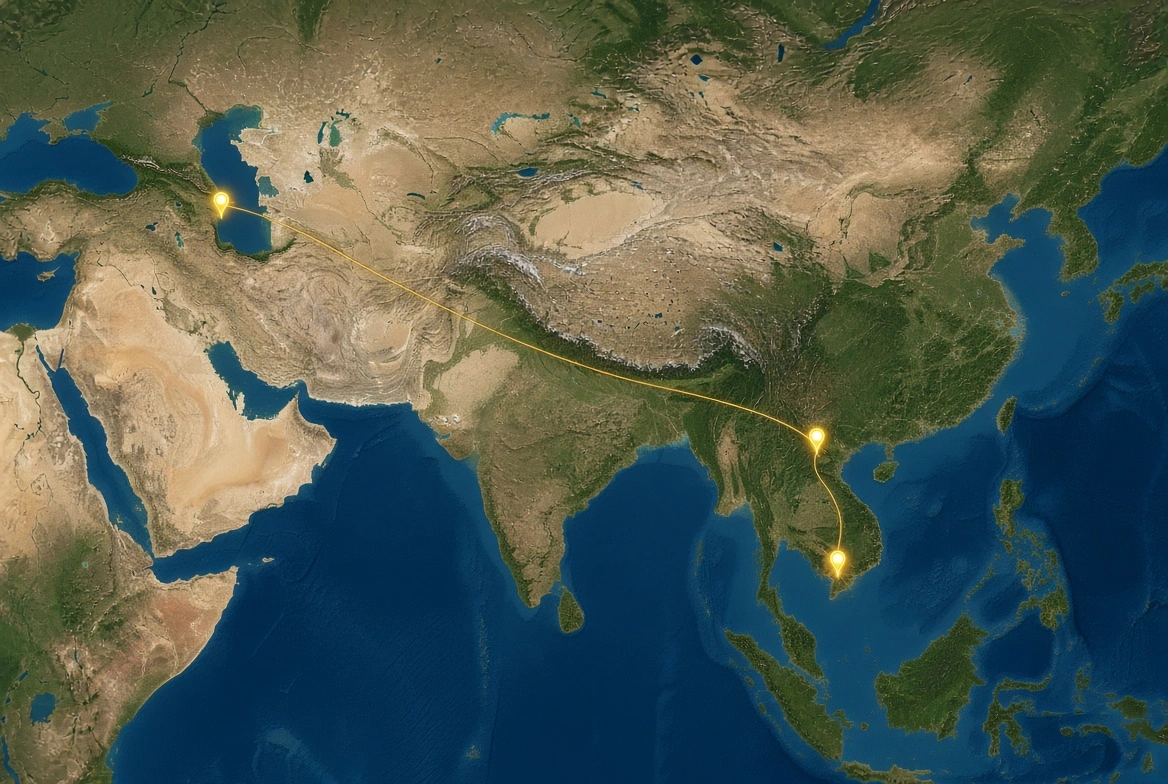
Azerbaijan’s energy resources, industrial potential, transport
infrastructure, and strategic location between Europe and Asia
create new opportunities for economic cooperation with Southeast
Asian nations. Recent meetings with Laos and Cambodia demonstrate
that these countries aren't content with merely maintaining
diplomatic ties; they are interested in expanding cooperation in
areas such as energy, investment, technology, and access to
regional markets.
For Laos, energy security represents one of the most concrete
avenues for cooperation with Azerbaijan. The country relies
entirely on imports to meet its oil demand and is considering oil
trade with Azerbaijan, as well as future collaboration in the oil
refining sector. Cambodia, meanwhile, could expand its economic
ties by leveraging Azerbaijan’s capabilities in energy,
petrochemicals, digital infrastructure, and investment. The desire
of both nations to attract Azerbaijani investors further
underscores the significance of the opportunities Baku offers as a
partner.
It would be incorrect to limit Azerbaijan’s advantages solely to
its energy resources. The country's experience with industrial
parks, the Alat Free Economic Zone, transport and logistics
infrastructure, and digital services creates opportunities for
foreign partners regarding production, investment, and market
access. For Laos and Cambodia, the key objective is to leverage
these opportunities to diversify their economies, attract new
investments, and strengthen their positions in regional trade.
However, the extent to which cooperation with Azerbaijan
benefits their economies depends on specific projects. For Baku,
these ties are significant in terms of expanding non-oil exports,
enabling Azerbaijani companies to enter new markets, and
reinforcing the country's position as a regional economic hub.
Shift from political ties to economic
outcomes
The recent upswing in activity regarding Azerbaijan's relations
with Laos and Cambodia highlights the growing importance of
Southeast Asia in the country's foreign economic agenda. Diplomatic
relations with Laos have spanned more than three decades, while
political dialogue with Cambodia is characterized by cooperation
and mutual support within international organizations. The primary
objective now is to elevate economic ties to a comparable
level.
During the visit of Lao President Thongloun Sisoulith to Baku on
October 13, discussions focused on expanding economic cooperation
and addressing issues related to trade, investment, energy,
agriculture, and transport. Noting that current trade relations
between the two nations don’t fully reflect their potential,
President Ilham Aliyev stated: "Today, during our
exchange of views, both sides agreed that the current volume of
bilateral trade reflects neither our potential nor our intentions.
Therefore, instructions were issued to intensify economic
cooperation, including efforts to increase bilateral
trade."
According to President Ilham Aliyev, the Laos-Azerbaijan
business forum held in Baku can be considered a significant step in
this direction.
"I informed Mr. President that, should the Lao
side present specific projects to Azerbaijani investors, we would
be very interested in examining them," President
Ilham Aliyev stated.
This statement defines the primary economic objective facing
Azerbaijan-Laos relations: complementing the progress achieved in
political ties with tangible results at the business level. The
Azerbaijani side expects Laos to present specific projects suitable
for potential investors. This approach is based not merely on the
general promotion of investment, but on the selection of
initiatives that are viable for both financing and
implementation.
A similar approach exists in relations with Cambodia. During
meetings held in Baku on October 12, attended by Cambodian Prime
Minister Hun Manet, an agreement was reached to establish a joint
working group to explore practical aspects of trade and investment
cooperation. President Ilham Aliyev explained the purpose of this
mechanism as follows: "We definitely also need to
see what we can do on the trade and investment
track.
We discussed these opportunities at length and
established a joint working group, which will concentrate on the
practical aspects of our trade and investment cooperation. So,
there are a lot of opportunities; the only obstacle could be
distance, but in today's world, it's not a big problem. Another
obstacle is the lack of information, and we need to close that
gap."
This approach also defines the role of business forums. Such
events provide a starting point for companies to get to know one
another, but sustained cooperation is shaped by market research,
the selection of partners, financing, and the drafting of
contracts.
What does Azerbaijan's regional position
offer?
Azerbaijan's potential significance for Laos and Cambodia stems
from its location between Europe and Asia, its access to the
Caspian Sea, and its participation in the Middle Corridor. The
country's transport infrastructure creates opportunities to
establish connections with markets in Central Asia, the South
Caucasus, Türkiye, and Europe. By leveraging these advantages,
Southeast Asian companies should not view Azerbaijan merely as a
consumer market; they can also consider it a potential production
and trade hub for accessing a broader geographic region.
At a business forum held with Cambodia, a representative of the
Azerbaijani delegation, Yusif Abdullayev, highlighted opportunities
for cooperation in the non-oil and gas sectors of the economy.
"Today, Azerbaijan is strengthening its position as a vital
transport, logistics, and economic hub connecting Europe and Asia.
At the same time, we are actively working to diversify the economy,
particularly by developing the non-oil and gas sectors," he
said.
This approach brings two key priorities to the forefront for
Azerbaijan. The first is to expand local production capabilities by
attracting foreign companies to the country's industrial and
economic zones. Secondly, the aim is to expand access for
Azerbaijani companies to new markets and increase the export of
non-oil products.
Companies from Laos can explore investment opportunities in
Azerbaijan's industrial parks and the Alat Free Economic Zone.
Meanwhile, discussions with Cambodia have highlighted the Aghdam
Industrial Park, the Araz Valley Economic Zone, energy,
petrochemicals, agrotechnology, and digital infrastructure as
potential areas for cooperation.
At the same time, opportunities for Southeast Asian companies to
access regional markets via Azerbaijan should not be assessed
solely based on geographical location. Factors such as product
delivery costs, transit times, customs procedures, standards, and
cargo volumes must be compared against alternative routes.
Therefore, linking the Middle Corridor with Laos and Cambodia
should be viewed not as a fully established transport chain, but
rather as a prospect to be evaluated from a commercial
standpoint.
Energy and raw material processing take center
stage in cooperation with Laos
Laos has shown interest in expanding cooperation with Azerbaijan
across several sectors, including energy, oil trade, the mining
industry, agriculture, and logistics. The country's lack of direct
access to the sea and its desire to expand regional transport
connections are also key factors in establishing economic ties.
Vanthana Nolintha, a representative of the Lao National Chamber
of Commerce and Industry, stated that his country wishes to explore
opportunities for cooperation with Azerbaijan in the energy sector.
According to him, Laos relies entirely on imports to meet its oil
demand; the country is considering oil trade with Azerbaijan and,
at a later stage, cooperation in the field of oil refining. This
interest presents an opportunity for Azerbaijan to expand the
geography of its energy exports. However, Laos's dependence on oil
imports does not in itself guarantee that supplies from Azerbaijan
would be commercially competitive. Factors such as transportation
costs, alternative suppliers, delivery routes, and the terms of
long-term contracts will determine the economic viability of any
potential cooperation.
Another promising area is the processing of raw materials and
the production of high-value-added goods. Representatives from Laos
have noted the existence of licensing restrictions on new mining
projects in the country, while also highlighting opportunities for
processing operations through partnerships with licensed local
companies. For Azerbaijani firms, this represents an area worth
exploring, encompassing not only raw material supply but also
technology transfer, the establishment of processing facilities,
and the development of local production.
In the agricultural sector, there are opportunities for
cooperation regarding the storage, packaging, processing, and
export preparation of products. Azerbaijan's experience can help
increase the value-added of products manufactured in Laos, while
Laos's agricultural potential can assist Azerbaijani companies in
exploring new products and markets.
The exchange of a Memorandum of Understanding on agricultural
cooperation on October 13 establishes an institutional foundation
for this effort. However, the economic impact of the memorandum
will be measured by specific projects, product groups, and trade
agreements.
How significant is Laos's transport strategy for
Azerbaijan?
A key aspect of Laos's economic strategy is transforming the
landlocked nation into a regional transport and logistics hub. A
railway link connects the country to China's transport network,
while new connections with neighboring countries aim to expand
access to regional markets.
In an interview with Trend, Executive Vice President of the Lao
National Chamber of Commerce and Industry, Tanongsinh Kanlagna,
highlighted the geographical positions of the two countries as
complementary advantages. "Azerbaijan connects the Caspian Sea,
Central Asia, and Europe via the Middle Corridor, while Laos aims
to become a regional transit hub. How can we better link these two
'bridges' for the benefit of our countries, neighboring states, and
the regions as a whole?" he noted.
This perspective outlines a key direction for potential
cooperation. The expansion of Laos' connections with regional
transport networks could create additional opportunities for
Azerbaijani companies to find partners in Southeast Asia. At the
same time, routes passing through Azerbaijan could be explored as
an alternative for delivering Lao products to Western markets.
However, for these routes to be commercially viable, logistics
companies must compare transit times, tariffs, border procedures,
and cargo volumes. Therefore, while the development of regional
transport links offers significant potential, actual economic
outcomes depend on the establishment of concrete shipments and
contracts.
Manufacturing cooperation with Cambodia and
ASEAN market
The underlying rationale for economic ties with Cambodia differs
somewhat from that of cooperation with Laos. Cambodia’s
manufacturing and agricultural sectors, young workforce, and access
to the ASEAN market make it a potential production and trade
partner for Azerbaijani companies. For its part, Azerbaijan can
offer opportunities in energy, petrochemicals, logistics,
agricultural technologies, and digital services.
Approximately 80 Azerbaijani companies and 16 representatives
from 12 Cambodian companies participated in the Azerbaijan-Cambodia
Business Forum held in Baku on October 12. The sectors represented
included banking and financial services, tourism, information and
communication technologies, energy, real estate, agriculture, and
water management.
Cambodian Prime Minister Hun Manet noted that economic relations
are still in their early stages and emphasized the importance of
strengthening cooperation through concrete projects.
"The next step is to translate the agreements reached into
concrete actions and identify avenues for cooperation that yield
tangible results," he said.
This approach highlights a key prerequisite for potential
collaboration in manufacturing, investment, and services.
Azerbaijani companies could explore opportunities to establish
production facilities in Cambodia, partner with local enterprises,
and introduce products to regional markets. Similarly, Cambodian
companies could evaluate options for accessing markets in the South
Caucasus, Central Asia, and other nearby regions by establishing
production operations in Azerbaijan.
President of the Cambodia Chamber of Commerce and Chair of the
ASEAN Business Advisory Council, Neak Oknha Kit Meng, identified
mutual investments, energy, artificial intelligence, and technology
transfer as promising areas for cooperation. He also proposed that
Azerbaijan open a full-fledged embassy in Phnom Penh and consider
establishing direct air links between the two countries.
These proposals highlight the importance of overcoming
information and contact gaps to expand business ties. While direct
air connections could facilitate business travel and tourism, their
economic viability depends on factors such as passenger demand,
flight load factors, and the commercial interests of airlines.
Similarly, although opening a diplomatic mission could streamline
relations, increasing trade requires active cooperation between
companies.
Another opportunity for Azerbaijan lies in the exchange of
expertise regarding digital services and public administration.
Interest in the ASAN Khidmet model could pave the way for exploring
cooperation in areas such as the organization of public services,
digitalization, and enhancing service accessibility. However,
translating this into tangible results requires identifying
specific areas of application and local needs.
Agreements and business environment: legal
foundations of cooperation
The expansion of economic relations with Laos and Cambodia
depends not only on market opportunities but also on the legal and
institutional conditions facing investors. Contract enforcement,
taxation rules, profit repatriation, and administrative procedures
play a crucial role in corporate investment decisions.
Work is currently underway on an agreement with Laos regarding
the promotion and mutual protection of investments. Signing such a
document could be significant in terms of protecting investor
rights and clarifying dispute resolution mechanisms. However, the
practical impact of the agreement will depend on its specific
provisions and the actual investment projects undertaken.
As for Cambodia, a framework agreement on trade and economic
cooperation, as well as an agreement on the avoidance of double
taxation and the prevention of tax evasion with respect to taxes on
income, have already been signed. Eliminating double taxation helps
establish clearer tax rules for companies engaged in cross-border
economic activities and reduces the risk of the same income being
taxed in both countries. However, the practical implementation of
the agreement depends on its entry into force and the completion of
relevant procedures.
Drafting a separate agreement on the promotion and mutual
protection of investments represents the next step in the legal
framework for cooperation with Cambodia. It's important to
distinguish the status of this document from that of agreements
already signed; the investment protection agreement cannot yet be
presented as a fully established legal mechanism.
A memorandum on agricultural cooperation and an agreement on the
mutual visa exemption for holders of service passports were also
exchanged with Laos. These documents lay the groundwork for
facilitating ties in the respective areas. However, the visa waiver
for service passports should not be construed as a general
visa-free regime applicable to all citizens.
It’s also important to establish a sustainable mechanism for
business forums with both countries. The Lao side has proposed
creating a joint business council or working group, continuing work
on investment and tax agreements, and arranging reciprocal visits
by business delegations. Meanwhile, an agreement has been reached
with Cambodia to establish a joint working group on trade and
investment issues.
The value of these mechanisms will depend less on the frequency
of meetings and more on their concrete outcomes; new contracts,
joint ventures, export orders, and implemented investment projects
serve as the true indicators of cooperation.
Key challenges facing economic
potential
Expanding cooperation with Laos and Cambodia is of interest for
the development of Azerbaijan's non-oil sector and the
diversification of its export geography. However, several key
constraints must be taken into account when assessing this
potential.
The first is logistics costs. Freight transport between
Azerbaijan and Southeast Asia may require the coordination of
various modes of transport and transit routes. Therefore, factors
such as delivery times, insurance, port and transit fees, customs
procedures, and backhaul cargo opportunities must be compared for
each product.
The second aspect involves gathering market intelligence and
identifying business partners. Companies may struggle to make
investment decisions without sufficient information regarding
market demand, the competitive landscape, local regulations, and
potential partners in the target market. Consequently, business
forums should be complemented by market research and the
establishment of enduring connections between companies.
The third aspect is translating political agreements into
economic outcomes. While framework agreements, memoranda, and
investment incentives lay the groundwork for cooperation, they do
not automatically boost trade volumes. Achieving this requires
projects with secured financing, long-term purchase agreements,
local partnerships, and clear implementation schedules.
The fourth aspect concerns product suitability for the market.
Quality, safety, certification, and rules-of-origin requirements,
applicable to food, agricultural products, and industrial goods,
directly impact export opportunities. Cooperation among chambers of
commerce, government agencies, and export promotion organizations
in this sector can reduce market entry costs for companies.
Ultimately, such cooperation should yield mutual benefits for
both parties. The activities of Azerbaijani companies in foreign
markets shouldn't be limited to the sale of raw materials or
isolated contracts; they should also encompass areas such as local
production, processing, technology exchange, and human capital
development. This approach can help foster more sustainable
economic ties.
Next stage depends on specific
projects
The political will and initial institutional mechanisms required
to expand Azerbaijan's relations with Laos and Cambodia are already
in place. Opportunities for cooperation with Laos in areas such as
energy, oil trade, raw material processing, agriculture, and
logistics are currently under discussion. Regarding Cambodia, the
focus is on manufacturing, energy, digital technologies, trade
facilitation, and prospects for accessing the ASEAN market.
These two countries could serve as complementary partners in
expanding Azerbaijan's economic reach into Southeast Asia. Laos
offers potential through its raw material processing capabilities
and regional transport links, while Cambodia presents opportunities
via its manufacturing sector and regional market connections. For
its part, Azerbaijan can share its expertise in energy, industry,
logistics, and digital services with these nations.
However, the main outcome depends not on merely acknowledging
geographical positioning and political affinity, but on translating
these factors into economically viable projects. In the initial
stage, the most practical steps could include conducting market
research on specific products and services, establishing direct
links between companies, comparing logistics costs, and preparing
investment projects. Subsequently, this cooperation could be
expanded to encompass the establishment of manufacturing
facilities, processing projects, long-term supply agreements, and
technology exchange.
Thus, economic relations with Laos and Cambodia offer prospects
for diversifying Azerbaijan's foreign economic ties. However, to
translate this potential into tangible economic results, political
dialogue must be complemented by sustained activity at the business
level, and announced initiatives must be converted into measurable
investment and trade indicators.


