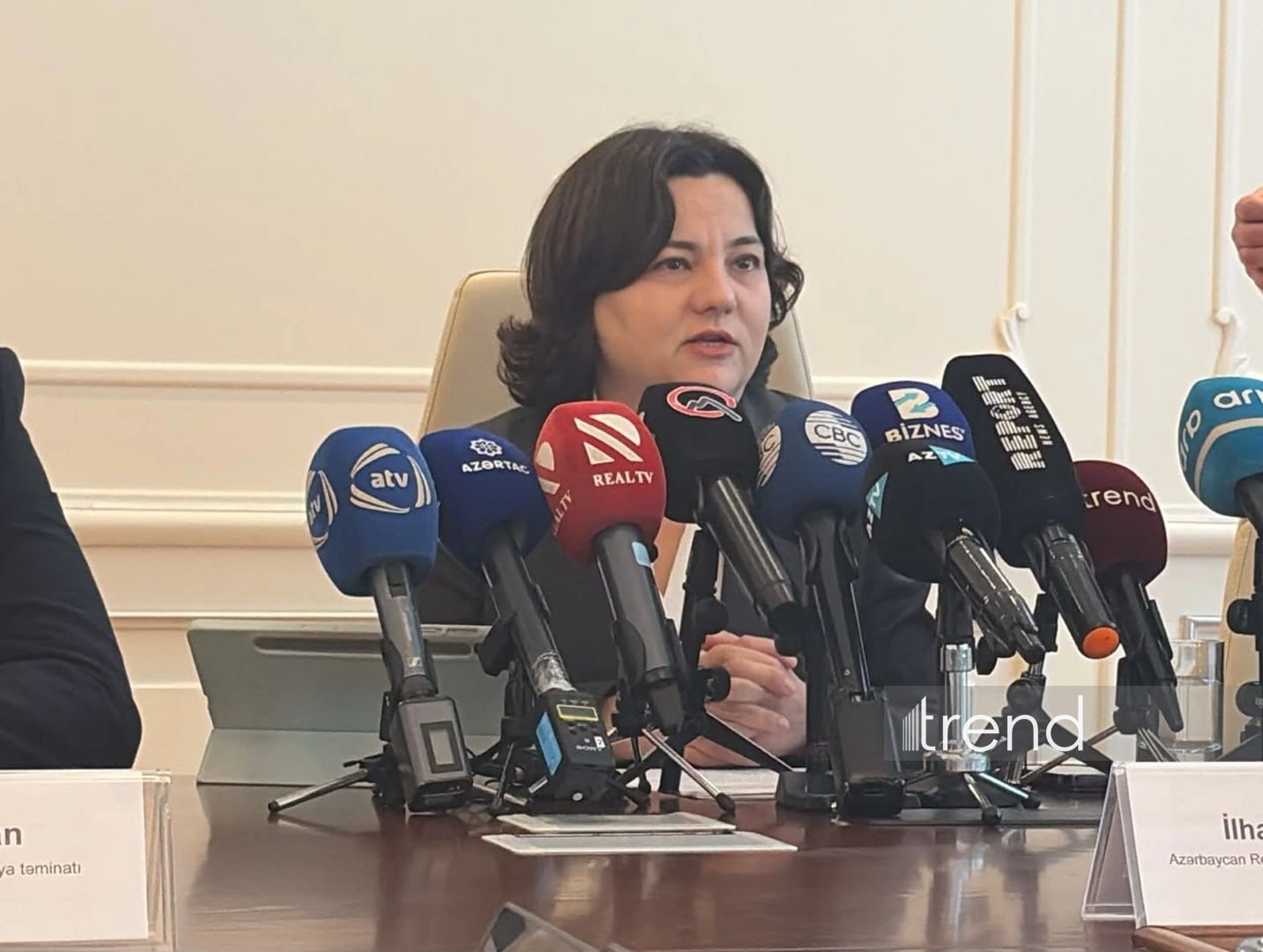
BAKU, Azerbaijan, October 15. Thirteen
solutions have been put into operation under Azerbaijan’s
"Agricultural Artificial Intelligence" project, Deputy Agriculture
Minister Ilhama Gadimova said today at a press conference dedicated
to the project’s implementation and technological innovations in
agriculture, Trend's
correspondent reports from the event.
She added that 11 more solutions are undergoing testing, 7 are
still under development, and work has yet to begin on 2 others.
Gadimova said development work had been completed on 24
solutions in total. The systems support farmers at various stages
of agricultural production, from crop selection and irrigation to
assessing disease risks and determining the best time for
spraying.
"The disease and pest risk forecasting solution calculates the
risk of disease for a farmer’s field hour by hour and tracks the
development stage of pests. It currently covers 18 diseases and
pests affecting eight fruit crops. The spraying-time solution
identifies suitable hours for treatment based on wind, rainfall,
and temperature," she said.
According to Gadimova, four solutions under the crop suitability
program are already operational. They help farmers select crops and
varieties suited to local soil and climatic conditions and
determine optimal planting times.
"The risk map for crop growth stages identifies cold and heat
risks during sensitive periods based on 15 years of data. The risk
alert for planted crops provides warnings of expected cold or heat
in the coming days for the variety already planted by the farmer,"
she said.
Moreover, Gadimova added that three solutions under the
irrigation management program were also in operation.
"The field-level water demand solution calculates daily
evaporation, rainfall, and water balance to recommend when to
irrigate. The same calculations are also performed at district and
national levels. The dynamic soil moisture map uses satellite
imagery to identify areas experiencing water shortages. This
solution is currently planned for use in cotton fields," she
said.
The deputy minister also noted that the farmer rating program
assesses farms based on their economic performance, land and
environmental management, and adoption of modern farming practices.
It also identifies areas for improvement to help farmers raise
their ratings.