BAKU, Azerbaijan, October 15. Participants in
the international NEW SILK WAY business forum in Kazakhstan's
Astana discussed ways to develop the Trans-Caspian International
Transport Route (TITR), increase its transit potential, and improve
freight transport efficiency, the Kazakh Ministry of Transport
reported.
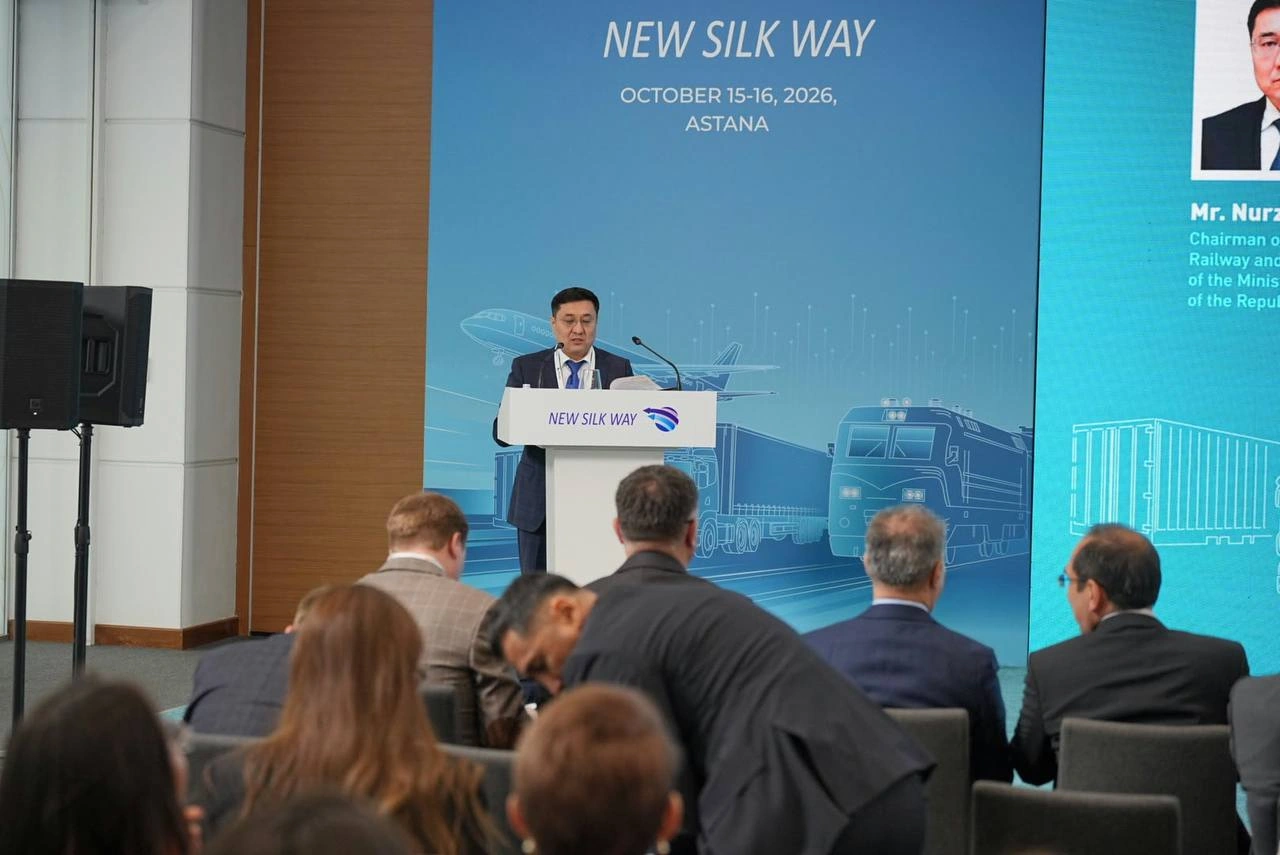
A panel session on the Middle Corridor brought together Nurzhan
Kelbuganov, chairman of the Committee for Railway and Water
Transport at Kazakhstan's Ministry of Transport; Andrei Mikhnev,
World Bank director for Kazakhstan and Turkmenistan; Bekzod
Kholmatov, director of the Center for Transport and Logistics
Development Studies at Uzbekistan's Ministry of Transport; and
business representatives.
In his opening remarks, Kelbuganov highlighted the importance of
the Middle Corridor for Kazakhstan, noting its role in expanding
the country's export opportunities and strengthening its transit
potential.
"Over the past five years, we have made significant progress in
developing the route: cargo traffic has increased more than
fivefold, while delivery times have been cut by three. Systematic
efforts are now underway to develop transport and logistics
infrastructure across the entire supply chain, from railway
approaches and border crossings to Caspian Sea ports," he said.
It was noted that Kazakhstan is continuing to develop
infrastructure to accommodate further growth in freight traffic
along the corridor. The work includes building new railway lines
and modernizing existing ones.
The country is also expanding the terminal capacity of the ports
of Aktau and Kuryk. A container hub has been commissioned, while
dredging operations are being carried out to increase port capacity
and improve transport efficiency.
The panel also focused on digitalizing freight transport,
expanding electronic document management and integrating the
information systems of railway administrations.
Participants noted that the next stage in the Middle Corridor's
development should focus not only on expanding infrastructure
capacity but also on improving the reliability, regularity and
competitiveness of freight services.
Coordinated development of infrastructure and digital solutions,
alongside closer cooperation among countries along the route, was
identified as an important condition for strengthening the TITR's
role in international transport and logistics chains