BAKU, Azerbaijan, October 15. Long-standing
cooperation with the World Bank (WB) and the International Monetary
Fund (IMF) makes a significant contribution to strengthening
institutional capacity and enhancing economic resilience in
Azerbaijan, Chairman of the Central Bank of Azerbaijan Taleh
Kazimov said.
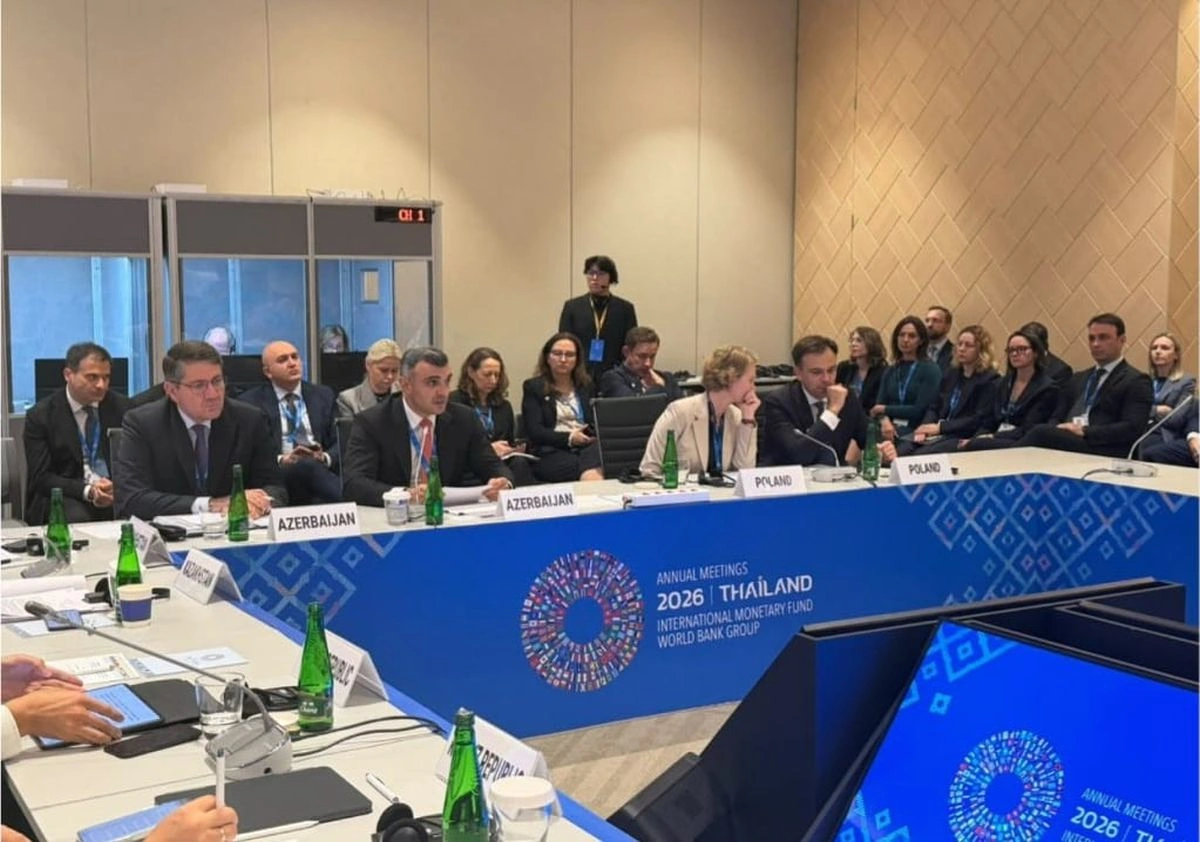
He made the remarks during a meeting of the Constituency Group,
of which Azerbaijan is a member, held on the sidelines of the WB
and IMF Annual Meetings.
In his address, Kazimov also discussed the impact of global
economic developments on Azerbaijan, measures to further strengthen
financial stability, and initiatives aimed at ensuring the
sustainable development of the financial sector.
Azerbaijan's cooperation with international financial
institutions covers various areas of the economy. Its partnership
with the World Bank encompasses digital development,
infrastructure, energy, transport, agriculture, water management,
employment, and institutional reforms. Since Azerbaijan joined the
bank, approximately $4.9 billion in financing has been allocated
for 53 projects.
These projects have focused on developing the country's
infrastructure, expanding energy and transport capacity, improving
water management, increasing employment, and strengthening
institutional capacity. The World Bank has expressed interest in
continuing its long-standing cooperation with Azerbaijan and
expanding the partnership into new areas.
Azerbaijan's participation in international development
initiatives is another dimension of this cooperation. After
attaining upper-middle-income country status, Azerbaijan increased
its support for international development initiatives in its
capacity as a donor.
Meanwhile, forecasts by international financial institutions
regarding Azerbaijan's economy are important for assessing the
country's growth prospects. According to the World Bank's latest
report, Azerbaijan's gross domestic product (GDP) growth is
projected to rise from 1.2% in 2026 to 1.8% in 2027 and 1.9% in
2028.
The bank attributes the slowdown in economic growth in 2026 to
the continued structural decline in the oil sector and
weaker-than-expected growth in the non-oil economy amid lower
public capital expenditure. However, stronger growth in the non-oil
sector is expected to support an acceleration in overall economic
growth in subsequent years.
The IMF's forecasts also reflect its expectations for
Azerbaijan's economic growth. According to the fund's World
Economic Outlook report, GDP growth in Azerbaijan is projected to
increase from 1.7% in 2026 to 2.3% in 2027. In its previous report,
published in April, the IMF had forecast growth of 2.2% in 2026 and
2.5% in 2027. According to the fund, Azerbaijan's GDP grew by 1.4%
in 2025.
Inflation expectations are another important indicator in
assessing economic resilience. The IMF forecasts that inflation in
Azerbaijan will decline from 5.8% in 2026 to 5.6% in 2027. In its
April report, the fund had projected inflation of 6% in 2026 and
5.1% in 2027. According to the IMF, inflation in Azerbaijan stood
at 5.6% in 2025.