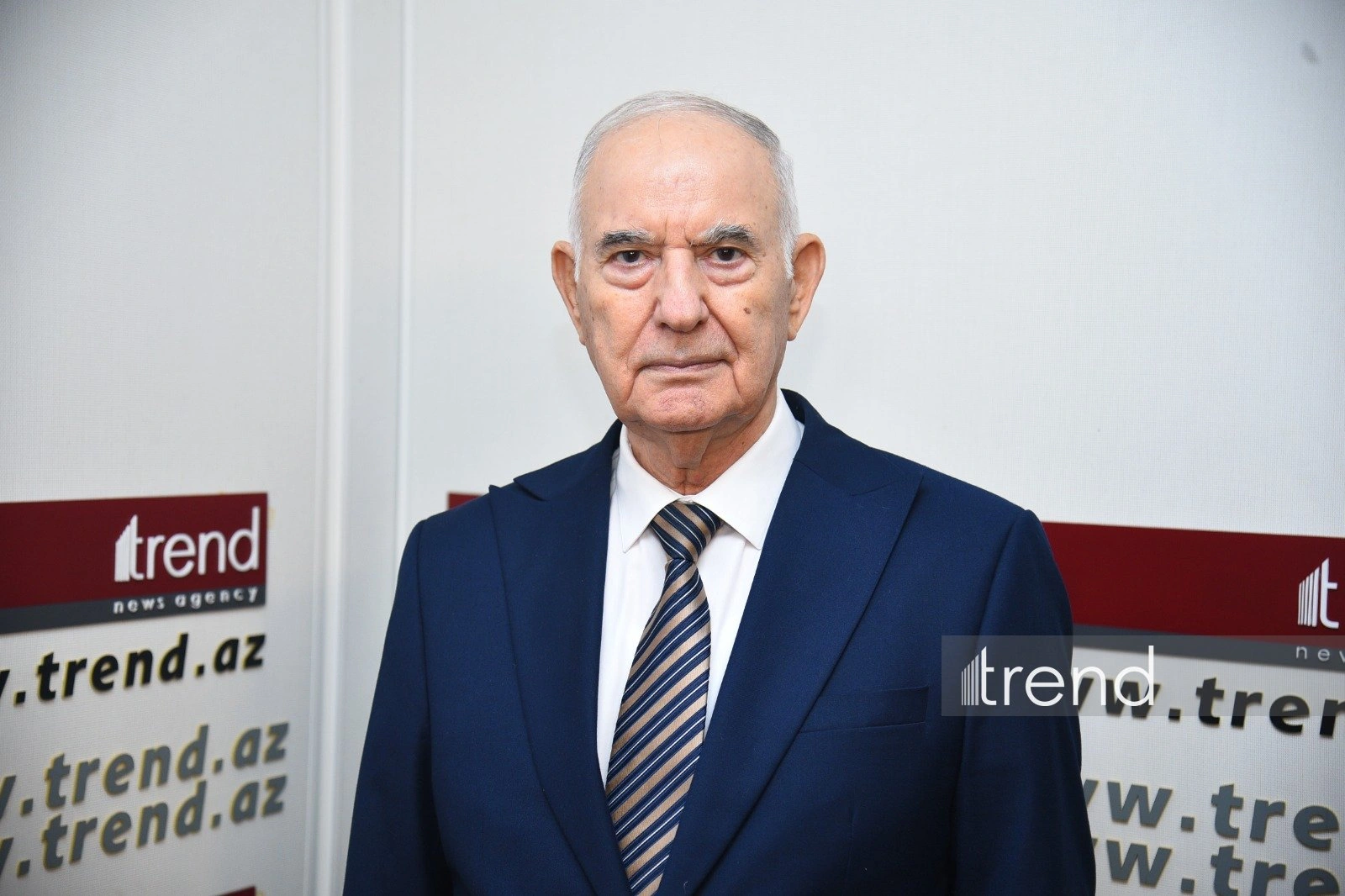
BAKU, Azerbaijan, October 27. Regional policy
of the President of Azerbaijan Ilham Aliyev opens up new options
for Azerbaijan-Netherlands ties, political analyst Azer Garayev
told Trend.
According to him, the meeting between the Minister of Foreign
Affairs of the Netherlands, Tom Berendsen, and President Ilham
Aliyev holds significant political and economic importance for the
future development of Azerbaijan-Netherlands relations.
The analyst noted that the reception of Tom Berendsen by
President Ilham Aliyev and the high appreciation of Azerbaijan’s
role in ensuring peace and stability in the South Caucasus serve as
indicators of the attention paid to the Azerbaijani state’s
position within the system of international relations.
"During President Ilham Aliyev’s meeting with Tom Berendsen,
discussions covered political dialogue, economic cooperation,
investment opportunities, transport and logistics links, and the
expansion of cooperation in the agricultural sector. The Dutch
side’s expressed intention to develop relations with Azerbaijan
creates additional opportunities for advancing our country’s ties
with European nations across a broader range of areas. A notable
aspect of the meeting was the Dutch Foreign Minister’s specific
emphasis on President Ilham Aliyev’s personal role in establishing
peace and stability in the South Caucasus. The observation that
this matter is significant not only for the region but also for
Europe demonstrates that Azerbaijan’s role in regional processes is
being recognized at the international level," the analyst
explained.
Garayev remarked that in the modern system of international
relations, the standing of states is determined not only by their
economic capabilities and resources, but also by their capacity to
influence regional processes, engage in dialogue with partners, and
establish cooperation mechanisms based on mutual interests.
"In this regard, expanding relations with European states,
developing economic partnerships, and strengthening regional
stability are key priorities in Azerbaijan’s foreign policy.
President Ilham Aliyev’s meeting with the Minister of Foreign
Affairs of the Netherlands is significant in this context, as it
allows for an assessment of the current state of bilateral
relations and a discussion of new opportunities for cooperation,"
he said.
The analyst emphasized that Azerbaijan’s geographical location,
energy resources, developing transport infrastructure, and growing
role in the international transport system position the country as
a vital link between Europe and Asia.
“In addition to these factors, the importance that Azerbaijan
attaches to the development of regional ties also plays a role in
the interest shown by European states in cooperating with the
country. Developing relations with a nation like the Netherlands,
which possesses extensive experience in international trade, port
management, and logistics, could open up new prospects for
expanding Azerbaijan’s economic opportunities.
During the meeting between President Ilham Aliyev and the
Minister of Foreign Affairs of the Netherlands, attention was also
focused on expanding economic and trade relations between the two
countries. The presence of Dutch companies operating across various
sectors in Azerbaijan serves as an indicator of the existing
economic foundation for the development of cooperation. Organizing
reciprocal business visits, strengthening direct ties between
entrepreneurs, and implementing joint projects could pave the way
for these relations to yield more concrete results. The primary
objective here extends beyond merely increasing trade turnover; it
also encompasses attracting new investments, expanding technology
exchange, and contributing to the development of the non-oil
sector.
Agriculture represents an area with particularly promising
potential for cooperation. The Netherlands' expertise in modern
agricultural technologies, greenhouse operations, enhancing
productivity, the efficient use of water resources, and product
storage could prove highly beneficial for Azerbaijan. Given the
special focus in our country on the development of agriculture, the
strengthening of food security, and the expansion of local
production, deepening cooperation with the Netherlands creates
additional opportunities. Through joint projects, it’s possible to
implement modern technologies, train local specialists, and enhance
access for Azerbaijani products to foreign markets," he
mentioned.
Garayev pointed out that cooperation in the fields of transport
and logistics also represents a significant aspect of
Azerbaijan-Netherlands relations.
"Azerbaijan’s location along the Middle Corridor, the
capabilities of the Baku International Sea Trade Port, and the
development of the Alat Free Economic Zone enhance our country's
importance in international trade relations. The Netherlands'
expertise in port management, the organization of freight
transport, and the optimization of supply chains creates a
favorable foundation for mutually beneficial cooperation in this
area. Such a partnership can contribute to the expansion of
Azerbaijan's transit capabilities, the improvement of the quality
of logistics services, and the development of economic ties between
Europe and Asia," he said.
The analyst noted that Tom Berendsen’s meeting with Azerbaijani
Foreign Minister Jeyhun Bayramov is significant in terms of
continuing the discussion of issues raised during the meeting with
President Ilham Aliyev at a diplomatic level, and for defining
specific areas of practical cooperation.
“During the meeting, opportunities for cooperation were reviewed
in areas such as strengthening political dialogue, promoting mutual
investment, energy, transport, agriculture, water resource
management, innovation, shipbuilding, education, and humanitarian
ties. The positive assessment by both sides regarding the adoption
of a roadmap for the development of Azerbaijan–Netherlands
relations, covering the period 2026–2028, establishes an important
framework for the systematic expansion of bilateral relations.
It’s particularly noteworthy that 2027 will mark the 35th
anniversary of the establishment of diplomatic relations between
Azerbaijan and the Netherlands. In this context, the preparation
and adoption of the roadmap are significant for aligning the
relationship with a new phase, defining cooperation priorities, and
planning future projects. Furthermore, the extent to which
political documents yield tangible results depends on their
implementation, the development of concrete projects, and the
fulfillment of mutual commitments.
Discussion of regional peace and security issues during the
meetings also draws particular attention. Ensuring lasting peace in
the South Caucasus is significant not only for the normalization of
political relations but also for expanding trade ties, developing
transport routes, and creating new investment opportunities.
Strengthening stability in the region can enable international
companies to formulate long-term plans and approach economic
projects from a broader perspective.
In this regard, Azerbaijan’s peace agenda and its initiatives
aimed at fostering regional cooperation are key topics of
discussion. Jeyhun Bayramov’s briefing to his Dutch counterpart,
covering the normalization process between Azerbaijan and Armenia,
issues related to the signing of a peace treaty, restoration and
reconstruction efforts in the territories liberated from
occupation, and the humanitarian challenges posed by the threat of
landmines, reflects the core priorities of Azerbaijan’s regional
agenda.
All of this demonstrates that relations between Azerbaijan and
the Netherlands aren’t limited solely to bilateral economic ties.
These relations also encompass the development of transport links
between Europe and Asia, the strengthening of regional stability,
the expansion of the investment climate, and are also linked to the
identification of new opportunities for international cooperation.
The Netherlands' expression of its intention to deepen political
and economic dialogue with Azerbaijan demonstrates the existence of
mutual interests between the parties,” Garayev concluded.