BAKU, Azerbaijan, October 29. On October 27, a
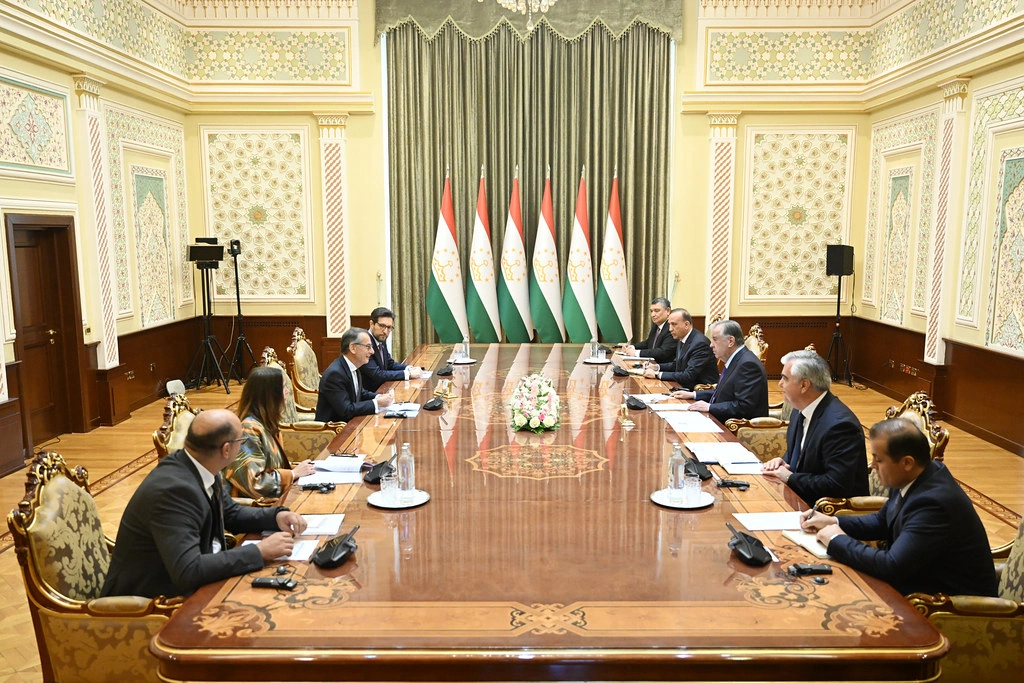
meeting was held in Dushanbe between Tajikistan’s President Emomali
Rahmon and Vice President of the European Bank for Reconstruction
and Development (EBRD) Matteo Patrone, during which the sides
discussed prospects for expanding investment cooperation, including
energy development, infrastructure modernization, and private
sector support.
The meeting outlined potential areas for the next stage of the
country’s investment cooperation with the international financial
institution. Discussions focused on renewable energy development,
power grid modernization, expanded financing for domestic
enterprises and attracting private capital to infrastructure
projects.
Of particular importance in this context is the multi-year
strategic investment roadmap for 2026–2030, which envisages
cooperation worth $900 million. According to information released
following the meeting, the EBRD has implemented 201 projects in
Tajikistan since 1993, with total investments exceeding 1.1 billion
euros. These figures reflect the long-standing nature of the
partnership and provide a basis for discussing new projects in
energy, infrastructure and the private sector.
President Emomali Rahmon outlined areas in which further
cooperation with the Bank could have practical significance for the
economy. These include improving the reliability of electricity
supplies, expanding businesses’ access to long-term financing,
developing water infrastructure and creating more opportunities for
private businesses to participate in investment projects.
Implementation of these priorities will depend on the preparation
of specific initiatives, agreement on financing terms and the
attraction of additional investors.
Solar energy development remains one of the most promising
areas. During the meeting, Emomali Rahmon proposed considering the
EBRD’s participation in financing the construction of solar power
plants with private capital. For Tajikistan, this area is linked
not only to expanding the power system’s generation capacity but
also to ensuring reliable electricity supplies to households and
businesses and increasing clean energy exports to neighboring
countries.
The development of electricity transmission and distribution
infrastructure will be an important condition for implementing
these plans. Grid modernization and reducing losses, which were
also discussed at the meeting, could improve the efficiency of
existing generating capacity and facilitate the connection of new
energy sources. In the longer term, combining investments in
generation and power grids could create conditions for a more
resilient electricity system and expanded regional energy
cooperation.
At the same time, solar projects will require mechanisms for
allocating risks among the government, international financial
institutions and private investors. Potential instruments include
long-term lending, technical assistance and public-private
partnerships. The specific model will depend on project parameters,
financial viability and the terms agreed upon by the parties.
Another important area identified by the president of Tajikistan
was expanding direct financing for manufacturing enterprises and
improving small and medium-sized businesses’ access to long-term
funding. Particular attention was given to companies operating in
the regions, for which the cost of borrowing and the availability
of financial instruments can play a significant role in investment
decisions.
This approach is gaining additional relevance amid the country’s
economic growth. According to the EBRD, Tajikistan’s real GDP
increased by 8.2% in the first half of 2026. The Bank forecasts
growth of 7.9% for 2026 and 7% for 2027. Fixed capital investment
increased by 35.9% year on year in January–July, while exports rose
by 57.2% in the first half of the year. At the same time, imports
increased by 38.6%, contributing to a wider foreign trade
deficit.
Against this backdrop, access to financing could become one of
the factors supporting further manufacturing development and
strengthening domestic companies’ ability to invest in equipment,
expand production and enter foreign markets. However, the results
will depend on whether new financial instruments are accessible to
businesses and meet their needs in terms of maturity, cost and
currency.
Emomali Rahmon also emphasized the importance of expanding
financing in the national currency and preparing domestic
enterprises to issue bonds. The development of these mechanisms
could gradually broaden sources of capital beyond traditional bank
lending. For companies, this could provide an opportunity to
diversify financing, while for the domestic financial market, it
could expand the range of investment instruments.
However, developing this market will require appropriate
infrastructure, greater transparency in corporate reporting, and
preparations for issuers to meet investor requirements. The EBRD’s
involvement could therefore include not only financing but also
technical support to help enterprises prepare to raise capital
through the market.
The meeting also addressed improving access to drinking water,
modernizing sewerage and irrigation systems, improving the
management of state-owned enterprises and preparing public-private
partnership projects. These areas cover both economic
infrastructure and essential services that affect living conditions
and business activity.
Modernizing water supply and sewerage systems may require
substantial long-term investment, particularly given the need to
upgrade existing facilities and improve operational efficiency.
Investment in irrigation could support agricultural development,
although the practical impact will depend on project scale, the
quality of water resource management and the capacity to maintain
the infrastructure over time.
Public-private partnerships, in turn, could broaden
opportunities for attracting private investors to infrastructure
initiatives. This mechanism involves allocating responsibilities
and risks between the government and businesses, but its
application requires thorough project preparation, transparent
selection procedures and clear financing terms.
Other areas of cooperation include education, digitalization,
and grants and technical assistance for social and climate-related
projects. Further progress will depend on which initiatives are
identified as priorities under the 2026–2030 investment
roadmap.
In the coming years, the Tajikistan–EBRD partnership could move
from setting priorities to financing specific projects. Investment
could be directed toward the construction of solar power plants,
power grid modernization, and water supply infrastructure. The pace
of implementation will depend on project preparation, agreement on
financing terms, and the attraction of private capital.
Another potential area is expanded support for manufacturing and
small and medium-sized businesses. The development of long-term
lending in the national currency and corporate bond issuance
mechanisms could provide enterprises with additional sources of
financing to expand production capacity and diversify economic
activity.
Cooperation could also encompass a broader range of
infrastructure projects involving private businesses. The use of
public-private partnership mechanisms could open up additional
investment models, provided that projects are economically viable,
risks are allocated transparently, and long-term operating
conditions are clearly defined.
Taken together, these areas could form a comprehensive
cooperation model combining investment in energy and infrastructure
with support for the private sector, education and digitalization.
The scale and pace of implementation will be determined by the
projects agreed upon, the availability of financing and the
readiness of public and private participants to carry out the
initiatives.
The meeting between Emomali Rahmon and Matteo Patrone thus
established a broad set of priorities for further cooperation
between Tajikistan and the EBRD. The next stage will be to
translate these priorities into concrete investment decisions. The
final structure of cooperation for 2026–2030 will depend on the
projects agreed upon, financing availability, private investor
interest, and the pace of preparing initiatives in energy,
infrastructure, and manufacturing.