BAKU, Azerbaijan, August 6. The high-level
Azerbaijani-Ukrainian meetings held in Kyiv may at first glance
seem like another diplomatic contact between the foreign ministers
of the two countries. However, the content of the visit, the scope
of the issues discussed, and the messages conveyed show that we are
not only talking about the current state of bilateral relations,
but also about the next stage of strategic partnership against the
backdrop of new geopolitical realities emerging in the South
Caucasus and the Black Sea region. Namely in this context, the
visit of Azerbaijani Foreign Minister Jeyhun Bayramov to Ukraine is
noteworthy.
The main distinguishing feature of Azerbaijani-Ukrainian
relations is that, despite acting in different geopolitical
environments, the parties have been sharing the position on issues
of sovereignty, territorial integrity of states and the rule of
international law for many years. This principle was confirmed
during the meetings held in Kyiv. Bayramov once again declared
Azerbaijan's unwavering support for the sovereignty and territorial
integrity of Ukraine within its internationally recognized borders.
Meanwhile, Ukrainian Foreign Minister Andrii Sybiha emphasized that
Kyiv is also supporting the sovereignty and territorial integrity
of Azerbaijan with the same consistency. This mutual approach has
further strengthened the political basis of relations in recent
years.
Another noteworthy point is that while demonstrating this
position, Baku also prioritizes the resolution of conflicts only
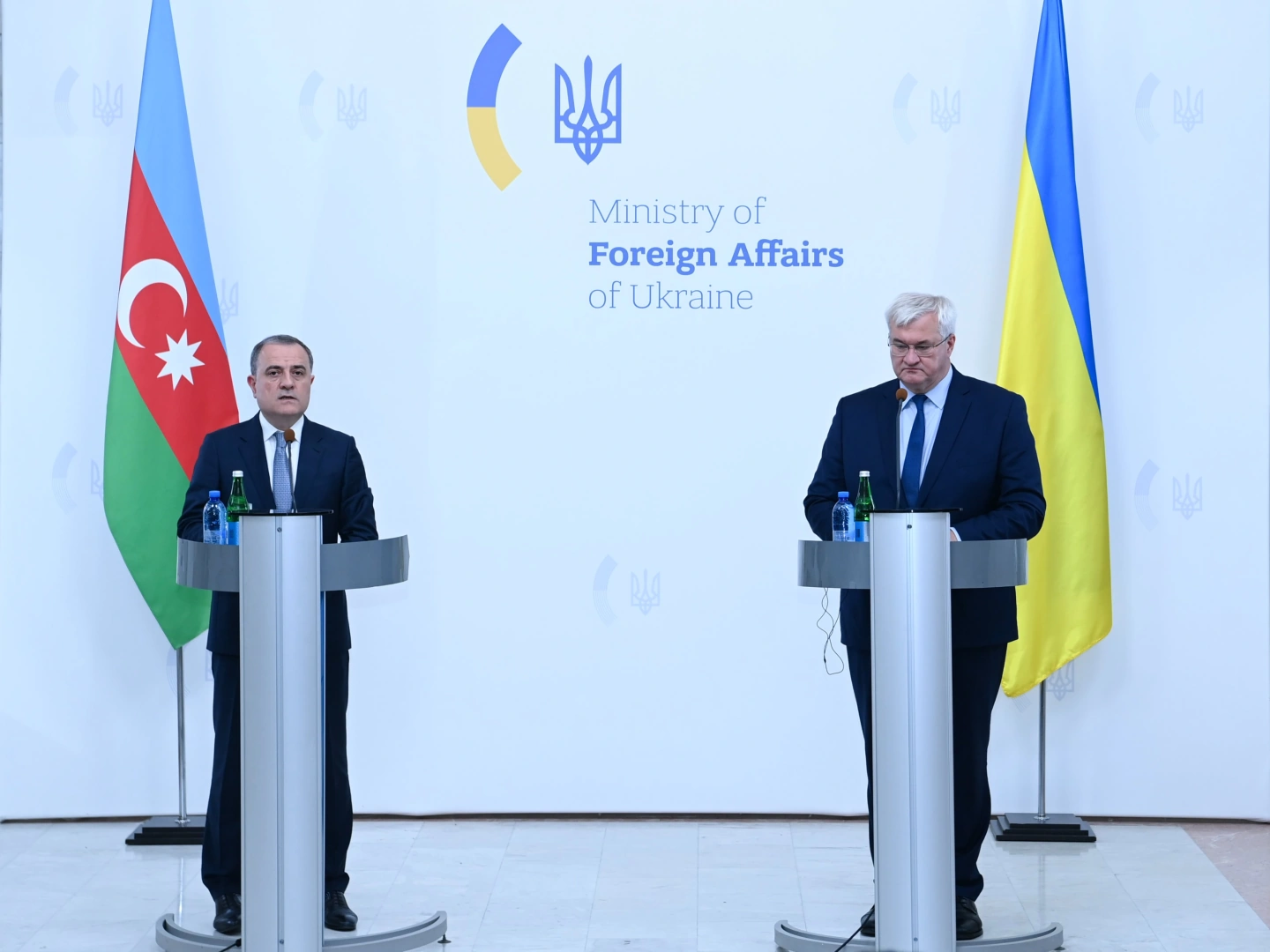
through diplomatic means. Bayramov’s emphasis at a press conference
on the importance of stopping military operations as soon as
possible and resuming the negotiation process on the basis of
international law is a continuation of the foreign policy course
that Azerbaijan has been developing for many years. This approach
isn't accidental. Azerbaijan itself, as a state that has faced the
consequences of the selective application of international law for
many years, consistently defends the importance of resolving
conflicts on the basis of legal principles.
Official position: Agenda of strategic partnership
expanding
According to the Azerbaijani Ministry of Foreign Affairs, within
the framework of Bayramov’s official visit to Ukraine, a one-on-one
meeting was held with Andriy Sibiha, and then an expanded meeting
with the participation of delegations. During the talks, the main
directions on the agenda of the strategic partnership - political
dialogue, trade and economic cooperation, energy, humanitarian
relations, regional and international security issues - were
discussed in detail.
The parties highly appreciated the role of the political
consultation mechanism between the Ministries of Foreign Affairs,
the Intergovernmental Joint Commission on Economic Cooperation and
the Business Council in the development of cooperation. The meeting
also positively assessed the recent recovery trends in trade
turnover and exchanged views on further expanding economic
relations.
During the discussions on regional issues, Azerbaijan once again
declared its support for the cessation of military operations in
Ukraine and the resolution of the conflict through diplomatic means
based on the norms and principles of international law. At the same
time, Azerbaijan's consistent support for the sovereignty and
territorial integrity of Ukraine within its internationally
recognized borders was reaffirmed.
Humanitarian diplomacy complements political
dialogue
In modern international relations, the level of partnership
between states is no longer measured solely by political
statements. Practical cooperation, support provided in times of
crisis, and long-term projects are considered to be the main
factors determining the real content of relations. Azerbaijan's
policy towards Ukraine is also built on this model.
During the meeting, the Ukrainian side also paid special
attention to humanitarian issues. Sybiha expressed condolences for
the deaths and injuries of Azerbaijani citizens as a result of
military operations in the Black and Azov Seas, expressed
condolences to the families of the deceased, and wished a speedy
recovery to the injured.
Sybiha's condolences over the deaths and injuries of Azerbaijani
citizens as a result of military operations in the Black and Azov
Seas were another indication of the humanitarian side of the
relations. This is of particular importance against the background
of the damage caused to Azerbaijani citizens as a result of the
attack by a drone of the civilian merchant ship "Atlas Bey" near
the coast of Odessa in July. After that incident, the Azerbaijani
Embassy in Ukraine carried out operational consular measures,
ensured the evacuation of crew members, and organized the return to
Azerbaijan of the body of the deceased ship captain Samad
Nasrullayev. The next warning addressed by the Ministry of Foreign
Affairs to Azerbaijani citizens working in conflict zones and
high-risk routes was a continuation of the importance the state
attaches to the safety of its citizens.
During the meeting, the ministers also reviewed in detail the
humanitarian support provided by Azerbaijan to Ukraine. It was
noted that the total volume of humanitarian assistance provided by
Azerbaijan to Ukraine since the beginning of the military
escalation has exceeded $50 million. This assistance was not
limited to food and medical supplies. The restoration of energy
infrastructure, the delivery of electrical equipment, the
reconstruction of social facilities, the restoration of Academic
Zarifa Aliyeva Linguistic Lyceum No. 12, and the Central City
Hospital in Irpin, as well as the involvement of 700 Ukrainian
children in rehabilitation and psychological support programs in
Azerbaijan, demonstrate Azerbaijan’s longer-term humanitarian
approach.
In this regard, Bayramov’s visit to Irpin has a special symbolic
meaning. Getting acquainted with the facilities restored with
Azerbaijani financial support, visiting the Zarifa Aliyeva park and
presenting plans for the future restoration of the Irpin House of
Culture show that Baku continues to contribute not only to the
elimination of the devastation caused by the war, but also to the
reshaping of Ukraine’s social infrastructure. This is one of the
important examples of how humanitarian diplomacy has already become
a separate direction in Azerbaijan’s foreign policy.
Energy and economic cooperation hold special place
in Kyiv talks
Another important direction is cooperation in the energy sector.
This topic was highlighted as a separate strategic line in the
talks held in Kyiv. In recent years, the priority of energy
security issues in Europe has further increased the role of
Azerbaijan. In this regard, Bayramov's statement that all
commercially viable and technically justified options for using
Ukraine's underground gas storage facilities can be considered, as
well as his statement that they are ready to supply gas to Ukraine
if necessary, has a broader meaning than just bilateral
relations.
This statement can be assessed as a political message indicating
that Azerbaijan's growing role in Europe's energy security can also
include the Ukrainian direction. This is not just about possible
gas exports. The main point is that Azerbaijan demonstrates its
intention to expand its position as a reliable supplier on the
changing energy map, as well as to participate more actively in
strengthening the energy stability of partner countries.
In this context, particular emphasis on SOCAR’s activities in
Ukraine is also not coincidental. The fact that the company
continued its activities even in the most difficult times of the
war and participated in fuel supplies shows that economic
cooperation continues even in times of crisis. As Jeyhun Bayramov
emphasized, supporting the operation of civilian facilities,
delivering humanitarian cargo, and assisting in the restoration of
energy infrastructure remain among Azerbaijan's priorities.
Economic statistics also indicate the stage of restoration of
relations shows that. Before the war, in 2021, the bilateral trade
turnover reached $900 million. Although this figure decreased to
$350 million in the subsequent period, it exceeded $500 million
again last year. In the first six months of this year, the volume
of mutual trade approached $280 million. This dynamics indicates
that, despite the difficulties created by the war, business
relations are adapting to the new conditions and economic
cooperation is gradually being restored. The ministers' agreements
on expanding cooperation in investment, transport, energy, science,
education, healthcare, culture and youth policy can also be seen as
a continuation of this trend.
Another noteworthy point during the visit was the importance
given to historical diplomatic traditions. Bayramov's viewing
archival documents on the activities of the diplomatic mission of
the Azerbaijan Democratic Republic in Ukraine in 1918-1920 at the
Ministry of Foreign Affairs of Ukraine shows that relations between
the two countries are not based only on modern political
conditions. The emphasis on historical diplomatic ties can also be
seen as a political message that strategic partnership has deep
roots.
The South Caucasus wasn't left out of the spotlight during the
meetings in Kyiv either. The Azerbaijani side informed the
Ukrainian leadership about the normalization process with Armenia,
the reconstruction work carried out in the liberated territories,
and the mine threat. Thus, Baku once again showed that it presents
regional security issues not only as a national issue, but also as
an integral part of a broader international security system. This
approach is an important line observed in Azerbaijan's foreign
policy in recent years. Official Baku doesn't separate regional
processes from the global security level and presents these issues
as an integral part of the agenda of mutual interest in the
dialogue with partner countries.
Member of working group: Strategic partnership
enters new stage
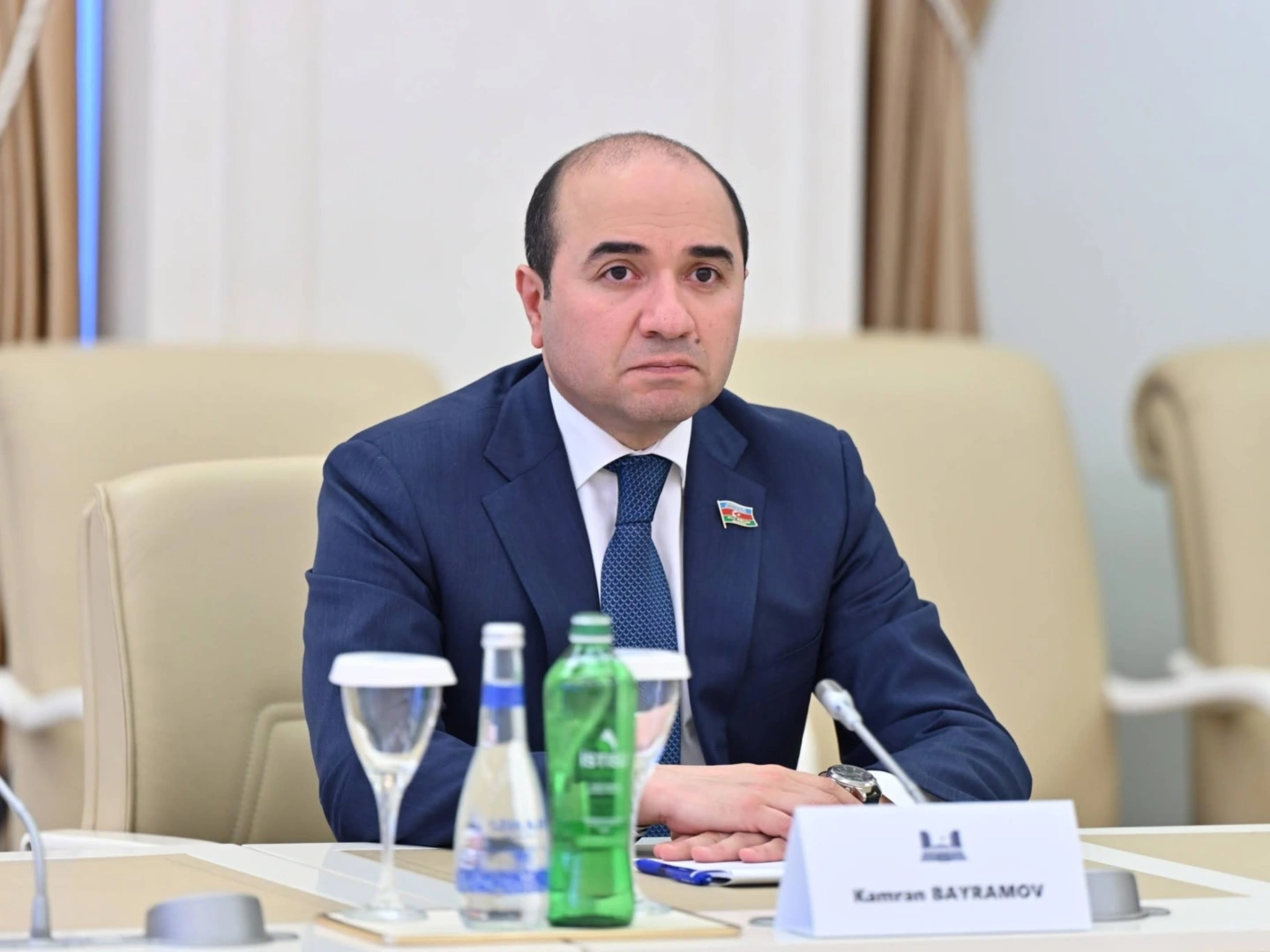
Commenting on the topic to Trend, Azerbaijani MP, Member of the Working Group on
Azerbaijan-Ukraine Interparliamentary Relations Kamran Bayramov
said that Jeyhun Bayramov's official visit to Ukraine is an
important diplomatic event that demonstrates the consistent
development of strategic partnership between the two countries and
the continuous nature of high-level political dialogue.
According to the MP, this visit, held in a complex geopolitical
environment, shows that relations between Baku and Kyiv, based on
mutual trust, have entered a new stage. He noted that it is of
particular importance to reaffirm in the negotiations the
commitment to the norms and principles of international law, in
particular the sovereignty, territorial integrity and inviolability
of borders of states.
Bayramov said that the scale of humanitarian cooperation is also
one of the main factors indicating the strategic nature of
relations. According to him, support for the restoration of energy
infrastructure, projects implemented in Irpin, cooperation in the
field of mine clearance, and the rehabilitation of Ukrainian
children in Azerbaijan further strengthen trust between the two
peoples.
The MP noted that economic and energy cooperation also opens up
new prospects.
"Restoration of trade turnover, expansion of investment
opportunities, and discussion of new formats of cooperation in the
energy sector indicate the intention of the parties to use the
existing potential more effectively," he pointed out.
Azerbaijani-Ukrainian relations expand beyond political
dialogue
All these points show that Azerbaijani-Ukrainian relations are
currently not limited to political dialogue. Humanitarian
diplomacy, energy security, economic cooperation, historical
diplomatic traditions and protection of international law have
become the main pillars of the strategic partnership between the
two countries.
Jeyhun Bayramov's visit to Kyiv can also be assessed as a
political step serving to strengthen these pillars. The messages
given showed that, on the one hand, Baku maintains its principled
position based on international law, and on the other hand, it is
trying to expand practical directions of cooperation with Ukraine
and bring relations to a new stage.
At the same time, the results of the visit give reason to say
that Azerbaijan is not just an observer of the new geopolitical and
geoeconomic realities taking shape in the region, but is one of the
actors actively participating in their formation. The multifaceted
agenda, ranging from humanitarian projects to energy security, from
economic cooperation to political dialogue, once again demonstrates
the flexible and pragmatic nature of Baku's foreign policy. This,
in turn, acts as one of the main factors indicating that in the
near future, Azerbaijani-Ukrainian relations will develop more
systematically and meaningfully in both the political, economic and
humanitarian spheres.