BAKU, Azerbaijan, August 7. The mechanism for
financing joint industrial projects within the Eurasian Economic
Union (EAEU) requires further revision.
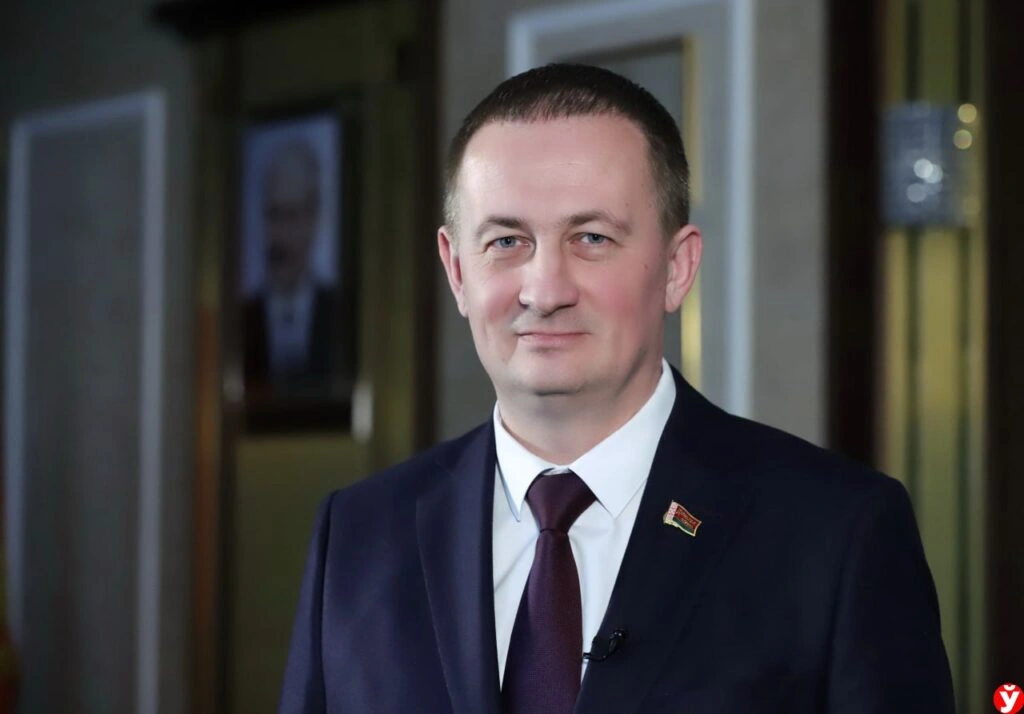
This was announced by Belarusian Prime Minister Alexander
Turchin at an expanded meeting of the Eurasian Intergovernmental
Council.
According to Turchin, the mechanism for financing industrial
cooperation projects, which has been in effect since July 2024, has
not yet fully realized its potential.
"Two years of practical application have shown that this
instrument has not yet fully realized its potential. This means
that this mechanism has flaws and gaps that hinder its widespread
use by economic entities in our countries," he said.
The prime minister noted that the requirements for the
participation of companies from several EAEU member states, as well
as certain financial conditions, remain among the factors limiting
the mechanism's application.
He also focused on the lengthy application review process.
"The lengthy application review process is detrimental to the
country's attractiveness. During this time, any single Belarusian
bank opens dozens of credit lines for investment projects," Turchin
pointed out.
According to him, over the past two years, only six applications
have been approved under the mechanism, despite the availability of
financial support.
"The subsidy budget has reached almost 9 billion Russian rubles.
We cannot spend it," he announced.
Turchin proposed that the Eurasian Economic Commission conduct a
further analysis of the conditions for supporting industrial
cooperation, taking into account proposals from market
participants.
He noted that a similar approach should be applied to projects
in the agro-industrial complex.
"If we don't want to waste our efforts and resources, and strive
to be effective and competitive in the domestic and international
markets, we need to take a serious look at industrial cooperation
and launch it at full capacity," the prime minister emphasized.
Turchin placed special emphasis on developing scientific and
technical cooperation, noting the need to create collective
instruments to support research and development.
"In the current context of rapid development, without strong
scientific support, the state is doomed to lag completely behind.
We clearly need collective instruments that stimulate R&D and
ensure access to advanced technologies," he said.
Speaking about the external framework of the EAEU, Turchin
highlighted the importance of further developing trade and economic
cooperation with third countries. He praised the work on concluding
free trade agreements with Indonesia, the UAE, Iran, and Mongolia,
and stressed the need to continue moving in this direction.