BAKU, Azerbaijan, August 8. Kazakhstan and
Greece discussed prospects for strengthening bilateral cooperation,
including in the energy sector.
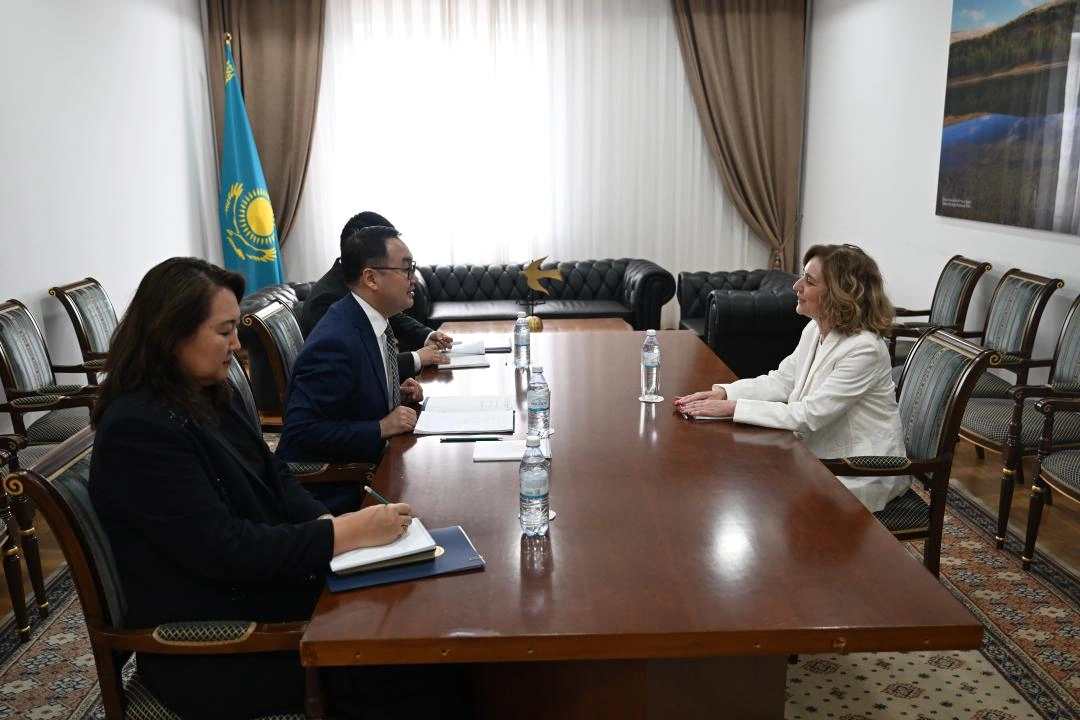
This was announced by the press service of the Kazakh MFA,
following a meeting between First Deputy Foreign Minister Yerzhan
Ashikbayev and Greek Ambassador to Kazakhstan Antonia
Katsourou.
The sides reviewed the current state of Kazakh-Greek relations,
opportunities for their further development, cooperation within
multilateral formats and the schedule of upcoming bilateral events
through the end of the year.
Particular attention was paid to energy cooperation. "In this
context, the parties exchanged views on the situation surrounding
the Caspian Pipeline Consortium (CPC), which is of strategic
importance for ensuring the export of Kazakh oil to European
markets. They emphasized the importance of the stable operation of
energy infrastructure, uninterrupted and sustainable energy
supplies to international markets, ensuring the safety of vessels,
and freedom of navigation at sea," the statement of Kazakh MFA
reads.
Katsourou confirmed Greece’s readiness to further develop
cooperation with Kazakhstan in areas of mutual interest, including
energy, trade, investment, transport and humanitarian ties.
Following the meeting, the sides agreed to maintain regular
political dialogue and continue efforts to expand Kazakh-Greek
partnership across various sectors.
Diplomatic relations between Kazakhstan and Greece
were established on 1 October 1992. Greece opened its embassy in
Almaty in 1997 (later relocated to Astana), while Kazakhstan
established its embassy in Athens in the mid-2000s. The two
countries maintain steady political dialogue and cooperate through
a Joint Intergovernmental Commission on Economic and Technological
Cooperation. Bilateral trade has grown significantly in recent
years, reaching around $2.4 billion, driven largely by Kazakhstan’s
exports of crude oil and other commodities. Key areas of
partnership include energy (with particular attention to reliable
export routes for Kazakh oil to European markets via the Caspian
Pipeline Consortium and alternative corridors), transport and
logistics linked to the Middle Corridor, investment, tourism and
cultural-humanitarian ties. A Greek community of approximately
8,000–12,000 people also contributes to people-to-people contacts
between the two nations.