BAKU, Azerbaijan, August 18. Uzbekistan’s
economy grew 8.5% in the first half of 2026, despite a challenging
global environment, while the country’s sovereign credit ratings
were upgraded by Fitch and Moody’s, President Shavkat Mirziyoyev
said.
This was reflected in the statement on the Official channel of
the Press Secretary of the President of the Republic of Uzbekistan,
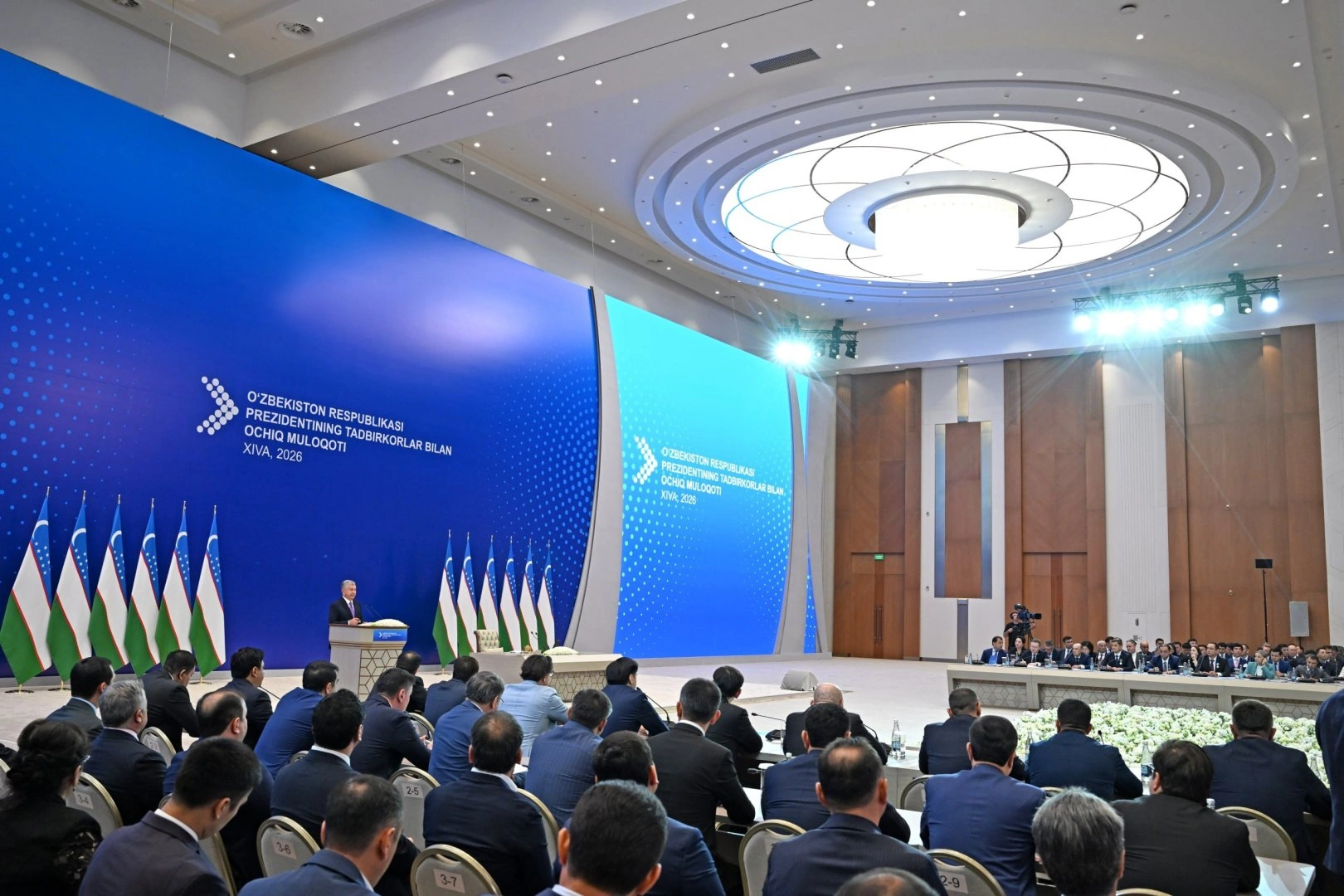
following an open dialogue with the country’s business community in
Khorezm region.
“These results are, first and foremost, the outcome of reforms
carried out shoulder to shoulder with our entrepreneurs,”
Mirziyoyev said.
The president attributed the economic performance to reforms
carried out in close cooperation with the country’s business
community.
Uzbekistan also ranked 31st in the World Bank’s assessment of
the investment and business environment, according to the figures
cited by Mirziyoyev.
Several institutional reforms were introduced this year in areas
including industrial cooperation, public procurement, standards,
food security and urbanization.
Through the National Industrial Chain initiative, private
companies received orders worth 4 trillion soums (about $337.1
million) from major state-owned enterprises, creating additional
opportunities for domestic suppliers.
Strategic enterprises also published lists of more than 650 new
products targeted for localization. According to the Uzbek side,
this created an additional market worth $1 billion for local
businesses.
The government has also raised the threshold for switching to
value-added tax from 1 billion (approx. $84,281) to 5 billion soums
(about $421,408), easing the tax burden on smaller businesses.
Restaurants and cafes received 100 billion soums (around $8.4
million) in VAT cashback, while the introduction of a zero VAT rate
for agricultural products left an additional 400 billion soums
(around $33.7 million) with farmers.
Uzbekistan has also expanded trade opportunities abroad.
Restrictions on imports of 11 types of construction materials from
Kazakhstan were lifted, while a duty-free trade regime with
Turkmenistan was introduced.
Preferential trade agreements covering hundreds of products were
also concluded with Jordan, Pakistan, Iran and Afghanistan.
The measures form part of Uzbekistan’s broader effort to
strengthen domestic production, expand export opportunities and
improve conditions for private businesses.
Mirziyoyev emphasized that the latest economic indicators were
closely linked to reforms implemented alongside entrepreneurs and
aimed at creating new markets, reducing business barriers and
strengthening the country’s investment environment.