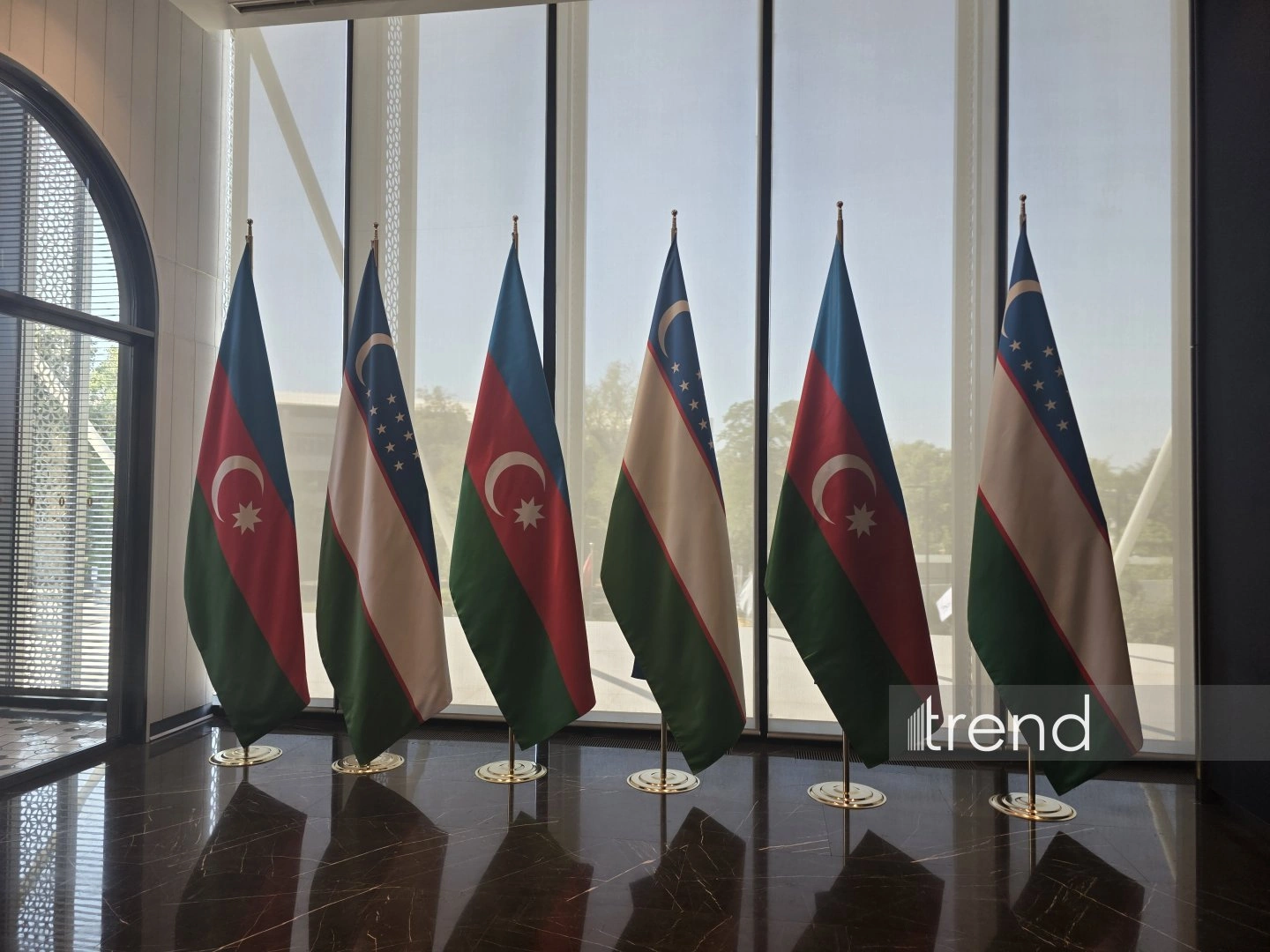
BAKU, Azerbaijan, August 23. The allied
relations between Azerbaijan and Uzbekistan are gradually entering
a new phase, in which political trust is increasingly underpinned
by economic ties. Growing trade, the development of joint ventures,
investment mechanisms, industrial cooperation and expanding
transport routes are creating the foundation for closer integration
of the markets of Central Asia and the South Caucasus.
The current model of relations has developed over several
decades. An important role in this process was played by the
official visit of National Leader Heydar Aliyev to Uzbekistan on
June 18–19, 1997, during which a number of documents were signed
laying the groundwork for further cooperation.
In recent years, political dialogue has gained particularly
strong momentum. Over the past five years, President of Azerbaijan
Ilham Aliyev has made two state and four working visits to
Uzbekistan, while President of Uzbekistan Shavkat Mirziyoyev has
made two state and seven working visits to Azerbaijan.
As a result, the two countries signed the Declaration on
Deepening Strategic Partnership and Expanding Comprehensive
Cooperation, the Treaty on the Establishment of the Supreme
Interstate Council, and the Treaty on Allied Relations.
“Today, our relations are already going far beyond traditional
political dialogue. Trade and investment cooperation, industrial
cooperation, and interaction in the fields of energy, agriculture,
transport and logistics are actively developing,” Shakhodat
Khoshimova, chief research fellow at the Center for Foreign Policy
Studies of Uzbekistan, told Trend.
In her assessment, the next stage should involve moving from
individual projects toward more sustainable transregional ties.
“The next stage of Uzbek-Azerbaijani cooperation is the
transition from individual joint projects to the formation of
sustainable transregional production, transport and energy chains.
This can become the main economic substance of the allied relations
between the two countries,” the expert said.
Trade and investment as the foundation for industrial
cooperation
Economic dynamics already reflect the strengthening of bilateral
relations. In 2025, trade turnover between Azerbaijan and
Uzbekistan more than tripled, reaching $795 million. In January–May
2026, it increased by 33 percent compared with the same period of
the previous year, reaching $144 million.
At the same time, experts associate further trade expansion with
changes in its structure. The focus is shifting from mutual
supplies toward the creation of production chains in which
companies from the two countries complement each other.
“The next stage of economic interaction between the two
countries should be associated with a transition from trade in
finished products to the creation of joint production chains. This
is where the greatest potential for mutual investment lies,” Uzbek
political analyst and Candidate of Philosophical Sciences Ravshan
Nazarov told Trend.
According to him, promising areas include mechanical
engineering, electrical engineering, chemical and petrochemical
industries, construction materials, textiles and
pharmaceuticals.
One of the mechanisms for realizing this potential is the
Azerbaijan-Uzbekistan Investment Company, established in 2023 with
a capital of $500 million. It is designed to finance projects in
various sectors of the economies of the two countries and may also
participate in projects in third countries.
“This means that the partnership is gradually acquiring the
character of a regional investment mechanism,” Nazarov said.
More than 130 Uzbek companies already operate in Azerbaijan,
including companies involved in projects in the liberated
territories.
One of the most notable examples of industrial cooperation
remains the automotive sector. The AzerMash joint venture
cooperates with Uzbek companies in the production of Chevrolet and
Isuzu vehicles. As part of this cooperation, more than 10,000
Chevrolet vehicles and more than 300 Isuzu vehicles have been
produced.
Nazarov believes that cooperation could go beyond vehicle
assembly in the future.
“Uzbekistan has a large industrial base and a developed
automotive industry, while Azerbaijan has a favorable geographical
location, access to international transport routes and
opportunities to promote products to the markets of the Caucasus,
Türkiye, Europe and the Middle East,” the expert said.
According to him, potential next areas include the production of
automotive components, electric vehicles and commercial vehicles,
as well as the development of service infrastructure.
From energy trade to joint production
Energy is another area where a transition toward more
sophisticated forms of cooperation can be observed.
The joint venture Neftgaztechnology, established on the basis of
Uzbekistan's OZLITINEFTGAZ Institute and SOCAR NIPI Nefteqaz, has
been operating since 2016. In 2024, SOCAR and Uzbekneftegaz also
established Turan Energetika APESCO.
Professor Saifiddin Juraev told Trend that cooperation in
petrochemicals could become the basis for export-oriented
production chains.
“The new trend is the transition from trade in raw materials to
joint production of polyethylene, polymers and other gas-chemical
products,” he said.
The expert believes that combining the production capabilities
of the two countries makes it possible to create higher-value-added
products and enter third-country markets.
Renewable energy is another area of cooperation. Azerbaijan,
Uzbekistan and Kazakhstan are working on the development of a
“green corridor”, which could take energy cooperation beyond the
bilateral agenda.
“The Green Corridor project, linked to the export of renewable
energy across the Caspian Sea, goes far beyond the bilateral
agenda,” Juraev said, emphasizing its potential importance for the
European market.
Middle Corridor as a connecting link
The transport component is becoming the element capable of
bringing together trade, investment and production projects. In
2025, the volume of transit transportation between Azerbaijan and
Uzbekistan amounted to 1.4 million tons.
For Uzbekistan, the development of the Trans-Caspian route
provides an additional route to global markets, while Azerbaijan
gains an opportunity to strengthen its position as a transport hub
for cargo from Central Asia.
“For Uzbekistan, as a landlocked country, the importance of
Azerbaijan is exceptionally high: through the Caspian Sea,
Azerbaijan, Georgia and Türkiye, an alternative route to European
markets is opened,” Nazarov said.
Khoshimova points out that the importance of the Middle Corridor
is already extending beyond transportation itself.
“More efficient transport connectivity creates conditions for
the development of trade, investment, warehouse infrastructure and
new production chains. Therefore, transport infrastructure is
becoming one of the factors shaping broader economic
interdependence between the countries of the region,” she said.
At the same time, further growth in cargo flows will require
coordinated efforts across all links of the route. Juraev
identifies tariff coordination, customs procedures and
digitalization among the priorities.
“It is necessary to create through tariffs, introduce the
‘single window’ principle, coordinate schedules and digitalize the
corridor. The systematic integration of the logistics systems of
Azerbaijan and Uzbekistan increases transit attractiveness,” he
emphasized.
Additional potential could come from the
China–Kyrgyzstan–Uzbekistan railway. Its integration with the
Middle Corridor could increase the cargo base from Central Asia
moving across the Caspian Sea, Azerbaijan and onward to European
markets.
From bilateral partnership to regional connectivity
Economic rapprochement between the two countries is developing
alongside their expanding interaction within regional and
international formats. The Organization of Turkic States, as well
as Azerbaijan's participation in the Consultative Meetings of the
Heads of State of Central Asia, are particularly important in this
regard.
In November 2025, a decision was made to grant Azerbaijan full
participation in this format, giving Baku's cooperation with
Central Asia an additional institutional dimension.
“Baku and Tashkent are capable of connecting the economic,
transport and cultural-humanitarian potential of two major regions
— the South Caucasus and Central Asia,” Nazarov said, speaking
about the role of the two countries in the OTS.
Juraev, in turn, views transport and energy cooperation as the
material foundation for broader Turkic integration.
“The Middle Corridor is the physical backbone of economic
integration within the OTS, while the Green Corridor is its energy
dimension,” he said.
At the same time, cooperation between the regions of the two
countries is developing. Sister-city ties have been established
between Baku and Tashkent, Shusha and Khiva, Shaki and Kokand,
Lankaran and Bukhara, among other cities. In the humanitarian
sphere, joint cultural and educational projects are being
implemented, including the Mirza Ulugbek School in Fuzuli and the
Uzbekistan Park project in Baku.
In agriculture, the “Garden of Friendship” project is being
implemented to establish a 100-hectare pomegranate orchard in the
Fuzuli district. The project provides for the cultivation of Uzbek
and Azerbaijani pomegranate varieties.
Ultimately, the current model of Baku-Tashkent relations is
increasingly moving beyond individual bilateral projects. Trade is
generating demand for new production ties, investment is creating
the financial foundation for their implementation, energy is
expanding opportunities for technological cooperation, while
transport is providing these projects with access to broader
markets.
According to experts, it is precisely the combination of these
areas that could become the next stage in the allied relations
between Azerbaijan and Uzbekistan — extending beyond bilateral
trade and contributing to closer economic connectivity between
Central Asia, the Caspian region and the South Caucasus.