BAKU, Azerbaijan, August 26. Uzbekistan and
South Korea are expanding scientific and practical cooperation in
horticulture and viticulture, focusing on the development of
high-yielding and disease-resistant fruit varieties, the
advancement of agricultural technologies, and the strengthening of
research capabilities.
This was reflected in a statement by the Uzbek Ministry of
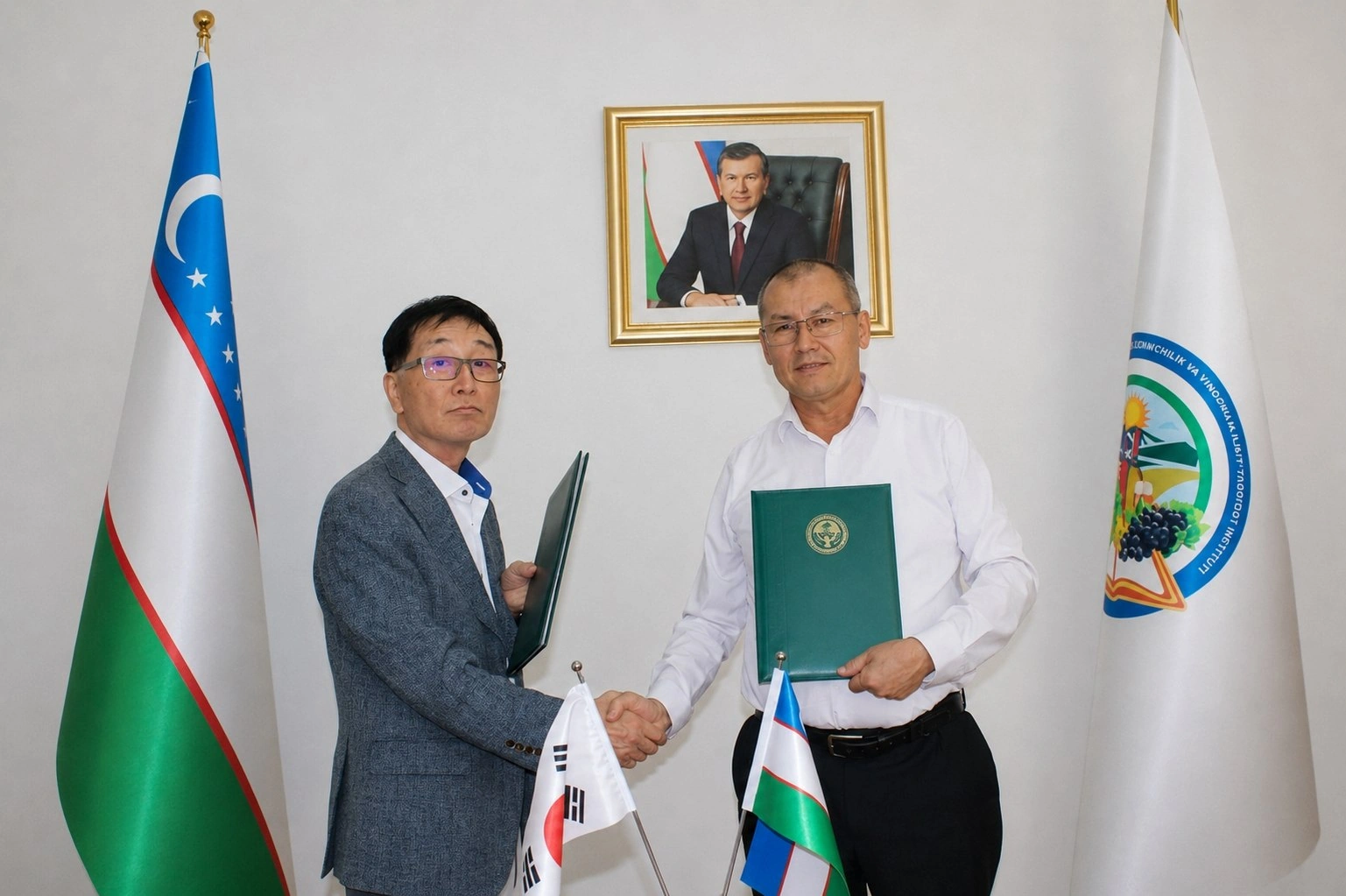
Agriculture, following the memorandum signed on August 25 between
the Korean Fruit Growers Association and Uzbekistan’s Academic M.
Mirzayev Research Institute of Horticulture and Viticulture.
According to the Ministry, under the agreement, the parties will
carry out joint research projects focused on cultivating
high-yielding and disease-resistant varieties of grapes, pears and
peaches, as well as producing high-quality, healthy planting
material.
The cooperation will include the introduction of modern breeding
methods, improvements to the variety-testing system and the
expansion of genetic resources used in horticultural research.
The partners also plan to adapt advanced agricultural
technologies and international best practices to Uzbekistan’s local
agro-climatic conditions.
“The cooperation is aimed at ensuring the transfer of innovative
technologies, strengthening scientific research capacity and
improving the professional skills of specialists through staff
exchanges,” the institute said.
The agreement is expected to support closer cooperation between
researchers and agricultural specialists from the two countries and
facilitate the exchange of expertise in modern horticultural and
viticultural practices.
Joint projects are also expected to contribute to the
sustainable development of Uzbekistan’s horticulture and
viticulture sectors while expanding the country’s agricultural
export potential.
According to the institute, cooperation with Korean specialists
could help increase the productivity and quality of fruits and
grapes produced in Uzbekistan and improve their competitiveness in
international markets.
The agreement represents another step toward strengthening
scientific and practical integration between Uzbekistan and South
Korea in agriculture, with research, technology transfer, and
specialist training forming key areas of cooperation.