BAKU, Azerbaijan,
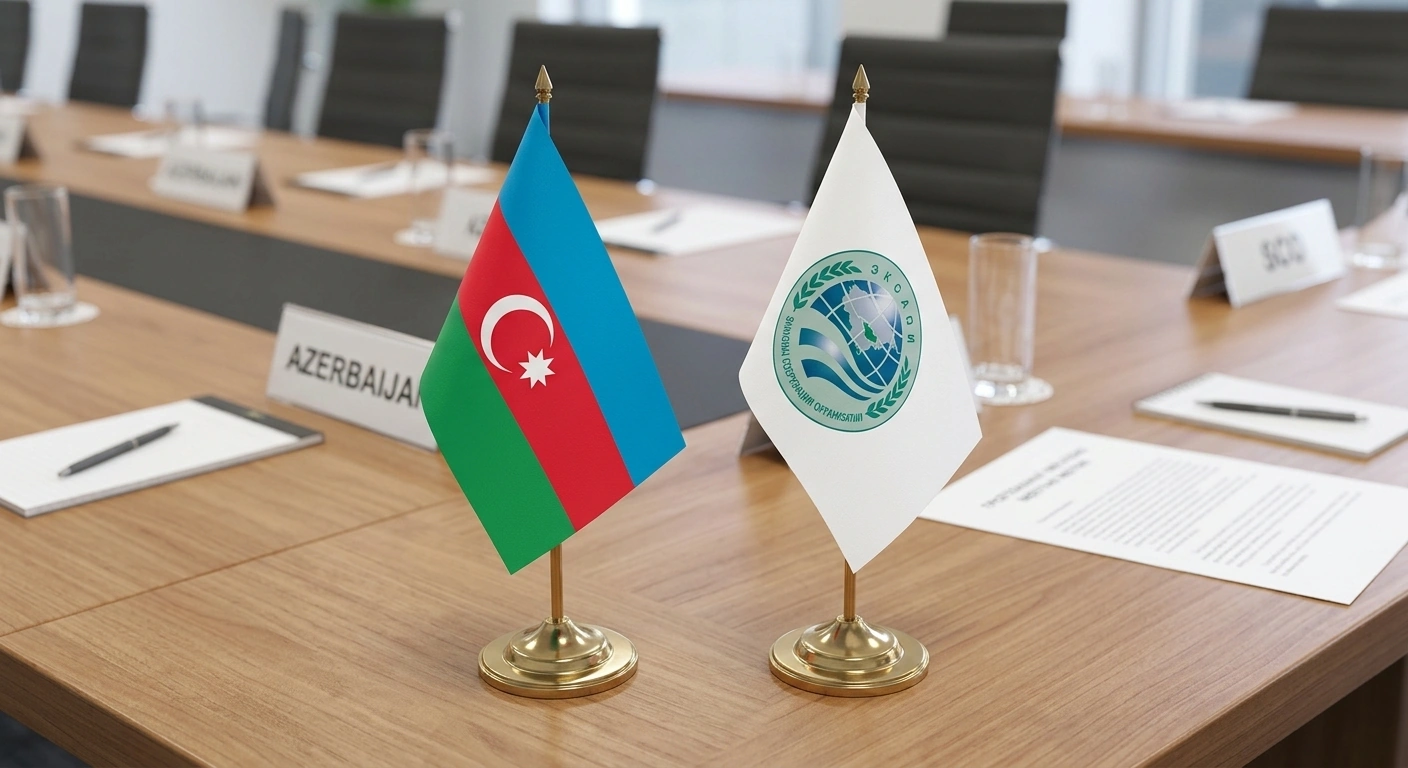
August 31. The Shanghai Cooperation Organization
(SCO) summit, to be held in Bishkek on August 31–September 1 and
dedicated to the organization’s 25th anniversary, comes against the
backdrop of a notable strengthening of Azerbaijan’s role in the
SCO’s Eurasian agenda.
Azerbaijan has been interacting with the SCO for more than a
decade. The country obtained dialogue partner status in 2015, while
the relevant memorandum was signed in Beijing in 2016. Over the
past two years, however, the nature of this interaction has changed
noticeably. In July 2024, Baku officially applied for observer
status, while in September 2025 the SCO decided to introduce a
unified “SCO Partner” status, abolishing the previous observer and
dialogue partner formats.
The transition to the new system of statuses still requires the
completion of legal procedures, but the process itself shows that
Azerbaijan’s interaction with the organization is gradually moving
beyond a formal partnership framework.
This is also reflected in the level of political representation.
President of Azerbaijan Ilham Aliyev attended the “SCO Plus”
meetings in Astana in 2024 and Tianjin in 2025. At the Tianjin
summit, the president described Azerbaijan’s relations with one of
the organization’s key members, China, as a foundation for broader
regional cooperation. “Azerbaijan is a reliable partner of China in
the region. We contribute to maintaining international and regional
peace and security, and implement large-scale economic, transport
and energy projects,” President Ilham Aliyev said.
China is of particular importance in this context. According to
the State Customs Committee of Azerbaijan, trade turnover between
the two countries reached $4.874 billion in 2025, increasing by
30.2% year-on-year. Azerbaijan’s exports to China rose 4.3-fold to
$84.4 million, while imports amounted to $4.790 billion.
Thus, the Chinese direction already has significant economic
weight for Baku. But the main point of convergence between
Azerbaijan and the SCO is not limited to trade. Transport
connectivity is becoming increasingly important. “Azerbaijan was
one of the first countries to support the One Belt, One Road
initiative put forward by the President of the People's Republic of
China. We are implementing substantial practical projects in this
direction,” the president said.
This is where the Middle Corridor becomes one of the key
elements of the broader framework. For the SCO, which brings
together China and Central Asian states, the development of routes
toward the Caucasus and Europe creates additional opportunities for
trade. For Azerbaijan, the growth of these flows strengthens the
country’s role as a transit hub. “Azerbaijan is one of the
transport and logistical hubs of Eurasia. We are actively
developing international transport corridors and creating modern
infrastructure. The East-West and North-South corridors have opened
up new economic transport prospects,” President Ilham Aliyev
said.
The figures show that this is no longer just a matter of plans.
According to the president, cargo traffic along the Middle Corridor
through Azerbaijan has increased by nearly 90% since 2022. At the
same time, transit times along the route have decreased
significantly. In 2025, the volume of freight transported along the
East-West corridor in Azerbaijan amounted to 16.9 million tons,
including 8.17 million tons along the Europe-Caucasus-Asia route.
The North-South corridor handled 9.29 million tons of cargo.
The next stage involves expanding infrastructure. Azerbaijan
plans to increase the capacity of the Alat International Trade
Seaport from 15 million to 25 million tons per year. This is
important not only for Azerbaijan’s national transport system, but
also for the entire Middle Corridor chain, where the capacity of
individual sections is becoming one of the key factors determining
further growth.
“Azerbaijan intends to increase the throughput capacity of the
Alat International Sea Port from 15 to 25 million tons per year.
The Middle Corridor represents a reliable and safe route connecting
China, Central Asia with Europe through Azerbaijan. Since 2022, the
volume of cargo traffic along the Middle Corridor through
Azerbaijan has grown by almost 90%. The transit time for cargo
along this corridor has been significantly reduced,” President
Ilham Aliyev said.
The importance of other projects is also gradually increasing
within this system. Agreements reached on connecting mainland
Azerbaijan with the Nakhchivan Autonomous Republic could expand the
country’s transit capabilities, while the Zangezur Corridor is
viewed by Baku as a potential component of a broader Eurasian
transport network. “I am confident that the Zangezur Corridor will
soon become another important segment of the Middle Corridor, as
well as the North-South Corridor, which will contribute to
enhancing peace, multilateral partnership and benefit all of
Azerbaijan's close and distant neighbors to the east, west, north
and south of our borders,” the president said.
At the same time, cooperation extends beyond transport.
Azerbaijani representatives participate in meetings of SCO
ministers responsible for foreign trade and external economic
relations, the SCO Economic Forum, as well as the China-SCO
Industrial Cooperation Conference. Trade, investment, energy,
digitalization and sustainable development are among the key areas
of these contacts.
Against this backdrop, the Bishkek summit appears to be another
stage in an ongoing process rather than a starting point. Over the
past several years, Azerbaijan has simultaneously strengthened ties
with China, increased transit flows along key Eurasian routes and
raised the level of its interaction with the SCO itself.
The next question is therefore not only what status Azerbaijan
will have under the SCO’s updated system. More important is the
practical role the country will be able to play within the
organization’s expanding economic and transport architecture. This
is where the interests of Baku and the SCO increasingly converge.
For Central Asian countries and China, Azerbaijan provides access
to the Caucasus and European markets, while for Azerbaijan itself,
deeper engagement with the SCO offers an additional platform for
advancing transport and economic projects.
As a result, Azerbaijan’s role in the SCO is gradually moving
from the category of formal partnership toward practical regional
influence. If cargo growth, the expansion of the Alat port, the
development of the Middle Corridor and the potential integration of
the Zangezur route continue, Baku will become increasingly involved
in shaping connectivity between China, Central Asia, the Caucasus
and Europe. In this case, Azerbaijan’s growing role in the SCO will
be determined not only by its formal status within the
organization, but by how important a node of the Eurasian economy
and transport system the country becomes.