BAKU, Azerbaijan, August 31. Uzbekistan and the
United Arab Emirates discussed expanding practical cooperation on
climate resilience, water management and sustainable development of
arid regions.
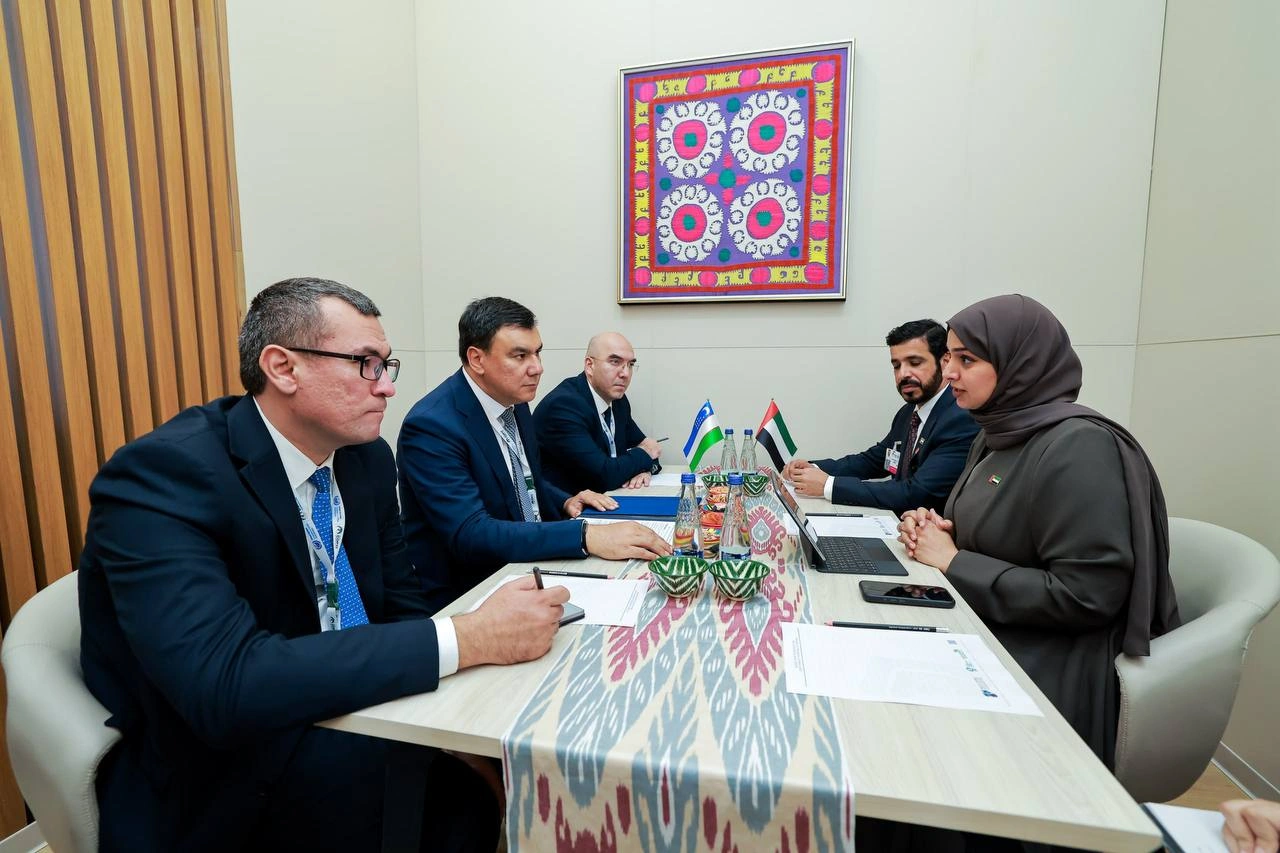
This was reflected in the statement by the National Committee on
Ecology and Climate Change of Uzbekistan, following a meeting
between Aziz Abdukhakimov, chairman of Uzbekistan’s National
Committee on Ecology and Climate Change, and UAE Minister of
Climate Change and Environment Amna bint Abdullah Al Dahak Al
Shamsi.
The talks focused on developing arid economies, improving the
efficient use of water resources and introducing modern approaches
to growing salt- and drought-resistant crops.
Particular attention was given to the UAE’s experience in
establishing and developing its Food Tech Valley, with the sides
discussing how advanced agricultural and food technologies could be
adapted to Uzbekistan’s arid climate.
Al Shamsi supported Uzbekistan’s initiative to establish a
National Center for Hydrometeorology and Climate Change and
expressed the UAE’s readiness to help attract international
financing, modern technologies and technical expertise for joint
projects.
“International financing, advanced technologies and expertise
can play a critical role in strengthening Uzbekistan’s climate
resilience and developing sustainable solutions for arid regions,”
the sides noted during the meeting.
Uzbek officials also presented national climate and
environmental projects being implemented at the initiative of
President Shavkat Mirziyoyev. The UAE delegation expressed strong
interest in the initiatives and gave them a positive
assessment.
Representatives of Green University and Uzbekistan’s National
Climate Change Center also briefed the UAE side on their activities
and ongoing work.
The Uzbek side invited Al Shamsi to attend Eco Expo Central Asia
2027, scheduled to take place in Tashkent on June 15-17, 2027.
The meeting highlighted growing opportunities for Uzbekistan and
the UAE to translate climate cooperation into practical projects
covering water conservation, food security, climate technologies
and the sustainable development of arid territories.