BAKU, Azerbaijan, August 31. Kazakhstan is
developing a mechanism that will enable its scientists to
participate in scientific experiments and research programs of the
European Organization for Nuclear Research (CERN).
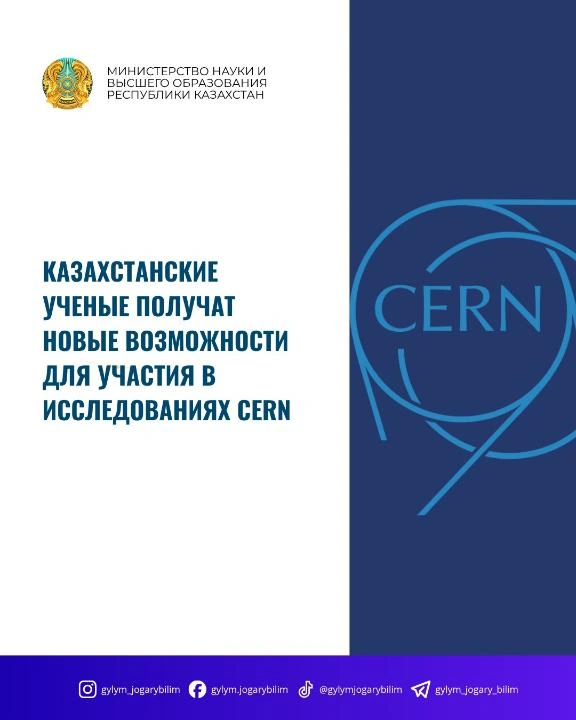
This was announced by the press service of the Kazakh Ministry
of Science and Higher Education, following the meeting between
Acting Minister Sayasat Nurbek and CERN Director-General Mark
Thomson.
According to the ministry, a draft protocol to the 2018
Agreement on International Cooperation between the Government of
Kazakhstan and CERN has been developed. The document is aimed at
establishing a practical mechanism for the participation of Kazakh
scientists in CERN's scientific experiments and research
programs.
''The sides discussed further steps to develop scientific and
technological cooperation between Kazakhstan and CERN, including
expanding cooperation in high-energy physics,'' the ministry
says.
Under the proposed mechanism, Kazakh scientists will be able to
undertake research internships and participate in CERN research
programs through the Scientific Internships program of Kazakhstan's
Center for International Programs.
This is expected to help develop the skills of Kazakh
specialists, expand international scientific cooperation and
further integrate Kazakhstan's scientific community into the global
research environment.
''Cooperation with CERN is of particular importance to us. The
Head of State has set the task of training domestic engineering and
technical personnel in the peaceful use of nuclear energy, taking
into account the prospects for the development of Kazakhstan's
nuclear industry,'' Sayasat Nurbek said.
He noted that Kazakhstan is currently undertaking efforts to
transform its scientific ecosystem and introduce a new science
management model focused on the practical application of research
results and their integration into the economy.
According to Nurbek, Kazakhstan is also modernizing its
universities and expanding international cooperation in higher
education. Partnerships have been established with 40 leading
universities worldwide, while branches of 33 foreign universities
have been opened in Kazakhstan.
Kazakh scientists also have opportunities to undertake
internships at major international research centers, while
Kazakhstan's scientific community is being integrated into the
global research environment, including through the European Union's
Horizon Europe framework program for research and innovation.
The sides also focused on the development of fundamental science
and the training of highly qualified scientific and engineering
personnel.
The parties confirmed their interest in further strengthening
the partnership, noting the importance of cooperation with CERN for
the development of fundamental science, strengthening Kazakhstan's
scientific potential, and creating new opportunities for domestic
researchers.