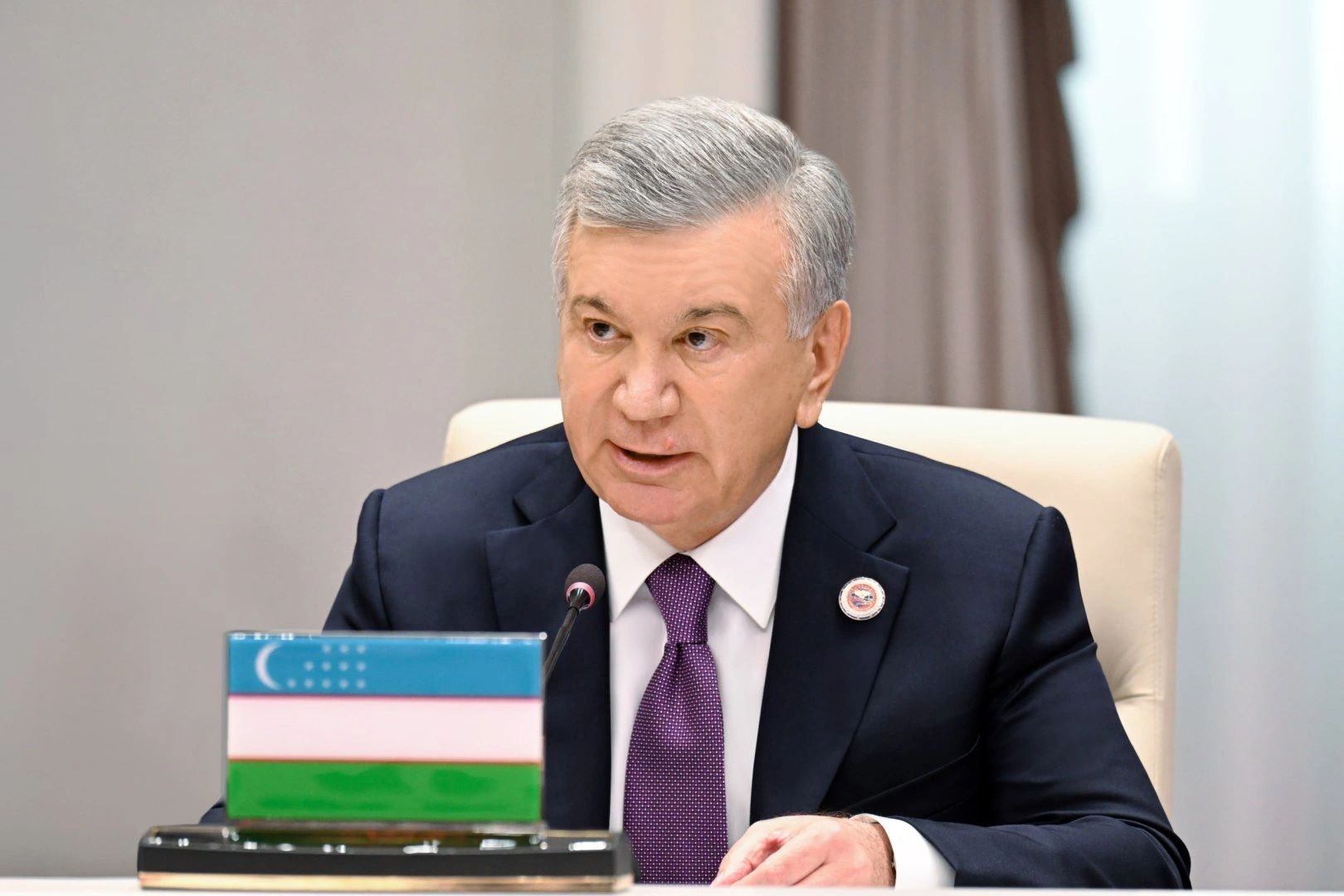
BAKU, Azerbaijan, September 1. Uzbekistan’s
President Shavkat Mirziyoyev called for the Shanghai Cooperation
Organization to develop a long-term “SCO–2040” vision focused on
deeper economic integration, investment, technology and
infrastructure cooperation among member states, Trend's special correspondent
reports.
Speaking at the SCO’s 25th-anniversary summit in Bishkek,
Mirziyoyev said the organization had demonstrated its relevance
over the past quarter-century and should now place greater emphasis
on practical economic cooperation and interconnected
development.
“The main goal should be to create an interconnected and
sustainable space where investment, technology and knowledge can
move freely, large infrastructure and industrial projects can be
implemented, and direct ties between regions, businesses and people
can expand,” Mirziyoyev said.
The Uzbek president proposed that the new long-term vision serve
as a framework for strengthening the SCO’s economic role and
expanding cooperation beyond political and security issues.
Among the key initiatives put forward by Uzbekistan was the
creation of an SCO Industrial Cooperation Map, which would bring
together special economic zones, production facilities, markets and
logistics networks through a digital platform for businesses,
investors and government agencies.
Mirziyoyev also called for the SCO Council of Heads of
Government to begin selecting a portfolio of projects in
transportation, energy, industrial cooperation and digital
infrastructure that could be implemented with the practical launch
of an SCO Development Bank.
The proposals come as the SCO seeks to expand practical
cooperation across its increasingly diverse membership. The
organization’s 2026 summit in Bishkek is focused on strengthening
cooperation in areas including trade, transport, digital
technologies, environmental protection and artificial
intelligence.
Uzbekistan also proposed deeper cooperation in artificial
intelligence, water and energy efficiency, transport connectivity
and food security. Mirziyoyev backed China’s initiative to
establish a World Organization for Cooperation on Artificial
Intelligence and proposed creating an open multilingual SCO data
corpus.
The Uzbek president’s proposals point to an effort to position
the SCO as a platform for economic connectivity and investment-led
development, particularly across Central Asia. The emphasis on
industrial zones, logistics, digital infrastructure and a potential
development bank suggests that Tashkent wants the organization to
translate its political dialogue into concrete cross-border
projects and business opportunities.
The summit concluded with the adoption of the Bishkek
Declaration marking the SCO’s 25th anniversary, alongside a package
of documents aimed at expanding cooperation across several
areas.