BAKU, Azerbaijan, September 4. Uzbekistan and
Mongolia have agreed to develop an “Aral-Gobi Partnership” aimed at
restoring degraded drylands and reducing the impact of sand and
dust storms, as the two countries seek to coordinate responses to
shared environmental challenges.
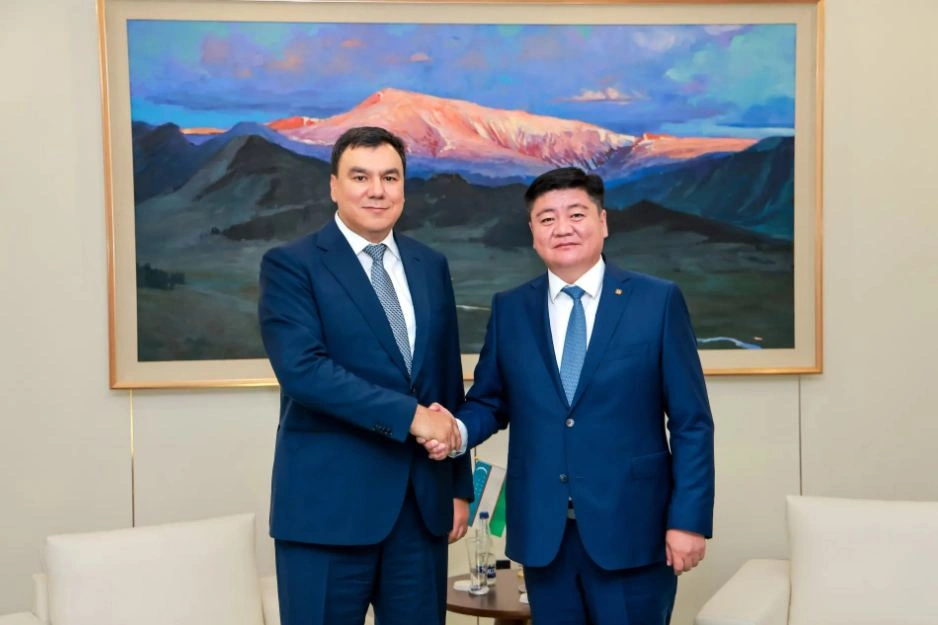
This was reflected in the statement by the Uzbekistan’s National
Committee for Ecology and Climate Change, following a meeting
between Aziz Abdukhakimov, adviser to the president of Uzbekistan
on environmental issues and chairman of the National Committee for
Ecology and Climate Change, and Mongolia’s Minister of Environment
and Climate Change Sandag-Ochir Tsend to discuss expanding
cooperation on environmental protection, land restoration and
climate adaptation.
The sides noted that Uzbekistan and Mongolia face similar
environmental challenges, including desertification, pasture
degradation, drought and increasingly severe sand and dust storms.
These issues affect ecosystems, agriculture and living conditions
in both countries.
Following the meeting, the sides agreed to jointly develop the
“Aral-Gobi Partnership for Dryland Ecosystem Restoration and Sand
and Dust Storm Reduction.”
The initiative will initially focus on identifying pilot areas
in Uzbekistan and Mongolia, assessing priority areas for
cooperation and preparing specific project proposals. Particular
attention will be given to restoring degraded land and pastures,
reducing the risks associated with sand and dust storms and
introducing sustainable land-management practices.
“Uzbekistan and Mongolia intend to jointly develop project
proposals and attract international financing” for these
initiatives, the committee said.
The two countries plan to explore financing opportunities
through the Adaptation Fund, Global Environment Facility, Green
Climate Fund, World Bank and other international financial
mechanisms.
Mongolia’s chairmanship of the UN Convention to Combat
Desertification is expected to provide additional opportunities to
promote joint initiatives and strengthen international cooperation
on dryland restoration.
Another proposed area of cooperation is the Central Asia and
Mongolia Land Project Preparation Facility (CA+M Land PPF). The
mechanism is intended to help develop investment-ready land
restoration projects, from identifying priority areas and preparing
concepts to developing the documentation required to attract
international financing.
The initiative could provide a practical framework for turning
shared environmental challenges into coordinated regional projects,
while linking land restoration efforts in Central Asia and Mongolia
with international climate and environmental financing.