You set aside a certain amount from your monthly income. Over
time, your savings start to build up. You do not want to spend this
money, but simply keeping it aside no longer feels sufficient. And
that is when a simple question arises: “How can I put
my money to better use?”
When you start thinking about investing, even more questions
come up:
Where should I start? How much money do I need to begin
investing? What is risk? What is the difference between stocks,
bonds, and ETFs? How should I allocate my money? How can I tell
whether an investment instrument is right for me?
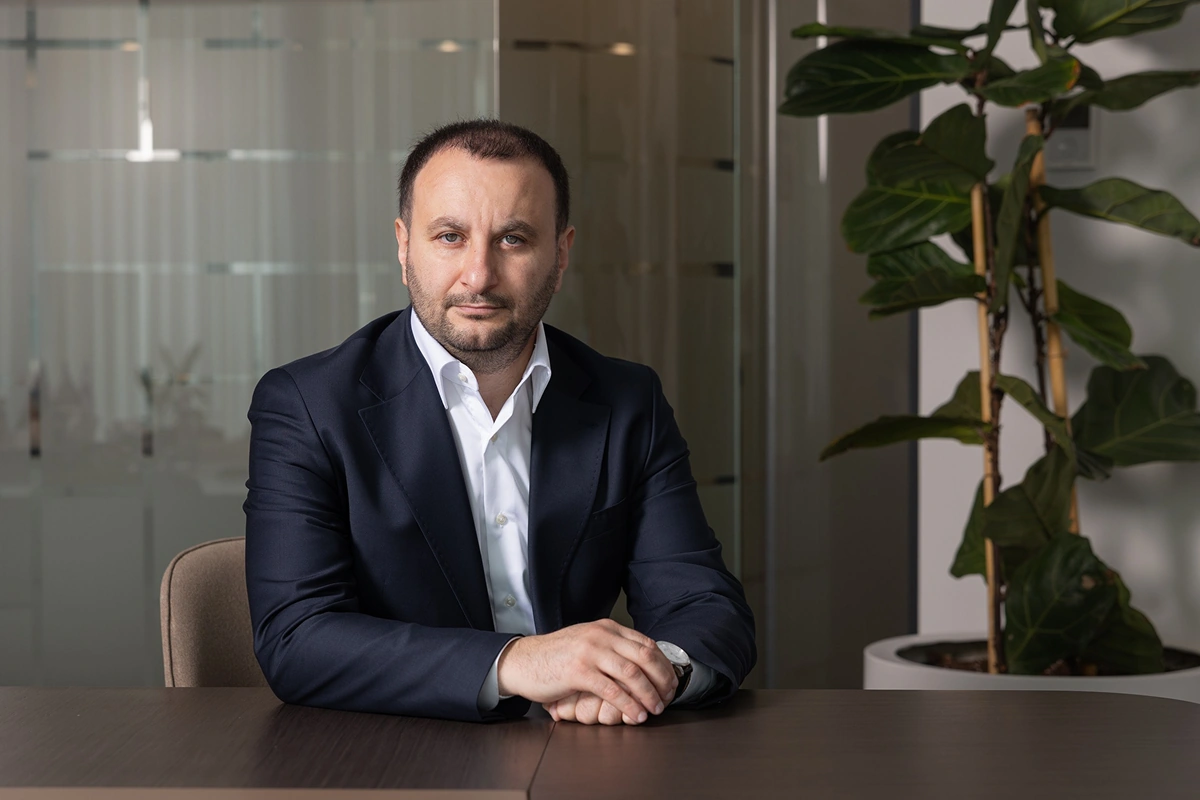
We asked these questions to Elshad Ibrahimov, Director
of the Treasury Department at Kapital Bank.
- What should someone who wants to start investing but
has no experience in this area do first?
Choosing a specific investment instrument should not be the
first step. First, you should ask yourself a very simple question:
“Why am I investing, and when will I need this
money?”
For example, your goal may be to build long-term capital, buy a
home, save for education, or create an additional source of
financial resources for the future. The time horizons for these
goals are different, so naturally, your approach to investing will
also vary.
There is another important point to keep in mind. The money you
invest should not be the only funds available to you in case of
unexpected expenses. Market prices can decline at certain times. If
you need your money precisely when the market is down, you may be
forced to sell your investment at an unfavorable price.
That is why I would approach the process in the following order:
first define your goal, then assess your financial
situation, and only after that explore which investment instruments
may be suitable for you.
- What is the difference between saving and
investing?
When we talk about putting money to better use, it does not
necessarily mean investing. A savings account and a
deposit are also options that allow you to earn income on your
funds.
For example, if you plan to use your money in the coming months
and want to keep it accessible, a savings account may be a suitable
option. With a Kapital Bank savings account, you can
even deposit money that you plan to spend as soon as tomorrow and
earn income on it. At the same time, you retain the
flexibility to use the funds whenever you need them.
If, however, you do not plan to use your money for a longer
period, a deposit may be an alternative.
One of the main advantages of a deposit is the opportunity to earn
income under predetermined terms.
Investing is different. Here, the investor accepts the risk of
changes in the market value of assets in exchange for the potential
to earn a higher return.
That is why there is no universal answer to the
question, “How can I put my money to better use?” You
need to consider what you are saving for, when you will need the
money, and what level of risk you are prepared to accept.
- What should someone who is saving for the long term
consider when thinking about the future value of their
money?
It is important to take inflation into account. Even if the
amount of money remains unchanged, rising prices can reduce its
purchasing power. For example, today AZN 10,000 may be enough to
buy a certain range of goods and services. In a few years, the same
amount may no longer be enough to purchase the same things. In
other words, the figure in your account has not changed, but the
real value of your money has.
That is why someone saving for the long term should ask not only
“How much money have I saved?” but also
“What will the purchasing power of this money be in the
future?”
At the same time, it would be wrong to interpret this as a call
to invest all your savings. Investments also carry certain risks,
and the same option will not necessarily be suitable for everyone.
The key is to explore options based on your financial goals, time
horizon, and financial capacity.
- What should an investor actually understand when it
comes to risk?
When we talk about risk, the first thought that usually comes to
mind is, “I could lose my money.” Of
course, that is one aspect of risk, but for a new investor, the
issue is somewhat broader.
Let’s say you have invested USD 1,000, and after some time its
value falls to USD 800. Your natural first reaction may be:
“I lost USD 200.” But there is another
question to consider: “When will I need this
money?”
If you do not need the money in the near future, you may have
the option to wait out a market downturn. But if you definitely
need that USD 1,000 in three months, the situation is different.
You may be forced to sell when the market is down and lock in a
loss.
That is why it is important to look at risk from two
perspectives: “Am I psychologically prepared for these
fluctuations?” and “Does my financial
situation allow me to take this level of risk?”
In other words, risk is not only about asking, “How
much could I lose?” Sometimes the more important
question is: “Could this loss disrupt my financial
plan?”
There is another principle worth remembering: higher
potential returns generally come with higher risk. A promise of
“high returns with zero risk” should be treated as a serious
warning sign.
- How can a beginner understand the difference between
stocks, bonds, and ETFs?
When you start investing, the first thing you need to understand
is what the available investment instruments actually are. It is
difficult to make an informed choice without knowing what you are
buying.
A stock represents an ownership stake in a
particular company. Its price may be affected by the company’s
financial performance, its business prospects, and market
expectations regarding the company.
A bond is a debt instrument. You provide funds
to a government or company for a certain period and may earn income
in accordance with the terms of the bond. However, bonds should not
automatically be considered “risk-free investments.” The financial
condition of the issuer, maturity, interest rate, and other terms
are all important factors.
An ETF, or exchange-traded fund, is a fund
traded on a stock exchange. It may contain a number of stocks,
bonds, or other assets. For example, an ETF that tracks a
particular index can provide access to a large number of companies
included in that index through a single transaction.
That is why I would not give a universal answer to the question,
“Which one is better?” The key is to
understand which instrument is aligned with your goals,
investment horizon, and risk capacity.
- Does it make sense not to put all your money into one
investment?
We often hear the advice: “Don’t put all your money in one
place.” In fact, this refers to diversification. But
diversification does not simply mean buying different stocks. For
example, if you have invested all your money in stocks of different
technology companies, you may have a large number of companies in
your portfolio, but it can still be heavily dependent on the
performance of a single sector.
A broader approach may involve considering different asset
classes, such as stocks, bonds, and cash, as well as different
sectors, companies, and geographic markets.
ETFs can also help with diversification in certain cases.
However, buying an ETF does not automatically mean that risk is
fully diversified. The key is to understand which assets are
included in the ETF.
In other words, the goal of diversification is not
simply to have many different investments. The aim is
to prevent a negative change affecting a single company, sector, or
market from having an excessive impact on your overall
portfolio.
- What should investors look at when choosing a specific
investment instrument?
The first question a beginner should ask should not be,
“Will this investment go up?” It is
better to start with simpler questions:
What exactly am I buying?
Where does the return on this investment come
from?
What are the main risks?
What could affect its price?
What costs will I incur?
And perhaps the most important question: “Do I
really understand what I am investing in?”
For example, if you are buying stocks, you should understand
what the company does and how it generates revenue. If you are
buying an ETF, you should research which index or sector it tracks,
what assets it contains, and what costs are involved. If you are
buying a bond, you should understand who the issuer is, its
maturity, the terms under which returns are generated, and the key
risks involved.
Today, digital platforms are making investing more accessible
than ever. For example, Birbank Invest allows users to
start investing with as little as USD 1 and provides access to more
than 12,000 stocks and ETFs. This lowers the barrier
to entry for investors. However, having more investment options
does not change one fundamental principle: investors
still need to understand what they are buying.
Being a good investor starts not with finding the “right stock,”
but with learning to ask the right
questions. The goal of investing is not to take
advantage of every opportunity, but to make decisions that you
understand, that align with your financial plan, and whose level of
risk you are prepared to accept.
- Thank you for your detailed answers. I think we will
certainly return to this topic again. - I’d be happy to. Thank you for the
conversation.