BAKU, Azerbaijan, October 1.
The railway project in Azerbaijan’s Nakhchivan will create new
opportunities for local communities and strengthen the overall
resilience of the Middle Corridor, European Commission Coordinator
for Blended Finance and Investment, Alice Bighinzoli, said during a
World Bank Group online event titled "Middle Corridor: Next Stage,"
Trend’s
correspondent reports.
According to her, the European Union (EU) aims to increase
investment, expand trade, create new jobs, and strengthen local
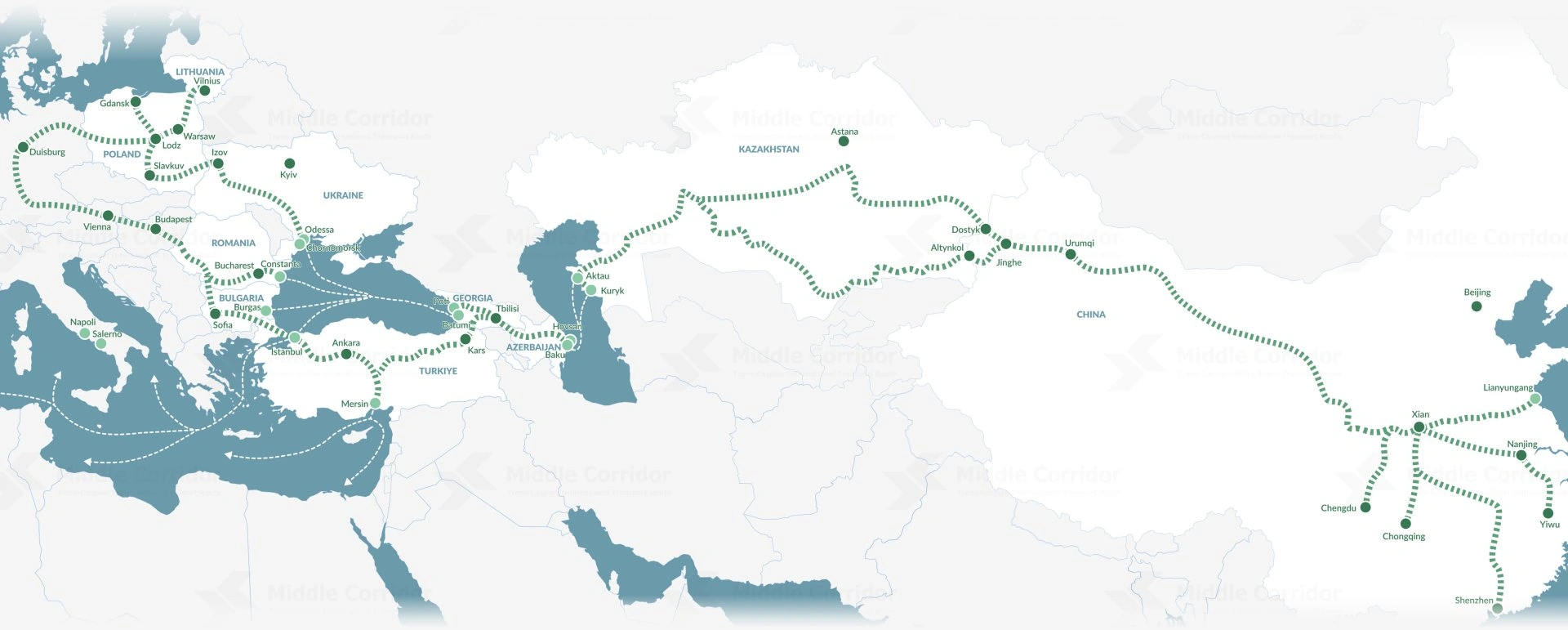
economies along the Trans-Caspian International Transport Route
(TITR).
"Through our connectivity agenda, we want to support linking
Central Asia with the South Caucasus and the Black Sea region, and
onward to Europe," she noted.
Bighinzoli emphasized that connectivity must be inclusive, and
the benefits of developing transport links should reach local
economies and partner countries.
"To this end, we are working to create a network of connections
and roads, comprising not just a single transport route but various
links that will connect regional markets, industrial hubs, and
different points along the corridor," she explained.
She noted that the EU is already implementing relevant projects
in cooperation with partner countries.
"We are also supporting a feasibility study for a railway in
Nakhchivan to connect the mainland with Nakhchivan itself; this
will create new opportunities for local communities and strengthen
the overall resilience of the corridor," the European Commission
representative said.
According to her, the EU is also working on major roads in
Central Asia, supporting logistics centers, and focusing on inland
areas.
Bighinzoli highlighted the EU's role as a catalyst and
coordinator, fostering cooperation among partner countries along
the Middle Corridor.
"It’s crucial for the partner countries to work together along
the corridor. We can facilitate this coordination and help
establish platforms for dialogue among the partner countries," she
added.