BAKU, Azerbaijan, October 2.
Turkmenistan reviewed international methane-emission standards
yesterday as part of work to develop its regulatory framework for
the energy sector.
The information was reported by the Ministry of
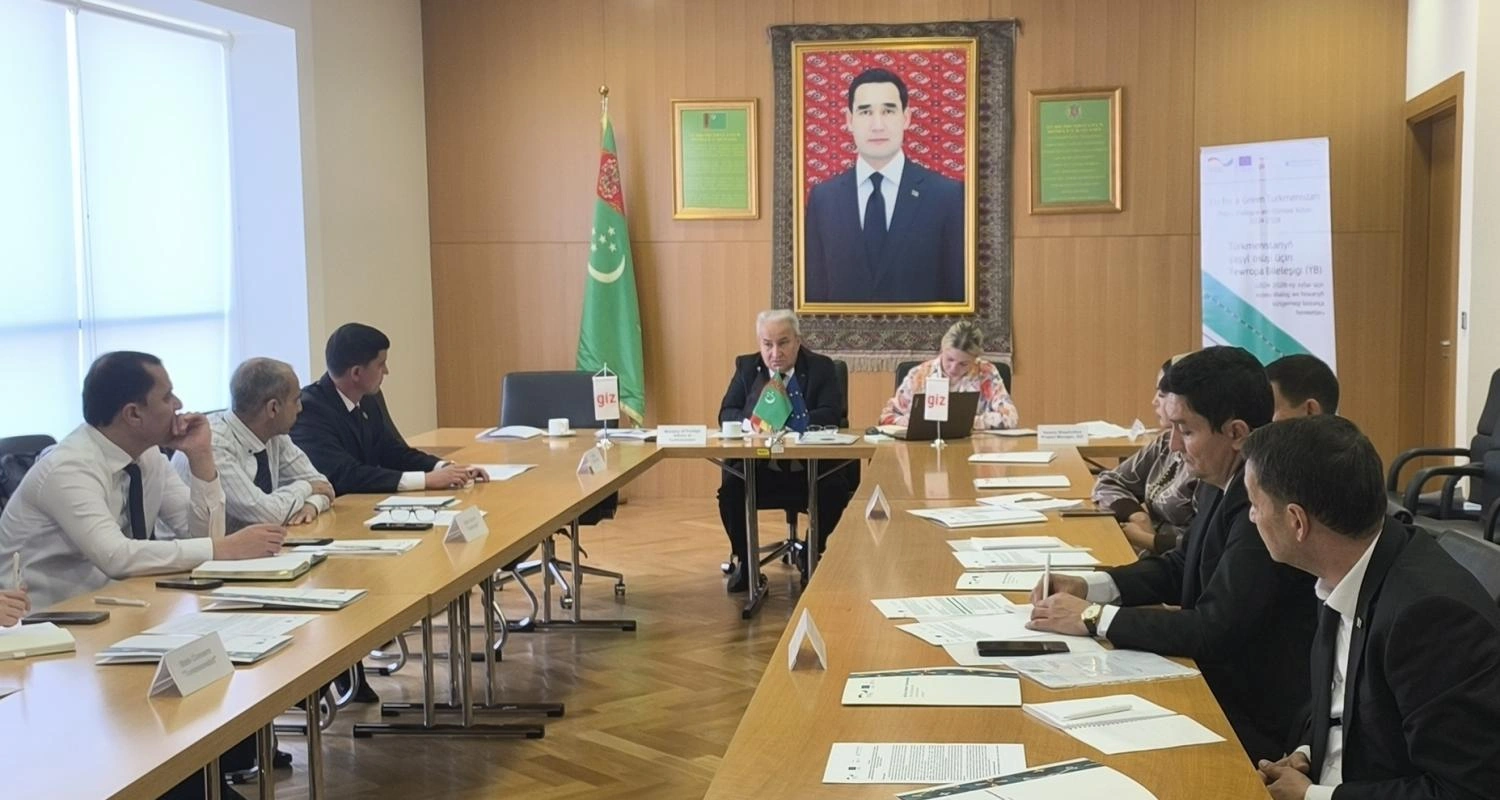
Foreign Affairs of Turkmenistan following a consultation meeting
held at the Research Institute of Natural Gas in Ashgabat.
Representatives of the Mejlis, Ministry of Energy, Ministry of
Environmental Protection, Turkmengaz and Turkmennebit took part in
the meeting, which focused on international standards and
regulations for reducing methane emissions, the ministry said.
According to the ministry, participants considered
approaches to reviewing Turkmenistan’s regulatory framework in line
with recognized international practices, including the EU
regulation on methane emissions in the energy sector.
The meeting was held under the EU-funded project “EU
for Green Development in Turkmenistan: Policy Dialogue and Climate
Action 2024-2029,” co-financed by the European Union and Germany’s
Federal Foreign Office and implemented by GIZ, according to the
ministry.
Meanwhile, Turkmenistan’s methane agenda has moved
beyond policy discussions toward practical emissions monitoring and
mitigation. In an exclusive interview with Trend UNEP told that eight
methane sources in Turkmenistan had been successfully mitigated and
remained under monitoring. The sources were linked to pipelines,
wells and flaring, while UNEP estimated that they had emitted more
than 27,000 tons of methane before mitigation.
The issue is becoming increasingly relevant to the
country’s gas sector as Turkmenistan seeks to expand production and
diversify exports. In 2026, the country launched the fourth phase
of Galkynysh development with China’s CNPC, a project expected to
add up to 10 billion cubic meters of annual commercial gas
production, while Ashgabat continues to promote projects such as
TAPI and explore broader energy cooperation with the EU.
At the same time, the EU’s methane regulation is
establishing increasingly detailed requirements for measuring,
reporting and verifying methane emissions associated with fossil
fuels entering the European market. From January 1, 2027, importers
will have to demonstrate that relevant contracts for oil, natural
gas and coal from outside the EU are covered by methane monitoring,
reporting and verification measures equivalent to those required
under the regulation.
The regulation also introduces methane-intensity
reporting requirements for imported oil and gas from August 2028,
while from August 2030 certain new or renewed supply contracts will
be subject to maximum methane-intensity requirements.
Against this backdrop, improving methane measurement
and regulatory practices can have implications not only for
environmental performance but also for the transparency and
international marketability of Turkmenistan’s natural gas.
Earlier, editor-in-chief of the Türkmen Dünýäsi
newspaper, Batyr Muradov, answering to a question from Trend, told that
Turkmenistan is exploring the possibility of exporting natural gas
to Europe through Azerbaijan as part of the country's potential
future energy projects.