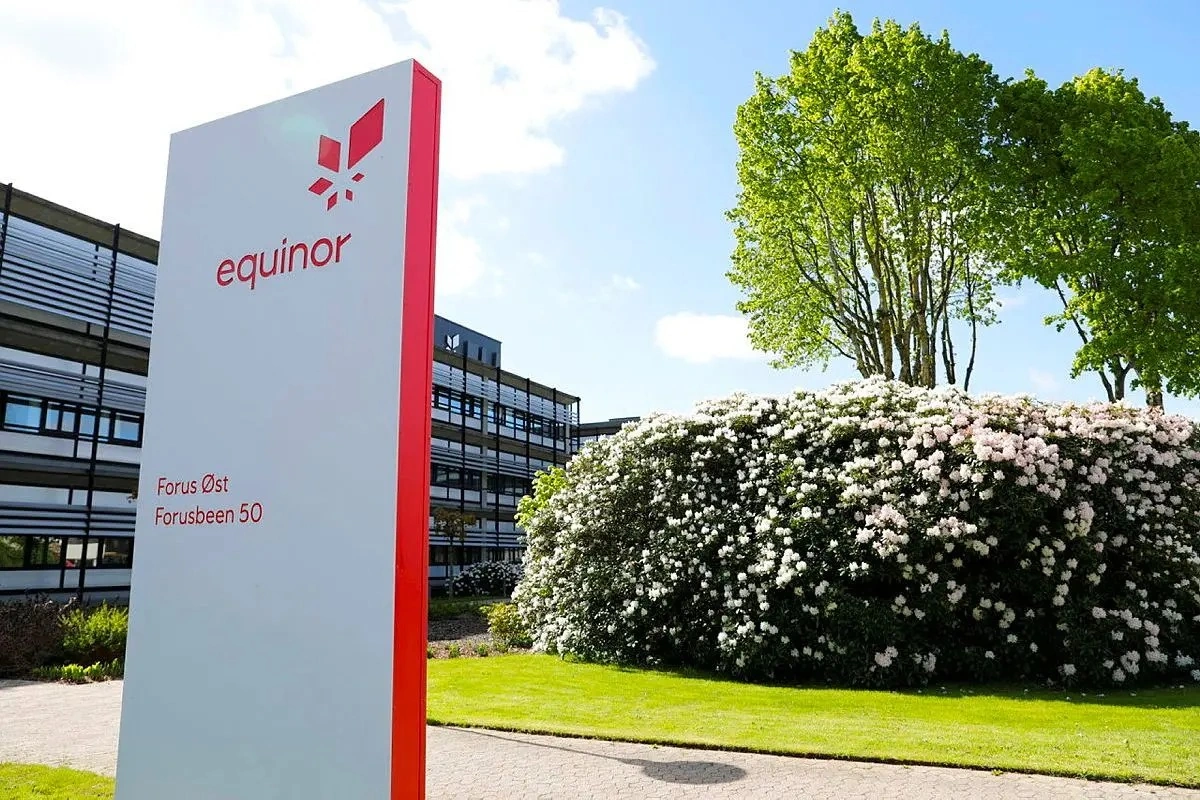
BAKU, Azerbaijan, October 7. Equinor has raised
the cost estimate for the Snøhvit Future project to NOK 26.5
billion ($2.5 billion) in 2026 value, while maintaining the
project’s existing schedule, the company said.
The partnership expects onshore compression at the Hammerfest
LNG facility to begin in 2029, followed by electrification in
2030.
The updated estimate was submitted to Norway’s Ministry of
Energy as part of the government’s proposed national budget for
2027.
Equinor had estimated the project at just over NOK 20 billion in
2025 value in December 2025. The original investment estimate
included in the project’s Plan for Development and Operation (PDO),
submitted in 2022, was NOK 13.2 billion. Adjusted to current krone
values, the original estimate is equivalent to approximately NOK
15.2 billion.
Compared with the December 2025 estimate of slightly above NOK
20 billion, the latest figure of NOK 26.5 billion represents an
increase of more than 32%. Against the inflation-adjusted 2022
estimate of NOK 15.2 billion, the current cost estimate is
approximately 74% higher.
“We take the cost development of Snøhvit Future seriously. The
project is being carried out at an operating facility and is more
complex than anticipated. It has also been affected by unforeseen
issues and challenges,” Trond Bokn, Equinor’s senior vice president
for project development, said.
According to Bokn, operational challenges at the Hammerfest LNG
plant, adverse weather conditions and difficult rock conditions
encountered during construction of the power cable tunnel have
affected the project’s progress and costs.
Equinor said it is working closely with suppliers to manage the
complexity of the project and implement measures aimed at ensuring
safe and efficient execution.
Despite the higher costs, the company said Snøhvit Future
remains a profitable project and is expected to support employment
in Hammerfest, Norwegian value creation and long-term energy
supplies to Europe.
The project is currently around 60% complete. The compressor
module was installed at Melkøya in August 2026, while the steam
boiler module is expected to arrive in spring 2027.
Snøhvit Future consists of two main components: onshore
compression and electrification of Hammerfest LNG. The compression
facilities are intended to maintain plateau production as reservoir
pressure declines, while electrification is expected to reduce the
LNG plant’s annual carbon dioxide emissions by approximately
850,000 tonnes.
The planned emissions reduction is equivalent to around 2% of
Norway’s annual emissions, according to Equinor.
The project also includes a new substation at Melkøya, a subsea
power cable to the facility and a 3.2-kilometre power cable tunnel
between Meland and Hyggevatn. Statnett is constructing a substation
at Hyggevatn and a power line from Skaidi to Hyggevatn.
Equinor expects more than 70% of the project’s value creation
during the development phase to go to Norwegian companies, with
more than one-third of that share expected to benefit companies in
Northern Norway.
The Hammerfest LNG facility employs around 750 people during
normal operations and supports approximately 1,450 jobs when wider
economic effects are included.
The Snøhvit partnership comprises Equinor Energy AS with a
36.79% interest, Petoro AS with 30%, TotalEnergies EP Norge AS with
18.4%, Vår Energi ASA with 12%, and Harbour Energy Norge AS with
2.81%.
The Snøhvit Future project is designed to extend the operating
life of the Hammerfest LNG facility, support continued gas exports
and maintain energy supplies to Europe beyond 2050.