
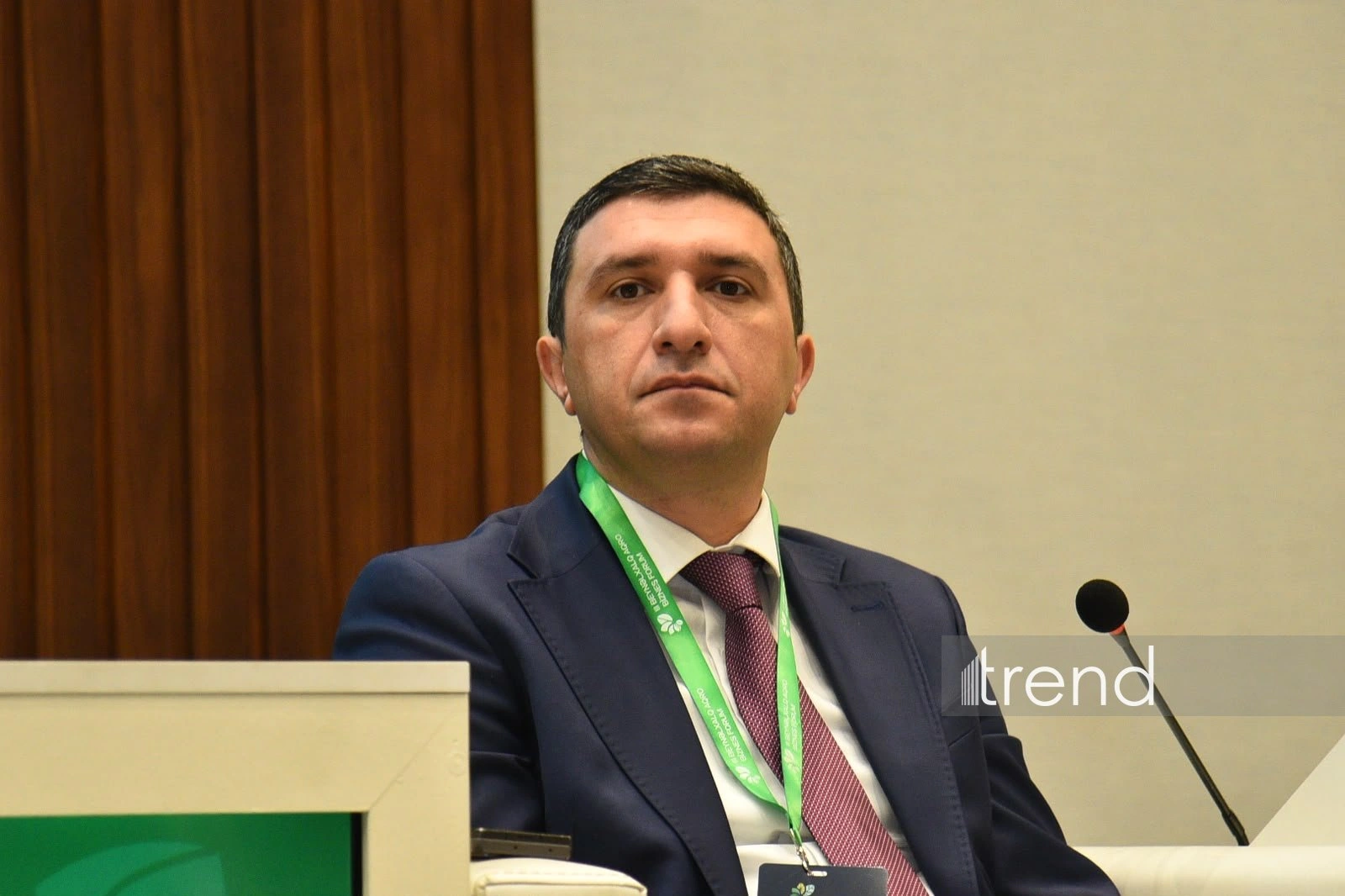
BAKU, Azerbaijan, October 9. One of the main
challenges in financing Azerbaijan’s agricultural sector is that
banks apply the same lending conditions to agriculture as they do
to other industries, without accounting for the sector’s specific
characteristics. Seasonal repayment schedules, longer loan
maturities, and alternative collateral mechanisms are needed to
improve farmers’ access to finance, Elkhan Mikayilov, chair of the
Food and Agriculture Working Group at the American Chamber of
Commerce in Azerbaijan (AmCham Azerbaijan), said at the 3rd
International Agro Business Forum in Baku on Friday, Trend’s correspondent reports
from the event.
According to Mikayilov, government agencies and banks currently
offer various financial instruments, but farmers are unable to take
full advantage of them. He said the reasons for the mismatch
between the availability of financial instruments and the actual
needs of the agricultural sector should be examined and practical
mechanisms developed to address the problem.
“The main problem is the asymmetry between supply and demand.
Government agencies and banks offer various instruments, but
Azerbaijani farmers cannot benefit from these opportunities to a
sufficient extent. We need to examine the reasons and develop
practical mechanisms to address them,” he said.
Mikayilov noted that one of the main challenges in agricultural
financing was the failure to tailor lending conditions to the
sector’s specific characteristics. He said banks often apply
approaches used in industries such as automotive manufacturing and
furniture production when lending to agricultural businesses.
The AmCham Azerbaijan representative explained that agricultural
income, particularly in crop production, is largely seasonal.
However, loan repayment schedules often require borrowers to make
equal payments throughout the year.
“International experience shows that agriculture needs its own
financing and loan repayment mechanisms. Financial instruments
should provide for higher payments during peak seasons and
interest-only payments during off-season periods. This approach can
be implemented through guarantee mechanisms,” he said.
Another important issue is loan maturity, Mikayilov said.
Growing perennial crops and establishing orchards require
substantial upfront investment, which can take years to recoup. In
some cases, farmers must wait three to five years or longer before
their fruit trees begin generating income.
He said grace periods offered by financial institutions
sometimes fail to reflect the specific characteristics of
agricultural production. Extending loan maturities and providing
longer grace periods until farmers begin earning returns on their
investments would therefore be appropriate.
Mikayilov also pointed to financial literacy, financial
discipline, and collateral requirements as factors limiting
farmers’ access to financing. Some farmers, he said, lack the
financial knowledge and documentation needed to use the financial
instruments offered by banks.
Requiring agricultural businesses seeking loans to provide real
estate collateral under the same rules applied to other sectors
creates an additional barrier. Mikayilov believes that alternative
mechanisms allowing agricultural products themselves to serve as
collateral should be expanded.
“Accepting products themselves as collateral, as well as using
certificates for products stored in warehouses and crops expected
to be harvested in the future, is important. International practice
uses instruments such as warehouse receipts and crop receipts.
These mechanisms allow existing and future agricultural products to
be accepted as collateral,” he said.
Mikayilov noted that AmCham Azerbaijan was discussing pilot
projects to introduce such instruments in cooperation with
financial institutions and representatives of the agricultural
sector. Banks, financial institutions, and agricultural
organizations that are members of the chamber are expected to work
together to demonstrate how these mechanisms can be applied in
practice.
He also stressed the need to expand project financing mechanisms
for agricultural processing facilities and greenhouses. Although
assets created through lending can potentially serve as collateral
for such projects, banks remain hesitant to adopt this approach, he
said.
“The construction of a greenhouse or processing facility can
itself provide collateral. Under the approach known as project
financing in international practice, the asset created through the
loan should be considered for use as collateral,” he said.
The AmCham Azerbaijan representative also called for the
development of guarantee mechanisms in agriculture. Despite the
availability of existing guarantee instruments, farmers and
agricultural processing businesses are not making sufficient use of
them, he said.
According to Mikayilov, expanding guarantee mechanisms could
reduce banks’ risks and make financing more accessible to farmers.
He expressed hope that the restructuring underway at the Azerbaijan
Business Development Fund and the introduction of new financial
instruments would create additional opportunities in this area.
He also welcomed the expansion of subsidy mechanisms and
emphasized that introducing agricultural loan insurance could make
an important contribution to addressing the mismatch between the
supply of and demand for financial instruments.


