
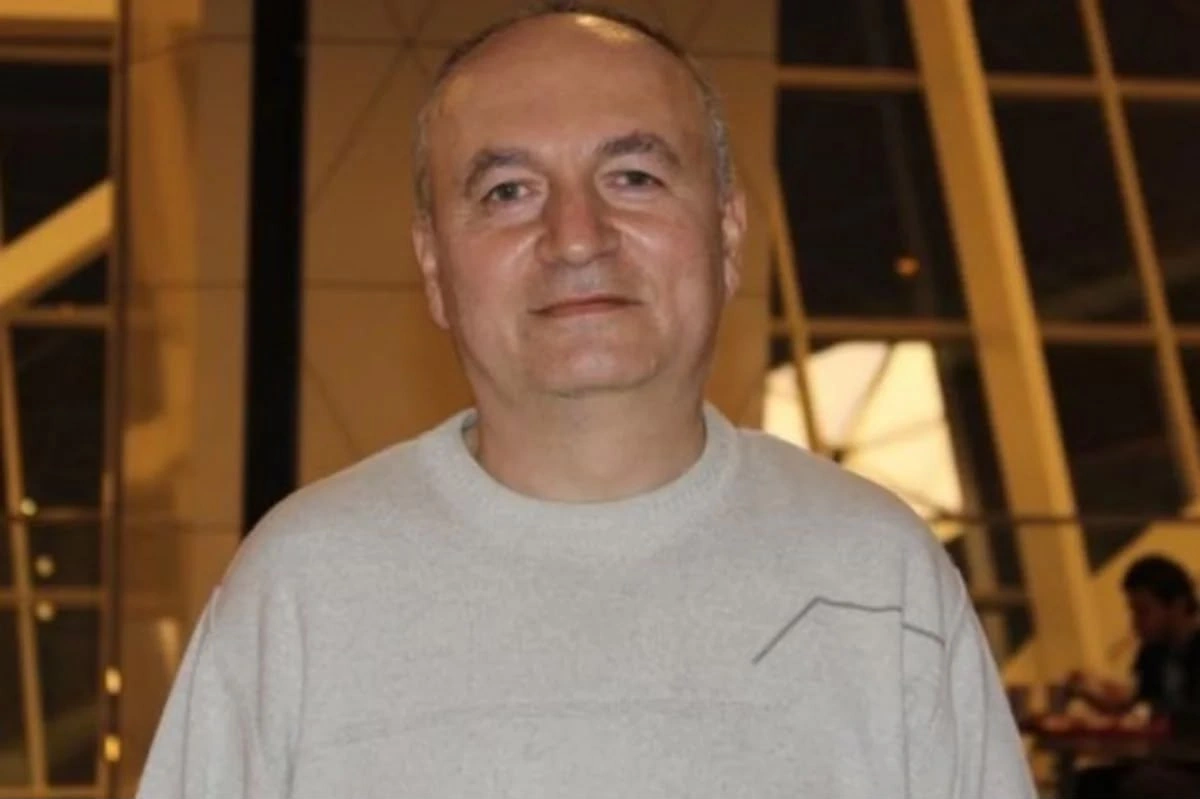
BAKU, Azerbaijan, October 10. We consider the
claims by Etchmiadzin and Armenia as a whole to the ancient
Albanian heritage of Karabakh and adjacent territories to be
unfounded, Artur Agadjanov, head of the Karabakh Christians
Movement public association and co-chair of the Armenia-Azerbaijan
Peace Civil Platform said.
He made this remark in a statement issued together with
representatives of the movement.
“We are a group of Turkic Christians from Karabakh who currently
live in different countries. For many years, we have sought to
restore and preserve our ethnic and religious identity, which has
been subjected to Armenization and persecution. Our movement has
repeatedly appealed to the UN, UNESCO, European and other
international organizations, asking them to help preserve our
unique cultural and spiritual heritage. Unfortunately, over the
years, we have not received the response we expected. Nevertheless,
we remain hopeful and continue our work.
The recent visit by foreign diplomats to the Ganjasar and
Khudavang monastic complexes in Karabakh, which are undoubtedly an
integral part of the historical heritage of Caucasian Albania, has
caused widespread resonance in Armenian society, within Armenian
Church circles and among political figures. Discussions surrounding
the visit are ongoing. Unfortunately, the Armenian side remains
unwilling to acknowledge historical reality. Azerbaijan's
restoration of control over Karabakh creates opportunities to
study, preserve and revive its multifaceted cultural and historical
heritage, including its Albanian Christian heritage.
We consider the claims by Etchmiadzin and Armenia as a whole to
the ancient Albanian heritage of Karabakh and adjacent territories
to be unfounded. The origins of the Autocephalous Albanian Church,
one of the oldest in the Christian world, date back to early
Christian preaching associated with Jerusalem and the apostles of
Jesus. Christianity began spreading in Caucasian Albania in the
first century AD. Under King Urnayr, the state of Caucasian Albania
officially adopted Christianity in 313, making it an important
unifying force for its population.
In the 18th and 19th centuries, the position of the Albanian
ecclesiastical tradition underwent significant changes due to the
Russian Empire's military and political expansion in the South
Caucasus and its subsequent establishment of control over much of
the region following two Russo-Persian wars, which ended with the
signing of the Treaty of Gulistan in 1813 and the Treaty of
Turkmenchay in 1828. Of particular importance was the Russian
imperial authorities' decision in 1836 to abolish the Albanian
Catholicosate and transfer its ecclesiastical structures to the
jurisdiction of Etchmiadzin.
From that moment, the tragic process of de-ethnicization and
Armenization of the Albanian people began. The Albanian population
comprised representatives of various ethnic groups, including our
Turkic Kipchak ancestors, who had lived in compact communities in
southern Karabakh since ancient times.
In support of this, we draw attention to statements by renowned
film director Karen Shakhnazarov, general director and chairman of
the board of Mosfilm, who has publicly discussed his ancestors'
origins in the family of Melik Shahnazar and their Turkic
roots.
Our glorious ancestors, the Kipchaks, have always intermarried
with the Udins and other peoples of Caucasian Albania, while
avoiding closer ties with the Haykan (Armenian) people and church.
Despite centuries of change, we seek to pass on the surviving
elements of our ethnic and spiritual identity to future
generations. We sincerely wish Azerbaijan success in rebuilding
Karabakh, preserving its churches, including the ancient Albanian
Church, and comprehensively studying the ancient Christian heritage
of Caucasian Albania,” the statement reads.
To note, the movement's members, who originate from Karabakh,
have for many years advocated the restoration and preservation of
their ethnic, cultural and religious identity, which they say has
been subject to Armenization over the past two centuries.
Karabakh Albanian Christians, whose interests Agadjanov
represents, identify themselves as Turkic Kipchaks who have
historically practiced Albanian Christianity and later experienced
church and cultural assimilation by the Armenian Church based in
Etchmiadzin.


