
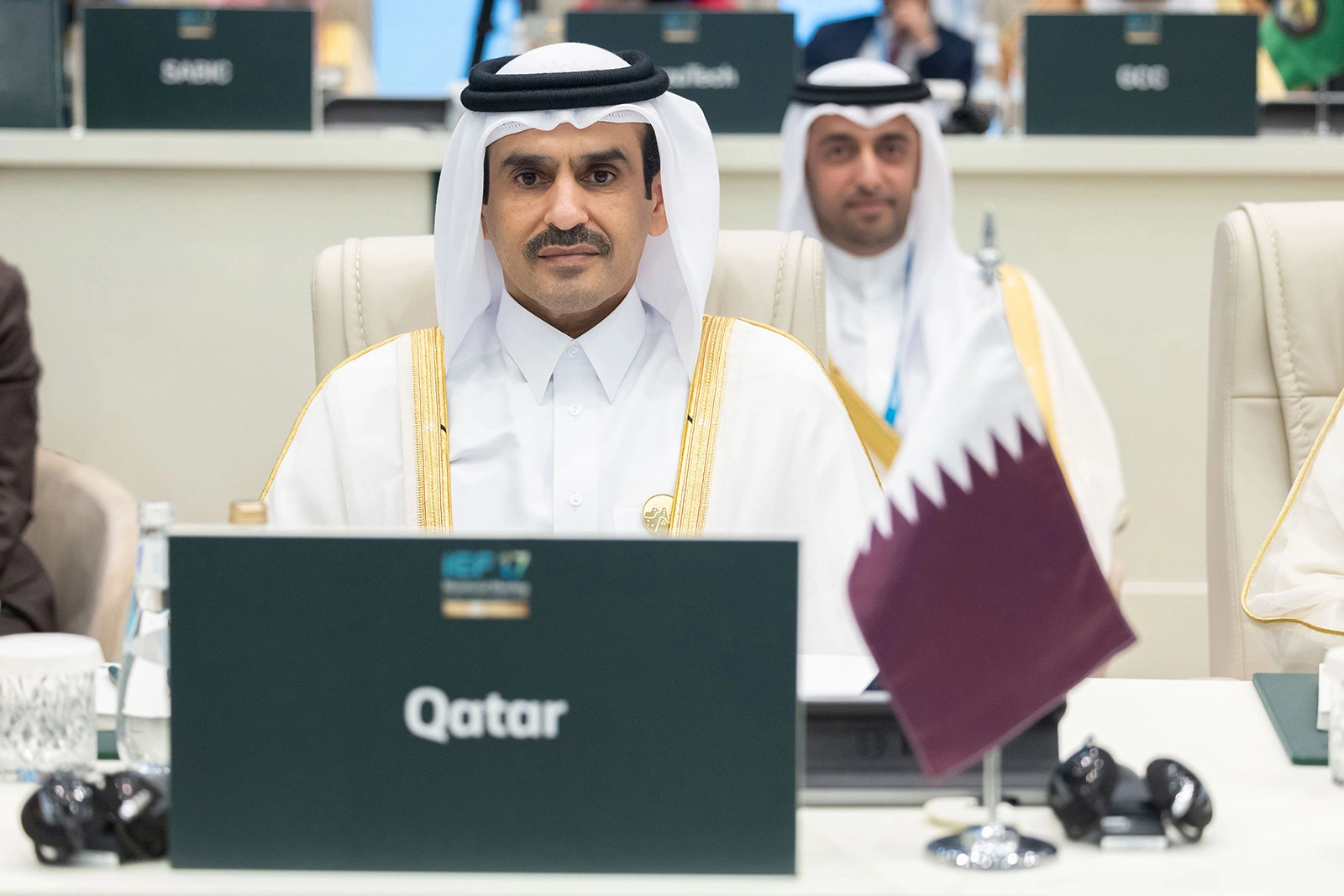
BAKU, Azerbaijan, October 12. Saad Sherida
Al-Kaabi, the Minister of State for Energy Affairs and the
President and CEO of QatarEnergy, called for a new world energy
order in which energy is kept above politics and is never made a
victim or target of conflict, QatarEnergy said.
He made the remarks on October 11 during the 17th International
Energy Forum Ministerial Meeting in Riyadh, convened under the
theme “Energy Security - A Shared Responsibility: Market
Fundamentals, Supply Chain Resilience, and the New Dynamics of
Demand and Supply.
Minister Al-Kaabi said the conflict in the Middle East has
caused what is, “by far, the world’s worst energy crisis,”
affecting the flow of around 20% of the world’s hydrocarbon
supplies. He added that many regional energy assets across the
region had been targeted, causing tens of billions of dollars in
damage and severe volatility in global markets.
“If there is one lesson we have learned from the past few
months, it is that energy security, as critical as it is to the
global economy, remains highly vulnerable and inseparable from
geopolitical security,” H.E. Al-Kaabi added. His Excellency also
highlighted the wider human consequences, noting that a billion
people still lack access to electricity and that approximately four
billion people depend on food produced using manufactured
fertilizers. He stated that “the impact on all those lives should
remind us of our shared responsibility to safeguard energy
security, protect the free flow of energy, and keep energy above
politics and conflicts.”
Minister Al-Kaabi called on the Forum to explore every possible
avenue to protect energy infrastructure during times of conflict,
saying: “It is a real problem that energy infrastructure has become
both an economic asset and a strategic military target. Energy
security must unite us, not divide us. It must be protected, not
weaponized.”
Despite the rise in the number of attacks, the U.S. Energy
Information Administration (EIA) estimates that oil exports from
the Middle East increased in September compared with August, while
the volume of production curtailments decreased.
“We assess that crude oil production shut-ins averaged 4.8
million b/d in September, down from 5.8 million b/d in August and
down from 10.9 million b/d at the peak in May,” the latest report
by the EIA states.
In the fourth quarter of 2026, the EIA expects restrictions on
oil flows from the Middle East to persist. The average volume of
curtailed production is forecast to be 4.5 million barrels per
day.
The EIA also notes an increase in risks for tankers transiting
the region. This has led to higher freight rates and insurance
costs, and has also increased the risk premium factored into oil
prices.
“High tanker rates, which reached record levels in September,
reflect increasing insurance costs and are putting additional
upward pressure on delivered crude oil prices to refiners,” the EIA
notes.
In addition, vessels are forced to take longer routes to avoid
conflict zones, which reduces the number of available tankers.
Against this backdrop, the EIA estimates that global oil
inventories declined by an average of 1.9 million b/d in the third
quarter of 2026 and will fall an additional 0.7 million b/d on
average in 4Q26.


