BAKU, Azerbaijan, October 14. Uzbekistan plans
to restore 4.32 million hectares of pastureland by the end of 2027
to improve land productivity, strengthen water supplies and support
livestock production, following a presentation reviewed by
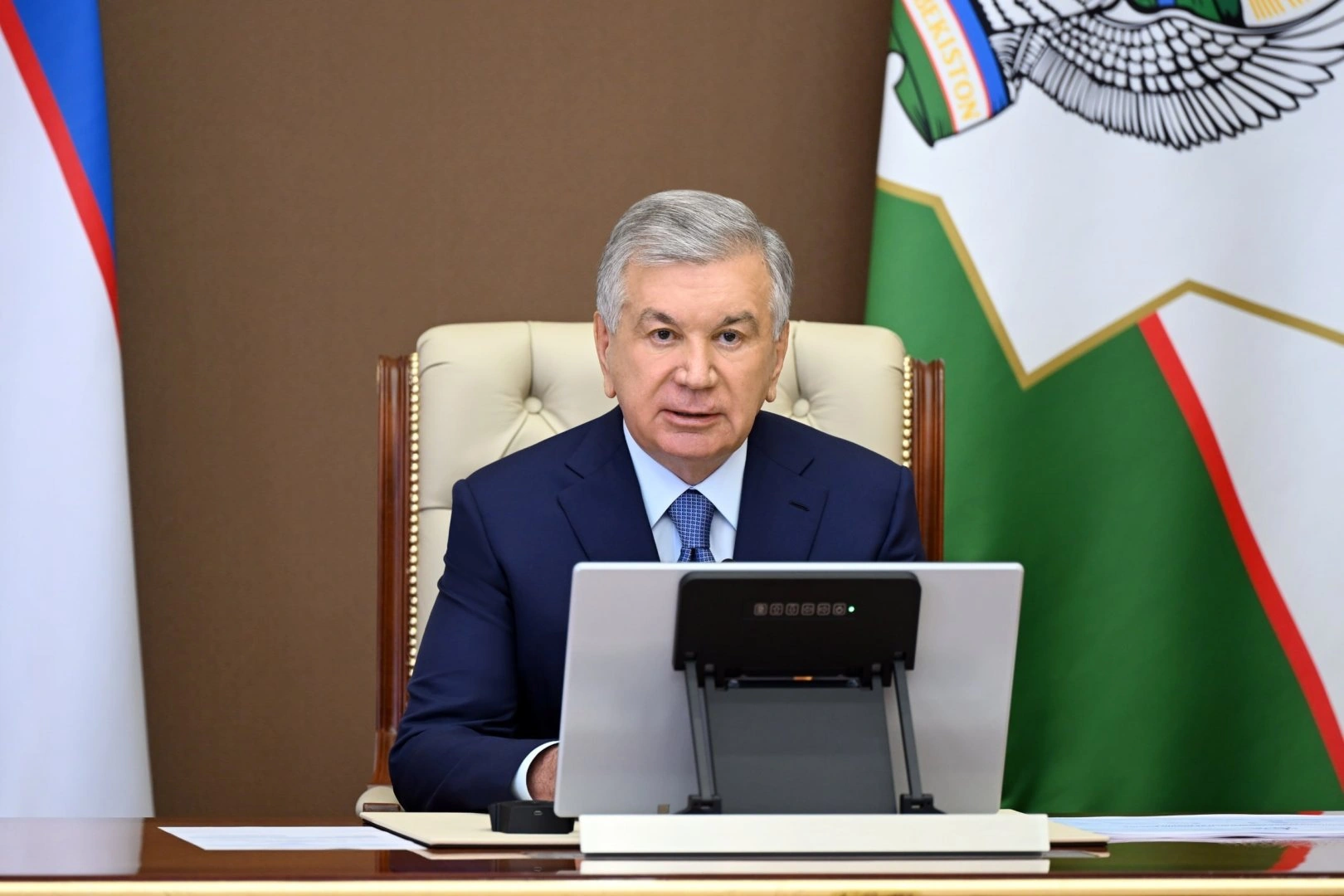
President Shavkat Mirziyoyev on October 13 in Tashkent.
This was reflected in the statement by the press service of the
Uzbek president.
Uzbekistan has 21.255 million hectares of pastureland, but only
40% is being used effectively, according to the presentation.
Local authorities have been tasked with restoring 620,000
hectares by the end of 2026 and another 3.7 million hectares in
2027 to improve productivity. In coordination with the Agency for
Livestock and Pasture Development, regional governors will prepare
comprehensive programs within one month to reduce the area of
degraded land by 10% in 2026 and 20% in 2027.
In the Navoi region, a pumping station called Kengsoy has been
reconstructed using 30 billion soums (about $2.5 million) from the
local budget, enabling the development of 20,000 hectares of
pastureland. Eleven businesses have begun building reservoirs and
introducing sprinkler irrigation technologies.
These areas are expected to produce 250,000 tons of animal feed
annually, enough to support 60,000 head of cattle.
In the Nishan district of the Kashkadarya region, circular
sprinkler irrigation systems have been installed across 1,332
hectares of pastureland, where new forage crops suited to local
conditions are being planted. Authorities have been instructed to
replicate this approach in the Mubarek and Dehkanabad districts and
establish 9,400 hectares of seed production areas within a
year.
To improve water access, revenue from pastureland leases will
remain under the control of regional pasture management entities.
The funds will be used to drill an additional 448 wells, improving
water supply to 1.5 million hectares of pastureland in 2027.
Authorities also plan to repair 1,600 existing wells by the end of
2026.
The government will allocate 100 billion soums (around $8.4
million) in 2026 to build 161 irrigation facilities. Another 81
facilities are planned for each of 2027 and 2028, bringing the
total to 323. The projects are expected to help restore 969,000
hectares of pastureland.
In addition, the government is moving to formalize land-use
rights for livestock farmers who have used pastureland for years. A
commission’s authority to register 623,000 hectares in the names of
their actual users has been extended through the end of 2026. The
land currently supports grazing for 260,000 head of livestock.
In addition, 470 mahallas, or local communities, will receive
627,000 hectares of pastureland for public use under 49-year leases
at no cost by the end of 2026. The land will be exempt from taxes,
providing grazing areas for residents of remote communities who
keep livestock on household farms.
Under the new rules, livestock complexes may be built on
pastureland without changing the land’s designated category.
Starting land prices and land taxes will be calculated under the
same rules applied to agricultural land.
Plans call for building 15 livestock complexes covering a total
of 130 hectares in the Navoi, Samarkand and Surkhandarya regions,
with a combined capacity of more than 55,000 head of livestock.
Authorities also plan to allow pastureland leases for
ecotourism, beekeeping, hunting, sericulture, and the cultivation
of medicinal plants and seedlings. Officials emphasized that such
activities must preserve the natural ecosystem and support
pastureland restoration.
Mirziyoyev instructed officials to restore degraded pastures,
strengthen water and feed supplies, and ensure that new
opportunities benefit local communities and businesses.