ASHGABAT, Turkmenistan, October 22.
Turkmenistan has the potential to produce petrochemical products at
competitive costs thanks to its substantial natural gas reserves,
Michael Liesfeldt, Research Director, Chemicals, at S&P Global
Commodity, said at the 31st International Conference and Exhibition
“Oil and Gas of Turkmenistan” (OGT 2026) in Ashgabat, Trend's special correspondent
reports.
He added that geographic and logistical constraints do not rule
out access to international markets, provided producers ensure
consistent product quality and reliable supplies.
According to him, production costs vary significantly across the
global petrochemical industry. North America and several Gulf
countries have competitive production facilities that use ethane as
feedstock, while producers in Europe, Japan and South Korea face
higher costs, partly due to their reliance on naphtha.
“According to our models and cost calculations, Turkmenistan is
in the second cost quartile and is significantly more competitive
than any producer in Asia, as well as Russia,” Liesfeldt said.
He emphasized that the country's substantial natural gas
reserves create favorable conditions for developing low-cost
petrochemical production in Turkmenistan, with competitiveness
comparable to that of facilities in Gulf Cooperation Council (GCC)
countries.
At the same time, the expert said the country's geographic
location must be taken into account when planning exports. In his
assessment, it is not an insurmountable barrier to accessing
foreign markets if producers can guarantee the required product
quality, reliable deliveries and compliance with agreed
volumes.
“There will always be a market for a reliable supplier, even if
delivery times are somewhat longer, provided the product is of the
right quality and there are firm commitments to supply volumes to
international customers,” he said.
Liesfeldt also highlighted structural changes in the global
petrochemical industry. According to him, China has made
significant progress in meeting its own demand over the past
decade, creating additional challenges for traditional exporters
from Japan and South Korea.
In Europe, where many facilities use naphtha as feedstock,
companies are also announcing production capacity closures. Some,
however, maintain their market presence by importing products from
the United States.
Against this backdrop, Turkmenistan could capitalize on its
domestic resource base and develop petrochemical products in demand
on international markets, the expert said.
He added that the country's prospects in this sector depend
primarily on its ability to produce goods at competitive costs and
establish long-term relationships with foreign buyers.
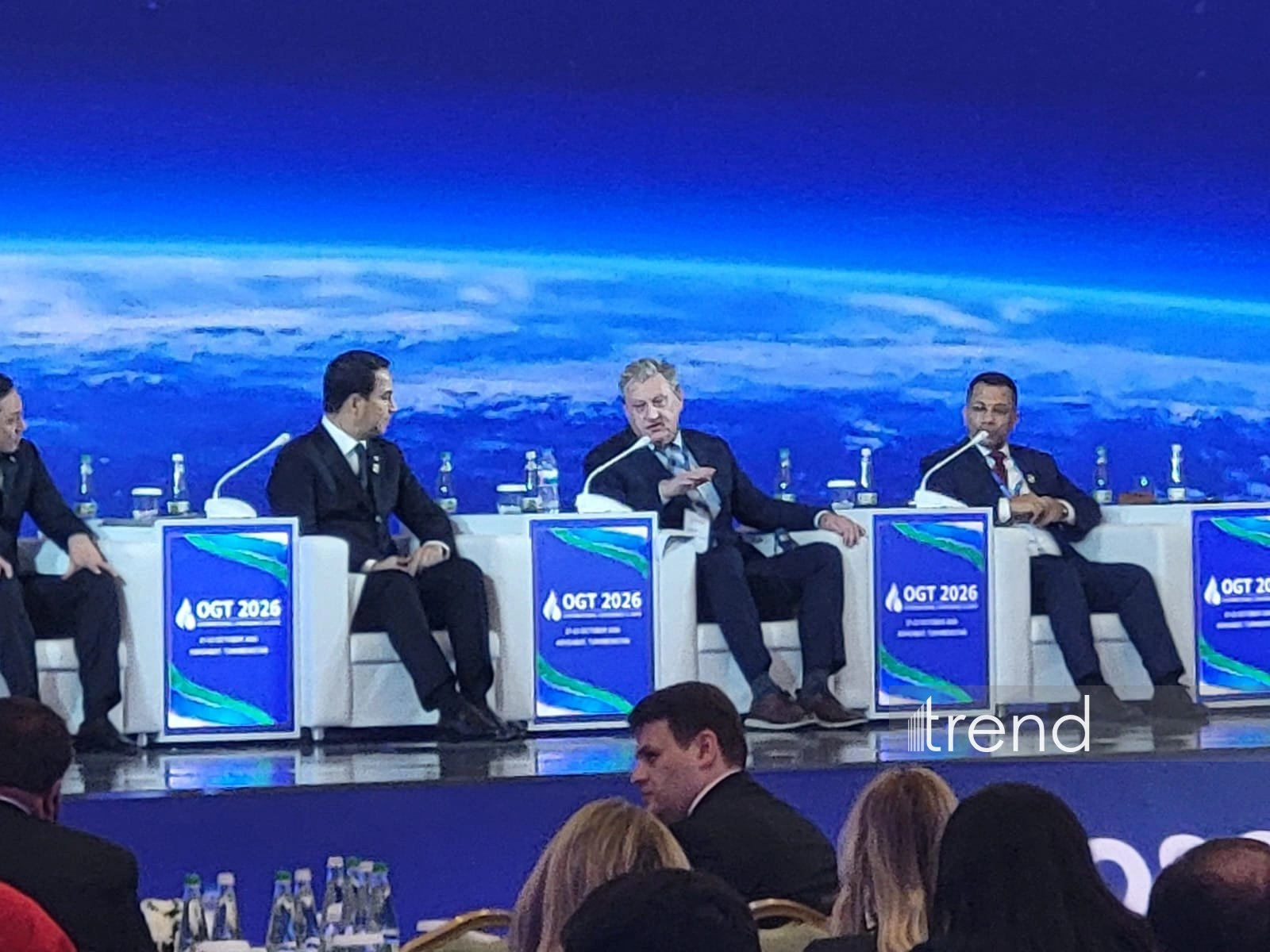
Meanwhile, the second day of the 31st International Conference
and Exhibition “Oil and Gas of Turkmenistan” (OGT 2026) has begun
in Ashgabat. As part of the event, a session is being held on the
topic “Investment and development opportunities in the Turkmen
sector of the Caspian Sea.” Discussions are focusing on investment
opportunities for developing the Turkmen sector, prospects for
offshore exploration and production of hydrocarbons, and the
development of international partnerships.
The agenda also includes existing and new production-sharing
agreements (PSAs), as well as modern seismic survey programs
designed to help assess resource potential and prepare promising
blocks for development.