BAKU, Azerbaijan, October 23. Major
international companies are deepening their engagement with Central
Asian countries in the oil and gas industry, energy, transport and
digital technology. Developments between October 19 and 22
highlighted both new investment projects and efforts to modernize
existing production facilities, introduce artificial intelligence
and expand infrastructure.
Kazakhstan, Uzbekistan and Turkmenistan saw the most active
cooperation. Key participants included China’s CNPC, Malaysia’s
Petronas, Italy’s Eni, the UAE’s Masdar, U.S. companies Wabtec,
Boeing, Google and SLB, as well as international financial
institutions.
Oil and gas: CNPC strengthens its presence in Kazakhstan
and Uzbekistan
One of the week's key developments was the expansion of
cooperation with China National Petroleum Corporation (CNPC) in
Kazakhstan. On October 22, company representatives met with
executives of national companies KazMunayGas (KMG) and QazaqGaz, as
well as sovereign wealth fund Samruk-Kazyna, and took part in a
technical seminar on the development of the oil and gas
industry.
Discussions focused on geological exploration, enhanced oil
recovery, deep-well drilling and the introduction of digital
technologies. The parties also proposed developing a joint
technology implementation plan for 2027-2030, specifying target
fields, timelines, funding and performance indicators.
Gas sector development was another priority. KMG and CNPC are
discussing ways to improve production at existing fields and
replenish the resource base. QazaqGaz, meanwhile, is considering
further cooperation with the Chinese company, including the
Severny-1 exploration project in the Aktobe Region. Investment in
exploration at the site is estimated at 3.5 billion tenge ($7.8
million).
In Uzbekistan, Uzbekneftegaz and CNPC discussed expanding
cooperation in hydrocarbon exploration and production, drilling,
seismic surveys and fuel supplies on October 20. Topics included
improving gas production efficiency, digitizing production
processes and establishing a permanent CNPC representative office
in Tashkent.
Cooperation with the Chinese corporation thus spans several
stages of the production chain, from identifying new reserves to
improving the efficiency of existing fields and supplying the
domestic market with fuel.
Turkmenistan: Petronas and ADNOC explore further asset
development
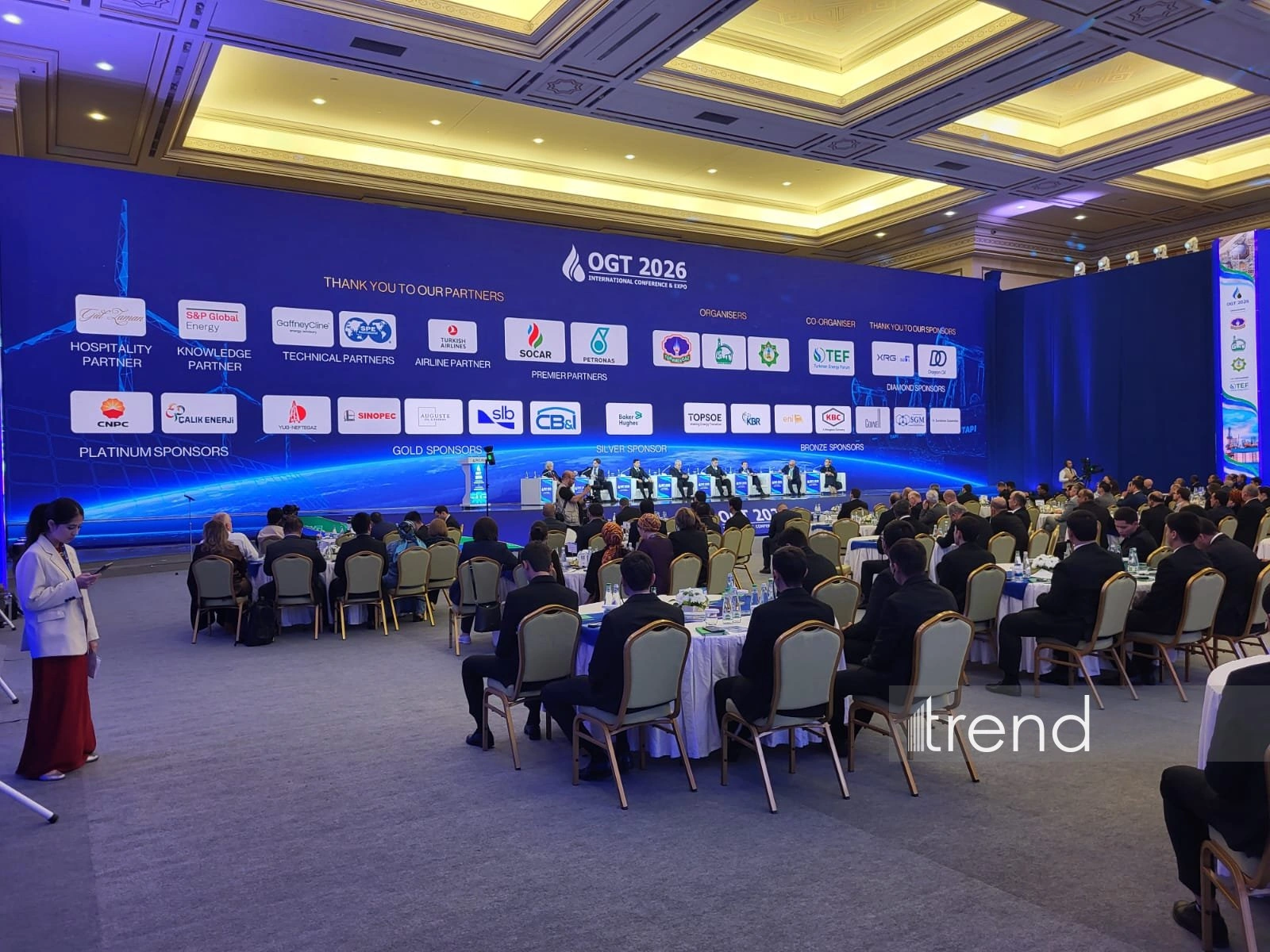
A significant part of the international energy agenda centered
on Turkmenistan, which is hosting the International Conference and
Exhibition "Oil and Gas of Turkmenistan - 2026" (OGT 2026) on
October 21-23.
Malaysia's Petronas said it had invested more than $12 billion
in Turkmenistan over 30 years of operations. The company continues
to develop its activities on the Caspian Sea shelf and is preparing
for the next stages of field development.
Petronas Carigali (Turkmenistan) plans to implement two new
field development projects on offshore Block 1, one focused on gas
and the other on oil. The company also intends to begin drilling on
Blocks 19 and 20 in December 2026.
"In order to monetize the entire volume of 70 trillion cubic
feet of gas and 200 million barrels of liquid hydrocarbons, we need
new markets," the company CEO Ismadi bin Ismail said at the
forum.
The company sees expanding sales markets as essential to
commercializing these resources. In June 2026, Petronas signed a
production-sharing agreement for Blocks 19 and 20 and also agreed
to conduct seismic surveys on the northern offshore blocks.
XRG, the international investment arm of UAE energy company
ADNOC, also outlined its plans. The company considers Turkmenistan
one of the key areas for developing its global gas business and
intends to expand its investment activities in the country.
"We look forward to the opportunity to do much more in
Turkmenistan by working on many other growth projects," said the
Senior Vice President, International Gas and Director, Business
Development at XRG, Abdulla Alshamsi.
Cooperation extends beyond field development. At the conference,
representatives of SLB and Honeywell discussed the use of
artificial intelligence, automation and data monitoring in the oil
and gas industry. These technologies can help optimize drilling,
adjust well trajectories, improve safety and reduce operating
costs.
Renewable energy: Masdar and Sumitomo
projects
Cooperation in renewable energy is also gaining momentum. In
Uzbekistan, UAE-based Masdar plans to commission a 300-megawatt
solar power plant and a 75-megawatt energy storage system in the
Kashkadarya Region in 2027. The project is valued at $250
million.
Japan's Sumitomo Corporation told Trend in an exclusive interview that it is also
implementing projects in Uzbekistan. Two 500-megawatt solar power
plants are under construction in the Samarkand Region, each paired
with an energy storage system with a capacity of 668
megawatt-hours. The facilities are expected to begin commercial
operations in 2027 and 2028, respectively.
The storage systems are expected to improve grid stability, help
balance electricity supply and demand, and facilitate the further
integration of renewable energy sources.
In Kazakhstan, Italy's Eni is working with KMG on a 247-megawatt
hybrid energy project in the Mangystau Region. It combines solar,
wind and gas-fired power generation.
Speaking at OGT 2026, Seger Hoytink, Head of Eni's Central Asia
Region, said the 50-megawatt solar power plant had been
commissioned in September 2025, while the 120-megawatt gas-fired
facility began generating electricity for industrial consumers in
July 2026. The 77-megawatt wind power plant is scheduled to be
commissioned in 2027.
These projects show that international partnerships in the
region involve not only the construction of new generating capacity
but also the integration of renewable energy into existing
infrastructure.
Transport and digitalization: Wabtec, Boeing and
Google
In Uzbekistan, U.S.-based Wabtec and the government are
discussing locomotive fleet modernization, equipment supplies,
long-term maintenance and the localization of component production.
The parties also considered involving U.S. financial institutions
in financing equipment deliveries and establishing a service center
for mining equipment.
Another U.S. manufacturer, Boeing, discussed possible aircraft
deliveries for Kyrgyzstan's national airlines, including financing
arrangements that could involve the Export-Import Bank of the
United States.
Meanwhile, the first Boeing 787-9 Dreamliner for Kazakhstan's
Air Astana has begun manufacturer flight testing. The airline
expects to put its first three aircraft of this type into service
in 2027. Their arrival will enable Air Astana to gradually replace
its existing Boeing 767-300ER aircraft and expand its long-haul
capabilities.
In the digital sector, notable developments included the launch
of Google Pay in Uzbekistan and talks between Uzbek authorities and
Google Cloud on using cloud solutions in public administration. GE
Aerospace also reached an agreement with Uzbekistan to jointly
develop educational programs for aviation specialists.
Financing and new areas of cooperation
International financial institutions are also deepening ties
with regional companies. Kazakhstan's KMG and Citi discussed
further cooperation in attracting investment and providing
financial services. QazaqGaz held talks with J.P. Morgan on
financing major investment projects, including potential corporate
and structured financing arrangements.
Kazakhstan also hosted a meeting involving TotalEnergies and
other energy sector representatives to discuss implementation of
Article 6 of the Paris Agreement. Topics included international
carbon market mechanisms, methane emissions reduction and the
implementation of climate projects.
Taken together, the week's developments show that international
engagement in Central Asia is advancing on several fronts:
hydrocarbon development, production efficiency, the energy
transition, transport infrastructure modernization and
digitalization.
The focus of cooperation varies across the region. Kazakhstan is
concentrating on technological upgrades to existing oil and gas
assets and attracting financing; Uzbekistan is combining energy
development with transport modernization and digital services;
while Turkmenistan remains an important destination for long-term
investment in the Caspian region's gas sector.