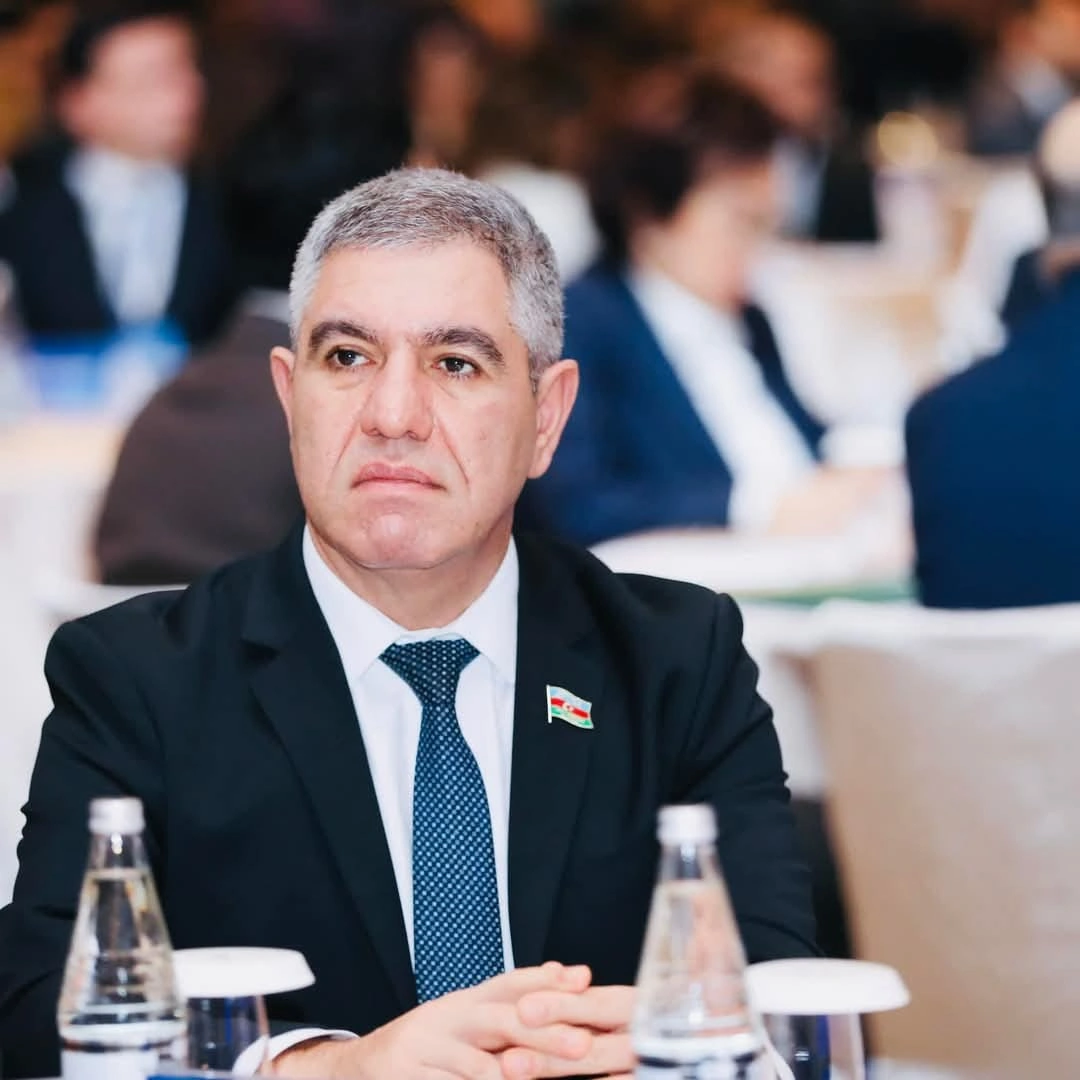
BAKU, Azerbaijan, October 23.
The economy of Karabakh has grown 4 times, while the economy of
East Zangezur has expanded 30-fold in Azerbaijan, surpassing 4
billion manat ($2.35 billion), since the Victory, a member of the
Parliament Committee on Economic Policy, Industries and
Enterprising Enterprises, Vugar Bayramov, said at the plenary
session of the parliament today, Trend’s correspondent reports from the
event.
According to him, to date, 26 billion manat ($15.29 billion) has
been allocated from the state budget for the restoration and
reconstruction of the liberated territories, and the process of
their reintegration into the economy and transformation into new
economic growth centers continues.
The MP noted that City Days for four districts liberated from
occupation are being marked in October. Following the City Day held
in Zangilan three days ago, a City Day will also be marked in
Gubadli in two days' time.
He pointed out that, following the victory, the process of
economic development and reintegration in the liberated territories
is proceeding intensively. Within the framework of the "First State
Program on the 'Great Return'," areas that remained under
occupation for a long time and were completely destroyed are being
restored, and the safe return of former internally displaced
persons to their native lands is being ensured.
According to Bayramov, 26 billion manat ($15.29 billion) has
been allocated from the state budget to date for the restoration
and reconstruction of the liberated territories.
"Azerbaijan is carrying out these efforts using its own
financial resources. This serves as further confirmation of
Azerbaijan's strength," the MP remarked.
He emphasized that significant progress has been recorded in the
economies of both Karabakh and East Zangezur in recent years. Since
the Victory, Karabakh's economy has quadrupled.
According to the MP, total production across key economic
sectors in the Karabakh economic region stood at nearly 1.55
billion manat ($910.6 million) in 2020, whereas it has now reached
6 billion manat ($3.53 billion).
He highlighted that while the Karabakh economic region is not
limited solely to the liberated territories, remarkable economic
growth is being observed specifically across the liberated and
reconstructed areas.
Bayramov pointed out that the value of industrial output in
Aghdam district reached 1 billion manat ($589 million) in 2025,
representing a 17.4-fold jump compared to 2024. Meanwhile,
agricultural production doubled over the same period.
The MP said that various industrial and non-oil products
manufactured in Karabakh are exported to a wide range of
destinations, including Georgia, Moldova, Uzbekistan, Kazakhstan,
and Russia.
He added that the process of reintegrating the Karabakh economy
has further accelerated under the leadership of President of
Azerbaijan Ilham Aliyev. As a result of the reconstruction and
restoration efforts undertaken following the victory, the
construction sector in Karabakh has grown more than tenfold.
"The revitalization of the construction sector not only adds new
value to the economy but also contributes to the creation of new
jobs," emphasized Bayramov.
According to the MP, the economy of East Zangezur, which
includes the district of Gubadli, set to celebrate its City Day in
two days, has entered a new stage of development. Since the
Victory, the economy of this economic region has grown 30 times,
surpassing 4 billion manat ($2.35 billion).
He stated that in 2020, total production across key economic
sectors in the East Zangezur economic region amounted to just 134
million manat ($78.82 million). Currently, the region has
established an industrial sector worth 100 million manat ($58.82
million) and an agricultural sector exceeding 170 million manat
($100 million).
Bayramov noted that, as in Karabakh, extensive construction work
is underway in the East Zangezur economic region, with the volume
of the construction sector approaching 4 billion manat ($2.35
billion).
According to the MP, Karabakh is becoming a new driver of
economic development for Azerbaijan. At the same time, this process
serves to strengthen the resilience of Azerbaijan’s economy and
support its diversification.