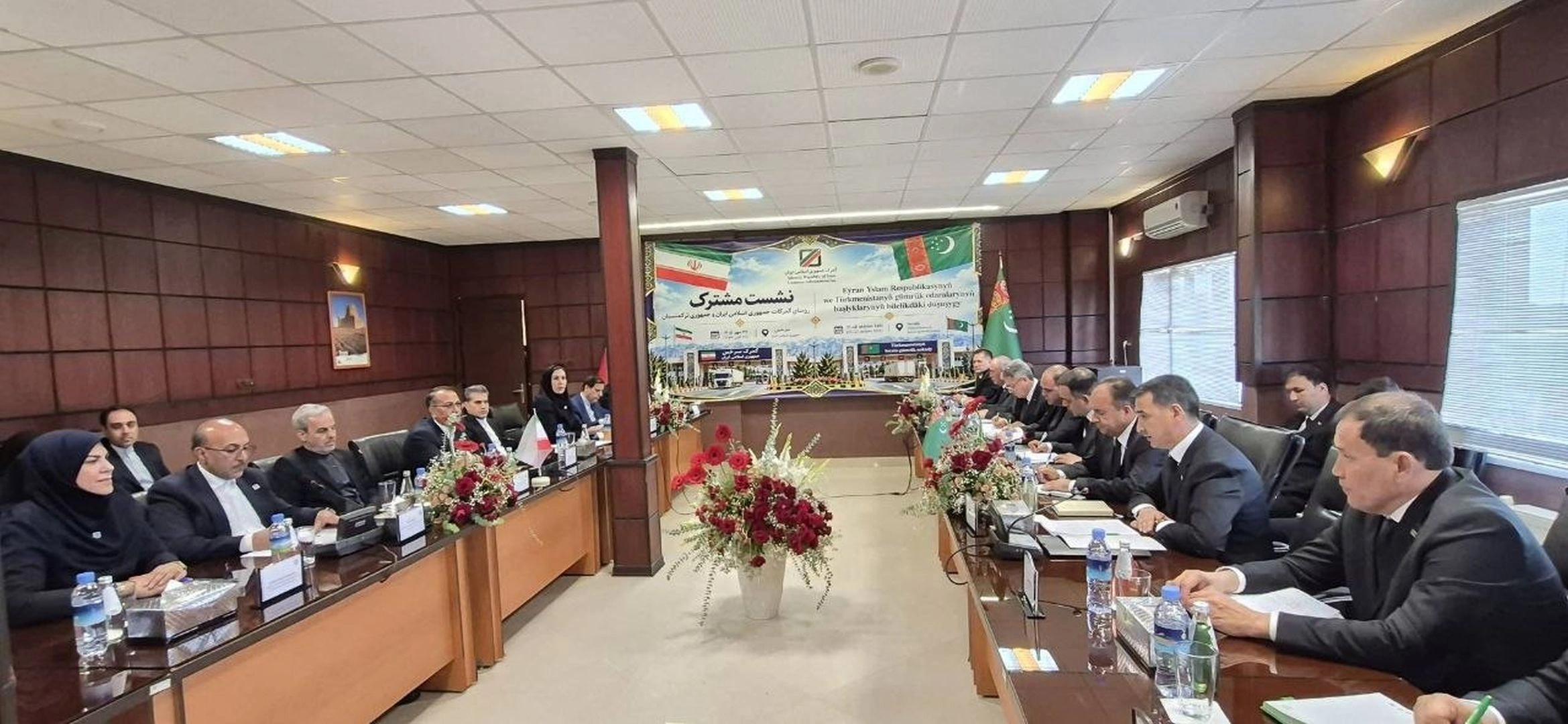
BAKU, Azerbaijan, October 26. Iran and
Turkmenistan have agreed to prepare measures to increase the number
of trucks crossing the Sarakhs border checkpoint to 700 per day,
with each country expected to handle at least 350 trucks.
According to Iran's Customs Administration, a meeting involving
customs officials from both countries was held on October 19 at the
Sarakhs checkpoint. Participants included Foroud Asgari, Iran's
deputy minister of economic affairs and finance and head of the
Customs Administration, and Maksat Khudaikuliyev, head of
Turkmenistan's State Customs Service.
The talks focused on increasing road and rail freight volumes
between the two countries, simplifying customs procedures, and
expanding trade cooperation. The proposed increase in truck traffic
will be examined by experts, with preparations to be made for its
implementation.
The measures are intended to implement a recent directive by
Iranian President Masoud Pezeshkian to improve border-crossing
operations and prevent cargo from remaining stranded at the
border.
The officials also discussed expanding rail freight capacity at
Sarakhs. The sides agreed to strengthen railway infrastructure,
better align the capacities of their respective networks, develop
Turkmenistan's railway infrastructure in line with Iran's
facilities, and simplify rail freight operations.
They also addressed delays in the movement and return of freight
wagons across the border. Discussions focused on resolving long
waiting times for wagons on the Turkmen side and delays involving
returning wagons at railway stations. The sides agreed to work
toward ensuring the timely return of wagons, accelerating cargo
transportation, reducing waiting times, and improving the
efficiency of rail freight operations.
The meeting also covered plans to upgrade border infrastructure
at the Lotfabad checkpoint and facilitate vehicle movements.
Proposals included increasing the number of truck entry and exit
gates and expanding the capacity of the Turkmen border service's
inspection facilities.
Asgari described the meetings as the beginning of more effective
customs cooperation, saying they would help further facilitate
trade between the two countries.
He said Iran was ready to strengthen cooperation with
neighboring countries to develop transit routes and improve customs
and trade procedures. He also emphasized the importance of
digitizing customs processes and noted Turkmenistan's strategic
geographical position.
According to Asgari, stronger customs cooperation could increase
bilateral trade and boost both countries' share of freight traffic
passing through their territories. He said cooperation could help
establish Sarakhs as a model border checkpoint for customs
procedures, citing its cargo-handling equipment, warehousing
capacity, and free trade zone as assets that could support trade
growth.
Asgari added that Iran and Turkmenistan could increase the
number of trucks and railway wagons crossing the border. Extending
daily operating hours until the last truck has crossed is among the
measures under consideration, he said, adding that closer
cooperation could help both countries make better use of their
railway capacity.
Khudaikuliyev said trade between the two countries was growing
and that their customs services were expanding cooperation.
He noted that meetings at the border helped officials review
operations and identify ways to speed up procedures. He expressed
hope that the implementation of bilateral agreements would be
reviewed within an appropriate timeframe and said continued
meetings were useful for facilitating truck crossings.
Khudaikuliyev added that installing digital equipment and
simplifying foreign trade procedures remained priorities. He said
Turkmenistan was ready to increase freight movements not only by
road but also by rail.