BAKU, Azerbaijan, October 27. Uzbekistan is
seeking to expand domestic hydrocarbon processing and diversify its
chemical industry through deeper cooperation with South Africa's
Sasol Limited, highlighting the potential for stronger economic and
technological ties between Central Asia and Africa.
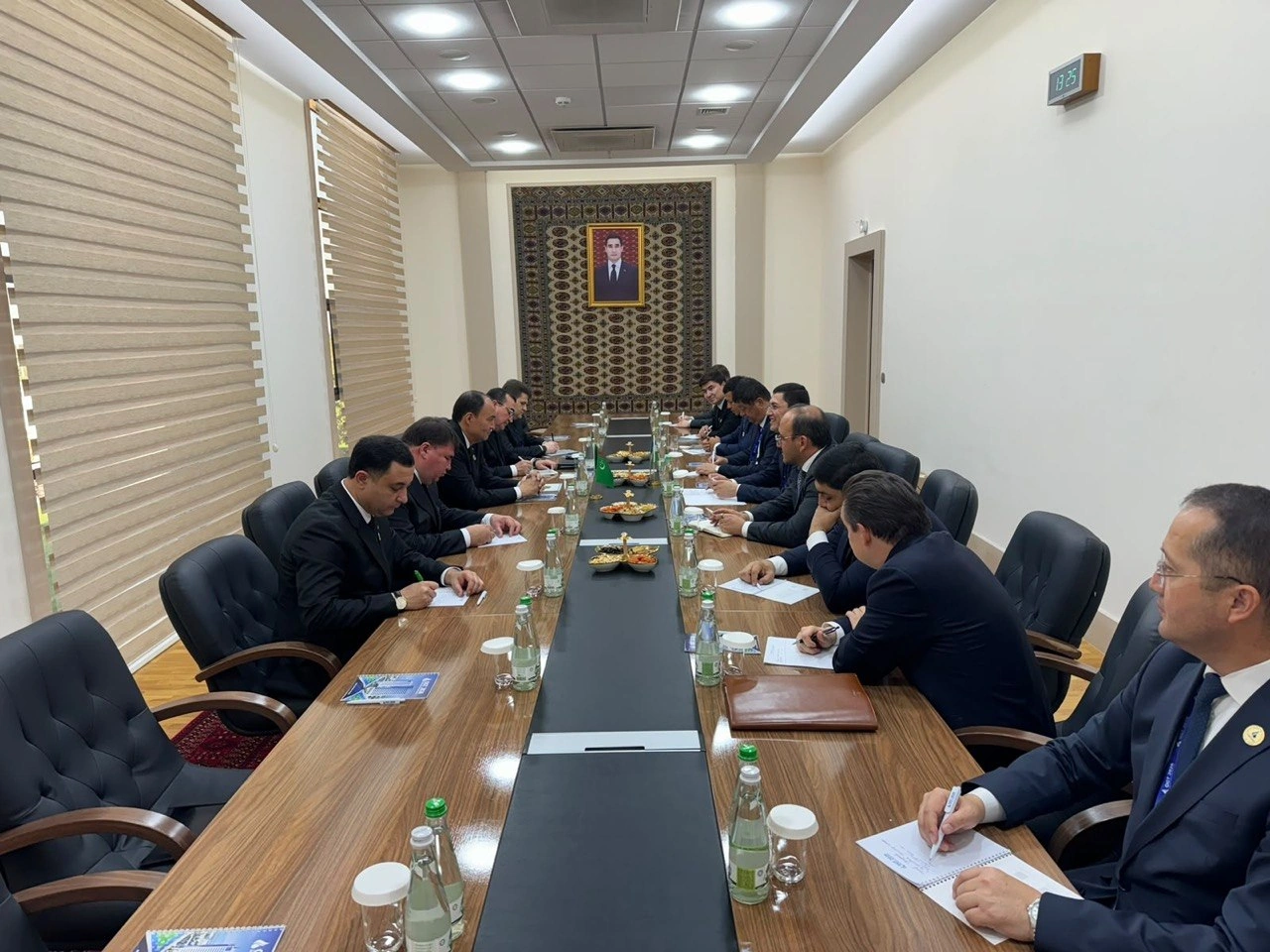
Recent meetings brought together representatives of Sasol,
Uzbekistan's Ministry of Mining Industry and Geology, and
state-owned oil and gas company Uzbekneftegaz to discuss potential
cooperation in coal processing, gas-to-liquids (GTL) technologies
and base oil production.
The discussions align with President Shavkat Mirziyoyev's
efforts to increase the domestic processing of natural resources,
develop higher-value-added manufacturing and attract international
expertise to Uzbekistan's industrial sector. They also illustrate
how cooperation between companies from different continents could
support technology transfer and the development of new industrial
capabilities.
Although the proposed projects remain under discussion, the
talks provide an example of how Uzbekistan is seeking to broaden
its international industrial partnerships beyond its immediate
geographic neighborhood.
Building on an established GTL partnership
Uzbekistan already has an industrial foundation for cooperation
with Sasol through the Uzbekistan GTL plant in the Kashkadarya
region.
The facility uses Sasol's Slurry Phase Distillate technology to
convert natural gas into synthetic liquid fuels, including diesel,
aviation kerosene, naphtha and liquefied petroleum gas. According
to Invest Uzbekistan, the plant processes approximately 3.6 billion
cubic meters of natural gas annually and has a production capacity
of around 1.5 million tons of liquid fuels.
In June 2025, Uzbekistan GTL successfully completed a
full-capacity performance test, marking its transition to full
commercial operation, according to Sasol. The process combines
Sasol's technology with technologies supplied by other
international partners.
The plant illustrates how advanced processing technologies can
transform domestic natural gas into products with greater
industrial and commercial value than unprocessed feedstock.
The meeting between Uzbekneftegaz Chairman Abdugani Sanginov and
Sasol Vice President Lourens Jacobs focused on maintaining supplies
of catalysts and cluster filters required by the existing facility,
alongside potential new projects in the oil and gas chemicals
sector.
Moreover, the parties discussed a possible base oil production
project and additional applications of GTL technology.
If developed, such initiatives could broaden Uzbekistan's
domestic production base and create opportunities to supply
industries that rely on specialized petroleum-derived materials.
However, the commercial viability of any new facility would depend
on its scale, feedstock requirements, production costs and access
to customers.
Mirziyoyev prioritizes higher-value industrial
output
The Sasol talks form part of a broader government agenda led by
President Shavkat Mirziyoyev to increase the value generated from
Uzbekistan's natural resources through advanced processing and
industrial diversification.
Addressing the Fifth Tashkent International Investment Forum,
Mirziyoyev identified attracting investment to expand higher-value
production chains as a priority.
"The third priority is attracting investments to expand high
value-added chains," he said.
On June 2, Mirziyoyev reviewed plans to accelerate the
development of the chemical industry, noting that the sector had
attracted $8.3 billion in investment and commissioned 87 major
production facilities in recent years. More than 60 new
higher-value-added products had been introduced, while industry
exports had tripled, according to the presidential press
service.
The government has also set a target of at least doubling
chemical production by 2030 and increasing chemical exports to $1
billion. On October 16, Mirziyoyev discussed plans for a
methanol-to-olefins project in Bukhara, alongside initiatives to
modernize the Bukhara and Fergana oil refineries.
These priorities provide a policy framework for Uzbekistan's
discussions with Sasol, a South African energy and chemicals
company with established expertise in gas-to-liquids and
coal-to-liquids technologies. Potential cooperation in GTL
production, base oils and coal processing could support
Uzbekistan's industrial diversification while creating
opportunities for technological exchange between Central Asia and
Africa.
However, the proposed Sasol initiatives remain at the discussion
stage, and their contribution to Uzbekistan's production and export
targets will depend on whether they advance to feasibility studies,
investment commitments and implementation.
Central Asia and Africa explore new industrial
links
The Sasol discussions also highlight opportunities to strengthen
economic cooperation between Central Asia and Africa through
industrial investment, technology transfer and the development of
higher-value production.
South Africa has established expertise in converting coal and
natural gas into liquid fuels and chemical products, while
Uzbekistan has domestic hydrocarbon resources and an existing
industrial facility built around GTL technology. Cooperation
between the two countries could provide a basis for exploring
additional processing projects and expanding the range of products
manufactured in Uzbekistan.
For Tashkent, partnerships with companies such as Sasol offer a
potential route to specialized technologies and international
industrial expertise. For South African companies, Uzbekistan could
provide an entry point for exploring opportunities in Central Asia,
depending on project economics, investment conditions and access to
regional markets.
The broader significance lies in the potential to develop
practical industrial ties between two regions whose economic
cooperation could extend beyond conventional trade in raw
materials. Technology licensing, joint ventures and local
production could help translate commercial engagement into
longer-term industrial links.
Coal-to-chemicals offers another avenue
The discussions with Sasol have also extended beyond natural
gas.
Representatives of Uzbekistan's Ministry of Mining Industry and
Geology met with a Sasol delegation led by Jacobs to discuss
advanced raw material processing technologies and potential joint
projects in the coal industry.
The talks followed earlier engagement between the company and
Uzbekistan's Ministry of Investment, Industry and Trade. In March
2026, the ministry reported that the parties had discussed possible
Sasol participation in a coal-to-olefins project, as well as
further development of the Uzbekistan GTL complex.
Coal-to-olefins technology converts coal into chemical building
blocks, including olefins, that can be used to manufacture plastics
and other industrial products. Such production could support the
development of downstream industries in Uzbekistan, potentially
expanding the domestic supply of chemical inputs and creating
additional opportunities for industrial investment.
Uzbekistan produced 8.9 million tons of coal in 2025, according
to preliminary data published by the National Statistics Committee.
The availability of domestic coal provides a resource base for
considering coal-processing projects, although resource
availability alone does not establish their economic viability.
A large-scale coal-chemical project would require detailed
assessments of capital expenditure, water and energy consumption,
environmental impacts, technology selection and demand for its
products. These factors will be important in determining whether
the proposal can progress from discussions to implementation.
Industrial diversification faces feedstock
constraints
Uzbekistan's efforts to expand hydrocarbon processing are taking
place against a changing domestic energy backdrop.
Natural gas remains an important resource for electricity
generation, industrial production and household consumption.
Expanding its use as a feedstock for chemical manufacturing could
increase the value generated per unit of gas, but it would also
require careful planning to balance industrial demand with the
country's broader energy needs.
The existing Uzbekistan GTL facility provides an example of the
potential for converting natural gas into higher-value products.
Nevertheless, additional GTL capacity and other processing
facilities would require reliable feedstock supplies, competitive
production costs and sufficient demand for their output.
Coal-based chemical production presents a separate set of
considerations, particularly regarding emissions, water
consumption, financing and the competitiveness of the resulting
products against imports.
These factors will influence whether proposed projects can
deliver sustainable industrial growth and generate attractive
returns for investors.
From negotiations to investment decisions
Sasol's engagement with Uzbekistan spans several stages of the
country's industrial development, from the existing GTL facility to
discussions on coal-to-chemicals and additional gas-processing
opportunities.
The latest meetings suggest that the partnership is being
considered as a platform for broader industrial cooperation rather
than being limited to the supply of technology for one
facility.
For Mirziyoyev's industrial diversification agenda, the next
step will be translating these discussions into commercially viable
projects capable of increasing domestic production, creating new
supply chains and expanding export opportunities.
Key indicators to watch include the announcement of feasibility
studies, investment estimates, technology licensing agreements,
financing arrangements, construction schedules and confirmed
production capacities.
Uzbekistan's ability to turn its natural resources into a more
diversified portfolio of manufactured products will depend on the
effective use of existing industrial infrastructure, reliable
feedstock supplies and sustained investment in advanced processing
technologies. The outcome of the discussions with Sasol could
provide an indication of how far the country can extend its
established GTL model into new areas of industrial production.