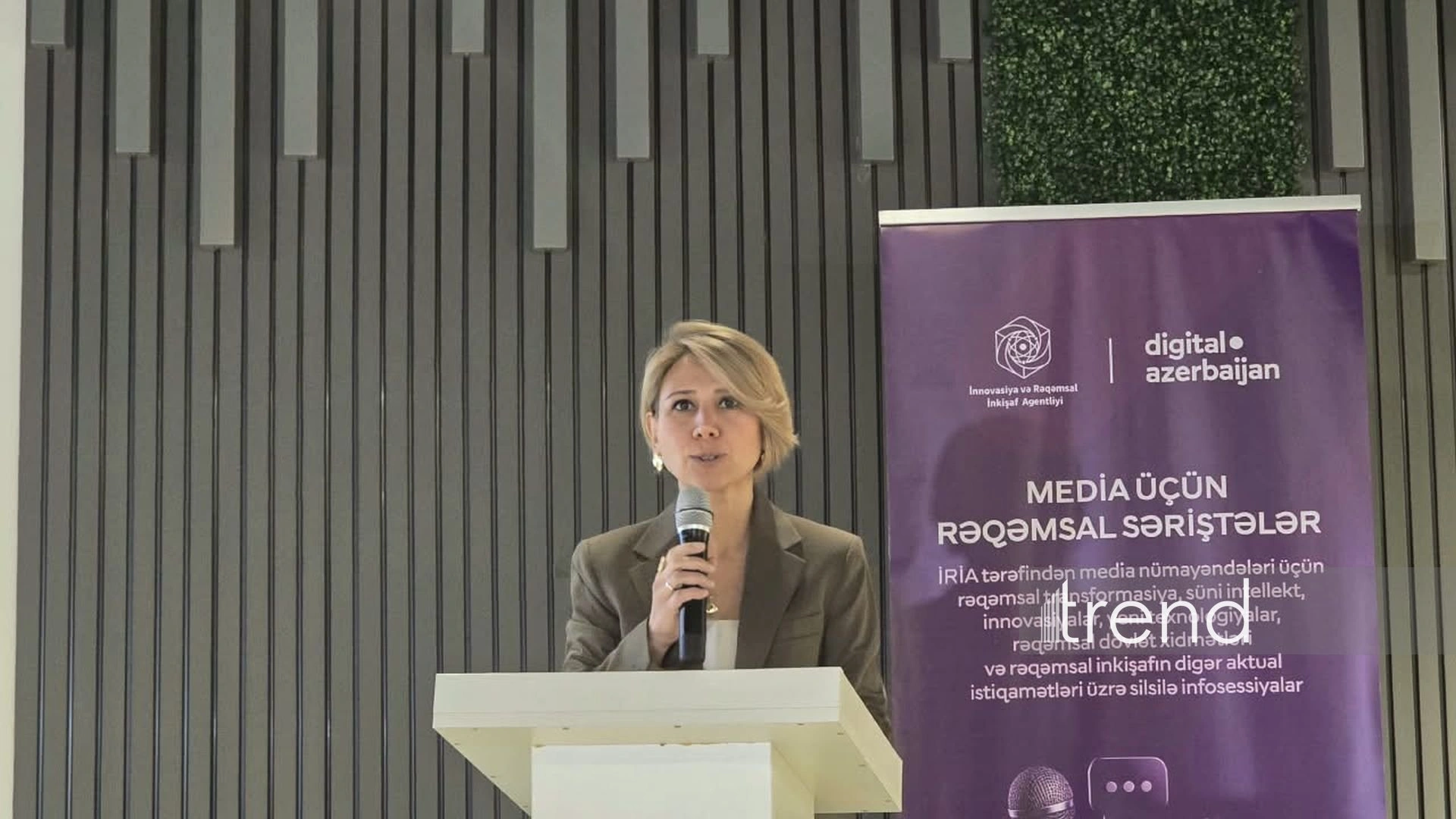
BAKU, Azerbaijan, October 27. The Innovation
and Digital Development Agency (IDDA) of Azerbaijan carries out
work aimed at increasing the digital literacy of the heads of state
entities, the head of the Digital Competencies Development
Department at the Innovation and Digital Development Agency (IDDA),
Vusala Gurbanova, said during the event on "Digital skills: today's
results, tomorrow's opportunities" held in Baku on Tuesday,
Trend’s
correspondent reports from the event.
According to her, for the effective implementation of digital
transformation within government institutions, it’s essential not
only to establish the necessary technical capabilities but also to
ensure that the leaders involved in decision-making processes
acquire the relevant knowledge and skills.
Gurbanova noted that efforts are underway to enhance the digital
literacy of various officials within central executive bodies,
ranging from heads of divisions, sectors, and departments to deputy
ministers.
"Those in leadership positions must also possess digital
literacy so that they can more easily implement digital
transformation within their respective institutions. Otherwise,
managing this process will prove difficult for them," she
remarked.
According to the department head, leaders need to be
sufficiently knowledgeable regarding the use of artificial
intelligence, information security, the protection of personal
data, and the application of modern technologies. Without this,
they may struggle to communicate effectively with staff on these
matters or to manage digital changes.
She emphasized that it is of particular importance for those
leading digital transformation to possess at least a foundational
understanding of modern technologies, artificial intelligence
tools, and global technological trends, as this is essential for
making sound decisions.
"Those responsible for making strategic decisions must
understand how technologies function, the scenarios in which
artificial intelligence tools can be applied, and how to ensure
information security and the protection of personal data. They need
to have a minimum level of knowledge in this area to make the right
decisions and effectively manage digital transformation," Gurbanova
explained.
She added that, within the scope of developing digital skills,
leadership personnel in state entities are considered a specific
target group, and particular attention is being paid to enhancing
their digital literacy.
According to her, enhancing the digital literacy of leadership
not only facilitates the implementation of new technologies within
government institutions but also creates conditions for a more
efficient digital transformation process and the making of sound
management decisions.