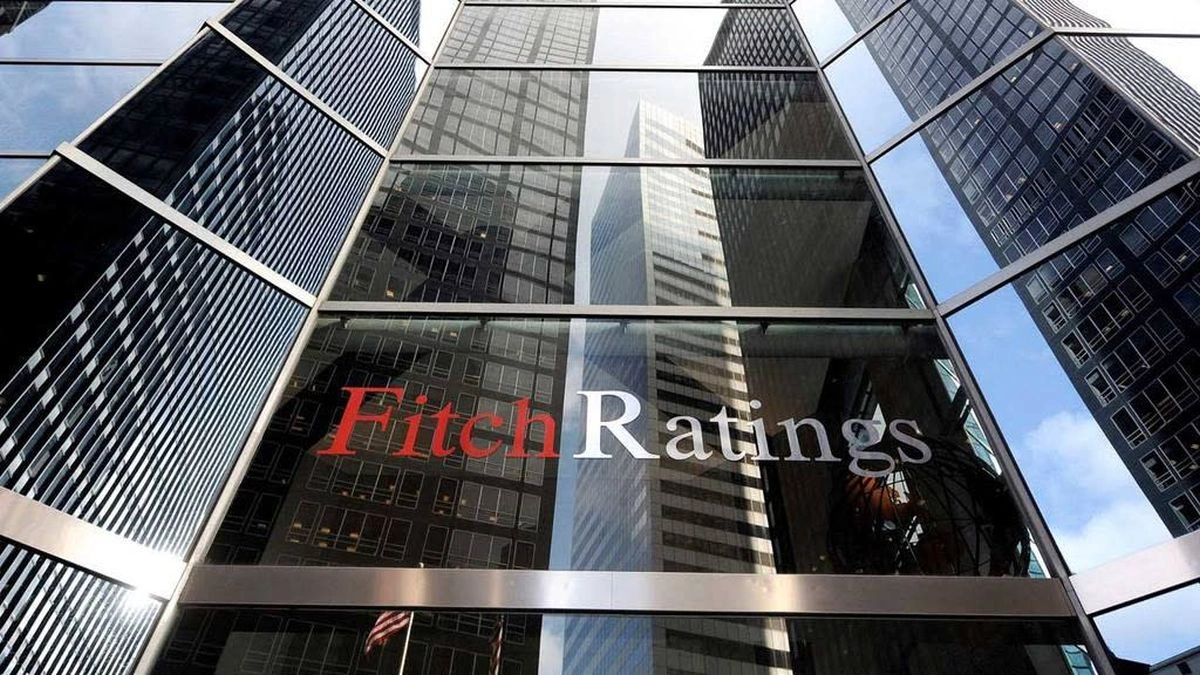
BAKU, Azerbaijan, October 29. Fitch Ratings has
downgraded JSC ForteLeasing's Long-Term Issuer Default Rating (IDR)
to 'B+' from 'BB' following the sale of a 51% stake in the company
by ForteBank JSC, removing ForteLeasing from Rating Watch Negative.
The rating outlook is Stable, according to Fitch.
Fitch also downgraded ForteLeasing's National Long-Term Rating
to 'BBB(kaz)' from 'A(kaz)', with a Stable Outlook.
The downgrade follows ForteBank's sale of its 51% stake in
ForteLeasing to a holding company within the wider group. The bank
plans to sell its remaining 49% stake in the first half of 2027.
Once the remaining stake is sold, the two companies will become
sister companies under common ownership rather than maintaining a
parent-subsidiary relationship.
Fitch has switched to a bottom-up approach to determine
ForteLeasing's Long-Term IDR, incorporating a one-notch uplift from
its standalone credit profile of 'b'. The uplift reflects Fitch's
expectation of continued but limited support from ForteBank,
primarily through liquidity assistance and, to a lesser extent,
indirect capital support. However, this support is materially
weaker than under the previous ownership structure, when
ForteLeasing's ratings were aligned with those of ForteBank.
"The sale of FB's controlling stake in FL materially reduces
FL's strategic importance to the bank, operational integration and
the reputational risk to FB from a default by FL," Fitch said in
its report.
Fitch expects ForteLeasing to retain some access to liquidity
support from ForteBank while the two companies remain under common
ownership. This includes an enlarged credit line of 40 billion
tenge. However, ForteBank's status as a regulated bank limits its
ability to provide open-ended financial support to a non-bank
sister company.
ForteBank accounted for 85% of ForteLeasing's funding at the end
of the first half of 2026. The Industrial Development Fund provided
4%, while the state-owned DAMU fund accounted for the remaining
11%.
Fitch said ForteLeasing's standalone credit profile reflects its
focused leasing business, relatively small market position and high
reliance on a single funding source. The company operates in
Kazakhstan's leasing market, which is dominated by state-owned
companies, and primarily leases trucks, specialized vehicles and
passenger cars, although it has begun expanding into other segments
and product types.
ForteLeasing's impaired receivables ratio improved to 0.7% at
the end of 2025 from 1.3% a year earlier, supported by portfolio
growth of 53% in 2025. Portfolio growth averaged 47% annually in
2021-2024. However, Fitch noted that the rapidly expanding
portfolio has limited seasoning and has not been tested through a
full credit cycle.
The company's exposure to foreclosed assets increased to 1.8
billion tenge at the end of 2025 from 500 million tenge a year
earlier. While repossessing equipment can help limit losses, the
stock of foreclosed assets exposes ForteLeasing to risks related to
disposal, valuation and re-leasing.
ForteLeasing's profitability remained strong in 2025 and
resilient in the first half of 2026, despite lower-than-budgeted
new business volumes. Its net interest margin averaged 13% over
2022-1H26, while its pre-tax return on average assets stood at 8%
in recent years. Fitch expects profitability to moderate in the
second half of 2026 and in 2027 as net interest margins decline and
provisioning costs rise as the portfolio matures.
Fitch said ForteLeasing's capitalisation remains a strength,
supported by retained profits and occasional capital injections
from ForteBank. Following the ownership change, the company's
capital adequacy is expected to rely more heavily on internal
capital generation, making it more sensitive to business expansion.
Its relatively small capital base and high concentrations of
exposure to individual borrowers also create risks.
Fitch has withdrawn ForteLeasing's Shareholder Support Rating
because it is no longer applicable under the bottom-up rating
approach.