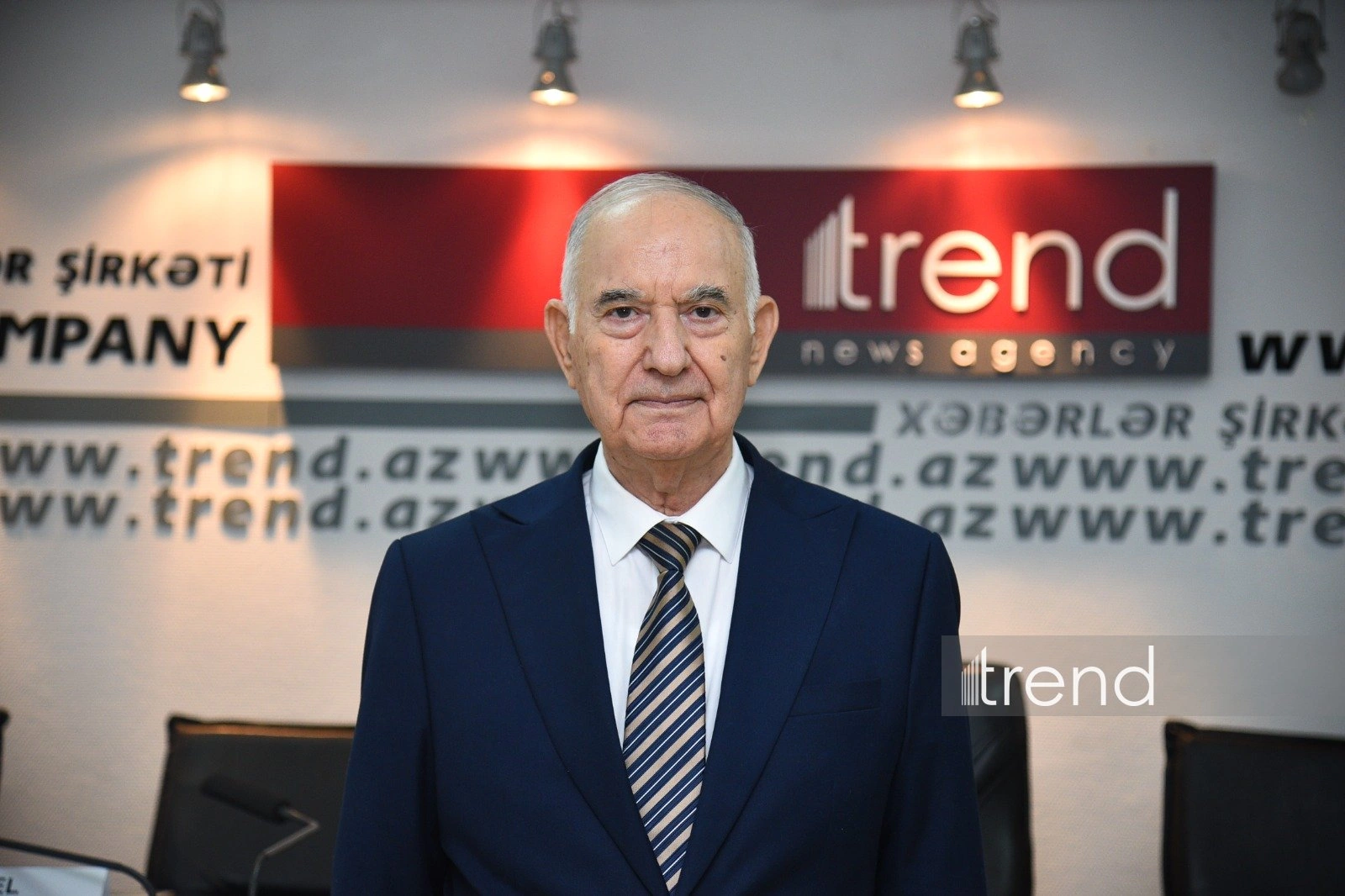
BAKU, Azerbaijan, November 24. The commencement
of the practical implementation of the TRIPP project in Armenia on
November 23, 2026, is yet another manifestation of the new
political and economic realities taking shape in the South
Caucasus, political analyst Azer Garayev told Trend.
According to him, in a region long characterized by conflict,
confrontation, and closed communication links, concrete steps are
now being taken to establish new transport and logistics
connections.
He said that at the heart of this process lie the resolute
policy of Azerbaijani President Ilham Aliyev, the restoration of
the country’s territorial integrity and sovereignty, and the
advancement of a peace agenda with Armenia.
"The transition of TRIPP to the practical implementation phase
within the territory of Armenia should be assessed, first and
foremost, in the context of the realization of strategic goals that
Azerbaijan has pursued for years. This is because the fundamental
political groundwork for the transport connectivity currently under
discussion was established precisely as a result of the new
realities created by Azerbaijan. On November 23, while announcing
the commencement of the project's practical phase, Armenian Prime
Minister Nikol Pashinyan specifically highlighted the significance
of the summit held in Washington on August 8, 2025. According to
him, that summit served as a turning point in the transformation of
the South Caucasus. Pashinyan noted the importance of the Joint
Declaration, signed with the participation of the President of
Azerbaijan, Ilham Aliyev, and US President Donald Trump, in terms
of turning the page on a long-standing conflict and paving the way
for lasting peace. This statement in itself is a significant
political point. The Armenian leadership directly links the launch
of TRIPP to the progress achieved in the peace process with
Azerbaijan. Consequently, the new relations established between
Baku and Yerevan form the political foundation for the project that
Armenia has now begun to implement on its own territory," he
noted.
According to him, to understand the essence of the matter, it
suffices to look at the processes that have taken place in the
region in recent years. Through the victory achieved in the 44-day
Patriotic War and the anti-terror measures carried out in September
2023, Azerbaijan fully restored its territorial integrity and
sovereignty. Consequently, the status quo that had persisted in the
South Caucasus for decades was altered.
"It was precisely thereafter that real opportunities emerged for
opening communications in the region, expanding economic
cooperation, and ensuring lasting peace. In the post-war period,
Azerbaijan has consistently articulated its position: ensuring
lasting peace in the region, restoring transport links, and
establishing unimpeded connectivity between the main part of
Azerbaijan and Nakhchivan. Baku’s stance on this issue has remained
unchanged. Azerbaijan has been carrying out all necessary
infrastructure work within its own territory, expanding transport
capabilities in East Zangezur and Nakhchivan, and taking practical
steps toward the realization of the Zangezur Corridor. Regarding
Armenia, the fulfillment of a political agreement and mutual
obligations has been put forward as a fundamental condition."
A notable point in this regard is that Azerbaijan has already
carried out a significant amount of work toward establishing the
infrastructure for the Zangezur Corridor within its own territory.
The construction of the Horadiz–Aghband highway was completed in
October 2026. Meanwhile, construction of the railway line is
nearing its final stage. In September 2026, Azerbaijan’s Foreign
Minister Jeyhun Bayramov said that 75% of the railway project and
approximately 95% of the highway project had been completed. Work
is also underway to modernize railway infrastructure in Nakhchivan.
In other words, Azerbaijan is consistently fulfilling its
infrastructure-related obligations. The country is taking steps,
both at the political and practical levels, to implement a
strategic transportation route that it identified many years ago.
The commencement of work on the section passing through the
territory of Armenia indicates that this process has also reached a
practical stage," he explained.
Garayev remarked that the significance of the TRIPP project is
not limited solely to the establishment of a transport link between
the main part of Azerbaijan and Nakhchivan. The approximately
43-kilometer-long route is intended to encompass a railway, a
highway, as well as energy and communication lines. In addition to
expanding Azerbaijan's access to Türkiye and Europe, this
connection will create conditions for the Middle Corridor to gain
further capabilities.
"For Armenia, too, this project represents new economic
opportunities. As Pashinyan himself has acknowledged, TRIPP could
become the largest economic project for his country since it gained
independence. Through this route, Armenia aims to expand its
integration into international transport networks, attract foreign
investment, and, in particular, develop the economic potential of
the Syunik region. There is an important point here: for Armenia to
secure these opportunities, progress in the regional peace process
and the normalization of relations with Azerbaijan were essential.
Armenia, which lived in a state of confrontation with Azerbaijan
for many years, is now seeking to leverage the opportunities
created by the peace agenda for its own economic development. In
this regard, the launch of TRIPP can be viewed as the realization
of the economic outcomes envisioned by the model of regional
cooperation proposed by Azerbaijan. Baku has repeatedly stated that
peace and cooperation in the South Caucasus will unlock new
opportunities for all countries in the region. For this to happen,
however, the conflict must first come to an end, territorial
integrity must be respected, and communication links must be
opened," he mentioned.
The analyst emphasized that the role of President Ilham Aliyev’s
political strategy in advancing the TRIPP initiative to a practical
stage deserves special mention. In the post-war period, the head of
state has consistently kept both peace negotiations and the
restoration of regional communications on the agenda, prioritizing
Azerbaijan’s interests.
“New political realities have taken shape in the region as a
result of Azerbaijan’s position. The Joint Declaration signed in
Washington on August 8, 2025, served as a diplomatic affirmation of
these realities. The document contains significant provisions
regarding the opening of transport links between Azerbaijan and
Armenia, the development of regional communications, and the
consolidation of peace.
In essence, the launch of TRIPP within the territory of Armenia
today stands as evidence that the demands put forward by Azerbaijan
years ago, and the strategic goals it defined, are now being
realized in practice. Azerbaijan has restored its territorial
integrity, established new political realities in the region,
advanced the peace process with Armenia, and elevated the issue of
opening communications to a key position on the international
agenda.
Furthermore, the inclusion of US President Donald Trump’s name
in the project’s title, combined with Washington’s involvement,
enhances its international significance. The fact that Trump, in a
statement released on November 23, expressed his gratitude to both
Pashinyan and President Ilham Aliyev further confirms the role
played by the leaders of both nations in the implementation of this
project. If Armenia is beginning the practical implementation of
the TRIPP project today, it is because of the new political
situation that has emerged in the region. Decisive factors in the
formation of this landscape have included Azerbaijan’s
military-political victory, the resolute stance of President Ilham
Aliyev, and the consistent advancement of a peace agenda.
Ultimately, the process that began in Armenia on November 23
should not be viewed merely as the groundbreaking phase of a new
infrastructure project. It represents a transition from conflict to
cooperation in the South Caucasus, the strengthening of
Azerbaijan’s position on the regional transport map, and the latest
tangible outcomes of the strategic course charted by President
Ilham Aliyev. The steps currently being taken to open communication
links, which remained closed until recently, are a direct result of
the new realities established by Azerbaijan," added Garayev.