BAKU, Azerbaijan, August 5. Freight
transportation between Kazakhstan and China reached 18.662 million
tons in the first half of 2026, up 9.2% compared to the same period
of 2025, according to Kazakhstan Temir Zholy (KTZ).
The figures were announced during a working meeting in Astana
between KTZ and a delegation from China Railway's Urumqi Railway
Company.
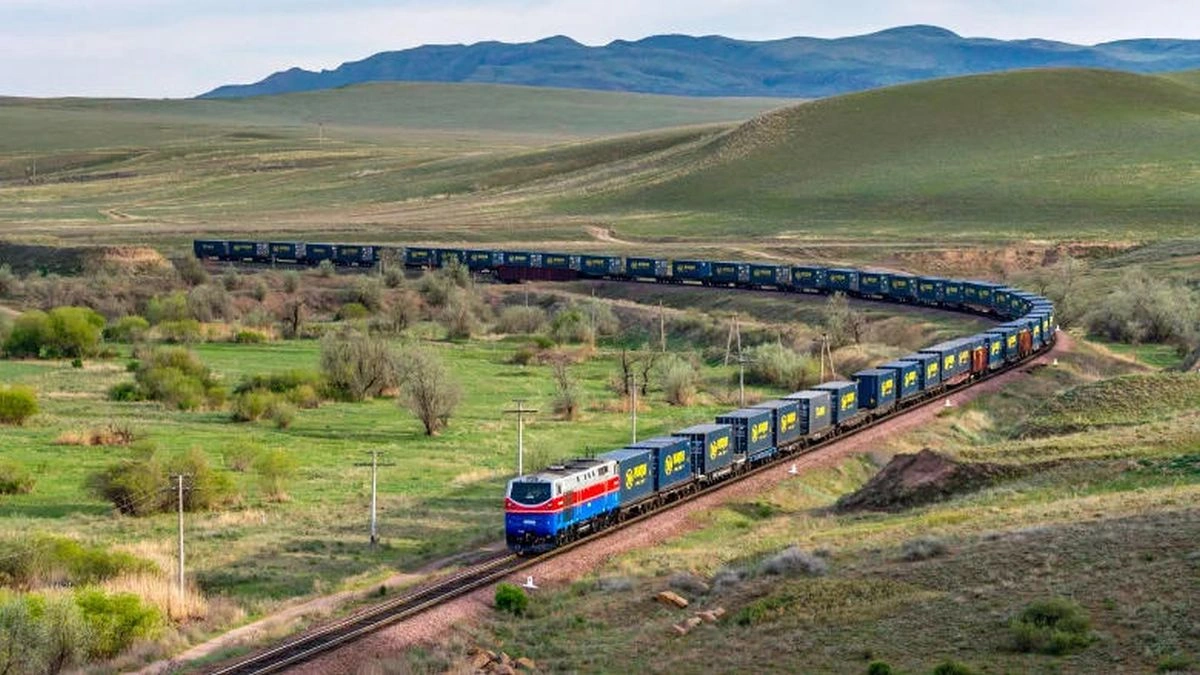
According to KTZ, cargo shipments from Kazakhstan to China
totaled 11.702 million tons during the reporting period, marking a
9.5% year-on-year increase. Freight transported from China to
Kazakhstan amounted to 6.960 million tons, up 8.7% from a year
earlier.
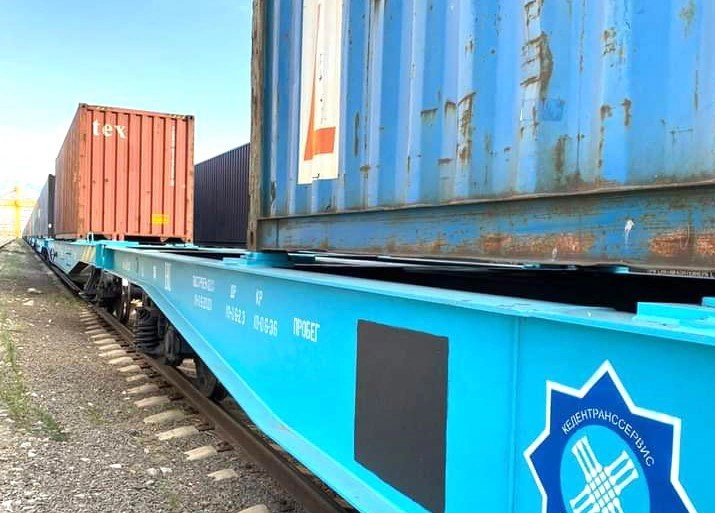
Container traffic through the Kazakhstan-China border rail
crossings also continued to grow. In the first six months of 2026,
the two countries handled 1.085 million TEUs, an increase of 6.6%
year-on-year. Of this total, 741,800 TEUs transited through
Kazakhstan, representing a 10.4% increase compared to the same
period of 2025.
The two sides praised the effective cooperation between
personnel at the border railway stations and expressed appreciation
for their efforts in ensuring the smooth operation of cross-border
freight services.
During the meeting, the participants also highlighted the steady
increase in cargo flows toward Central Asia and Iran, including
shipments transported via the Trans-Caspian International Transport
Route (TITR), or Middle Corridor. To sustain this growth, the
parties agreed to continue joint efforts to ensure uninterrupted
logistics services.
The Kazakh side also pointed to rising demand from neighboring
countries for imports of petroleum cargo from China. Given the
strategic importance of this traffic, Kazakhstan confirmed its
readiness to receive and process up to 90,000 tons of liquid bulk
cargo per month. The Chinese side expressed its willingness to
support these shipments and jointly assess the technical capacity
of border infrastructure to further expand transportation
volumes.
"KTZ and Urumqi Railway Company reaffirmed their commitment to
further developing their strategic partnership in the field of
railway transportation," the company said.
The Middle Corridor is a multimodal trade route connecting Asia
and Europe through several countries in the region and serving as
an alternative to the traditional Northern and Southern corridors.
The route begins in China and passes through Central Asian
countries before crossing the Caspian Sea, Azerbaijan, Georgia, and
Türkiye, ultimately reaching Europe. It is a land-based transport
route that bypasses longer maritime routes, linking the eastern
parts of Asia, including China, with European markets.
Kazakhstan's Vice Minister of Trade and Integration Aset Nusupov
told Trend
that the corridor has become one of Kazakhstan's main strategic
assets over the past decade.
"The figures speak for themselves. Over three years, from 2022
to 2025, the volume of transportation along the route increased
more than fivefold. By the end of 2025, total cargo traffic reached
4.5–4.7 million tonnes, of which container transportation accounted
for 76,900 TEUs (36% more than a year earlier)," the vice minister
said.
He noted that in the first quarter of 2026, 125 container trains
passed along the route, representing a 34.4% increase compared to
the same period last year. Over the same period, 85 trains operated
on the Xi'an - Alat Port route, twice as many as a year earlier.
Delivery times along the route have nearly halved, decreasing from
28–32 days to 11–13 days.